
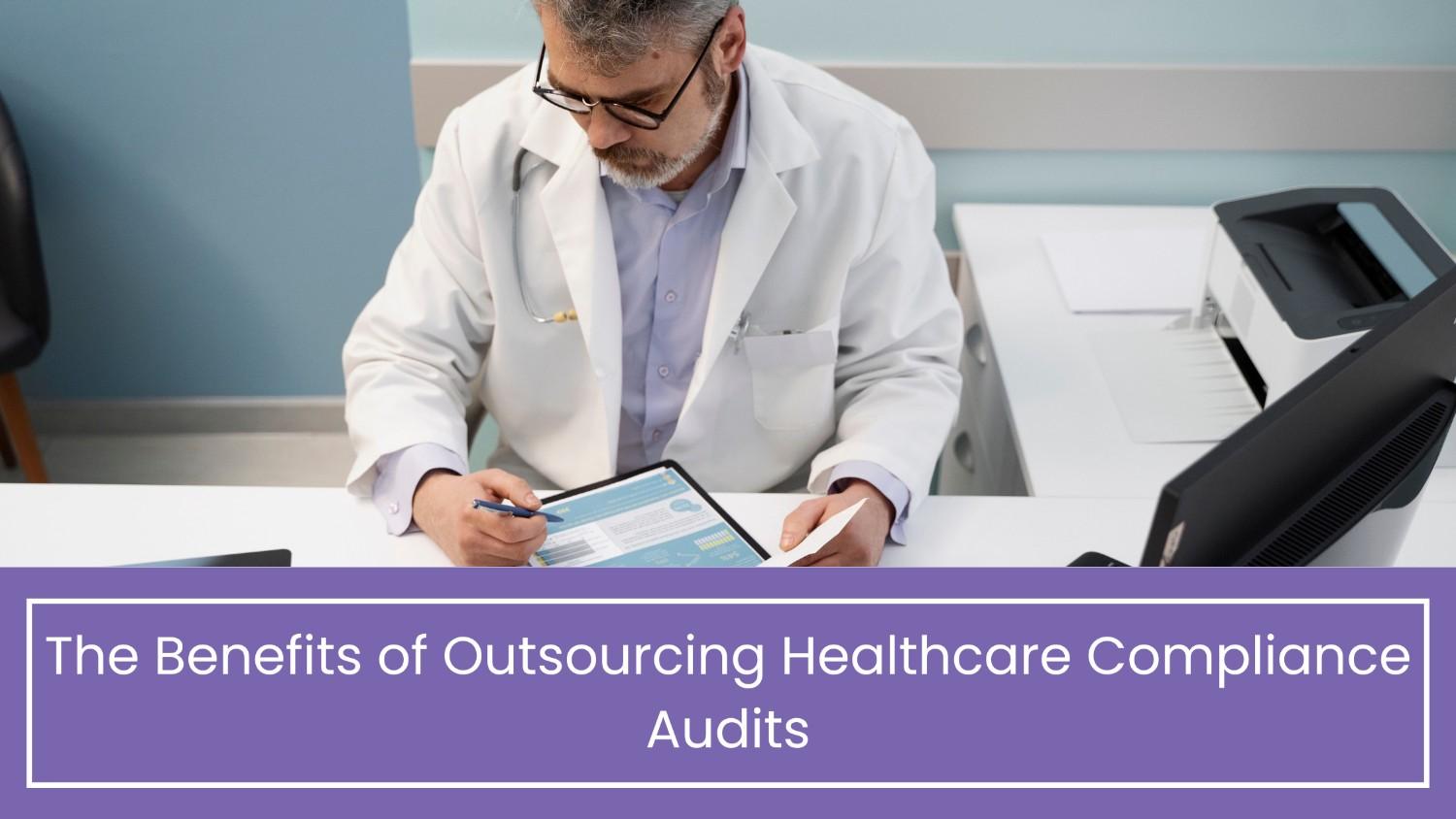
Strategic Wisdom: The Benefits of Outsourcing Healthcare Compliance Audits
Hospitals and clinics deal with a maze of rules—billing codes, privacy laws, patient data requirements, and more—that shape their daily operations. Conducting Healthcare Compliance Audits helps identify loopholes, gaps, and flaws in existing processes and facilities’ ability to operate within regulatory requirements. Once these issues are identified, organizations can take the necessary corrective actions. Such measures can help healthcare facilities avoid hefty fines, improper payments, compliance risks, and more serious problems in the future.
Additionally, bringing in a compliance expert helps to discover issues the management has missed, particularly during a complicated process or where there are diverse opinions.
Outsourced compliance services can cover areas such as the following:
- HIPAA privacy and security practices
- CMS and Medicare/Medicaid requirements
- Billing and coding accuracy
- Revenue cycle compliance
- Business Associate Agreement compliance
- Patient data security
- Documentation and medical necessity
- Denial management compliance
- Internal policies and regulatory controls
A compliance audit conducted by a competent firm will be able to combine expert insight and knowledge with an established methodology to assess a practice’s risks and prioritize them according to importance and degree of impact.
CTA Button: Request a Compliance Assessment
Table of Contents
What Are Healthcare Compliance Audits and Why Do They Matter?
A healthcare audit checks your processes and files to ensure you follow rules and get paid. It is not about finding errors. It is about finding healthcare compliance risks early so your team can fix them before they become real problems.
Depending on the organization, an audit may examine the following:
- Billing and coding practices
- HIPAA policies and safeguards
- CMS requirements
- Medicare and Medicaid billing
- Medical necessity documentation
- Claims and reimbursement workflows
- Patient data access
- Business Associate Agreements
- Credentialing and provider information
- Revenue cycle processes
Regular healthcare compliance monitoring keeps you on track all year long, instead of just once.
If you lack the staff to do this, hiring experts lets you get the help you need without adding more payroll.
CTA Button: Identify Compliance Risks
Types of Healthcare Compliance Audits
Healthcare compliance has many layers. Different audits target different risks, so your practice may need several types based on your services and insurance payer.
Common audit categories include:
- A HIPAA compliance audit covers privacy, security, access, safeguards, and other matters related to the handling of PHI.
- A CMS compliance audit focuses on the review of adherence to applicable Medicare requirements.
- A billing and coding audit ensures the accuracy of coding, documentation, application of modifiers, and other aspects related to claim submission.
- A revenue cycle compliance audit assesses the organization’s revenue cycle in terms of regulatory and payer requirements.
- A patient data security audit evaluates the security safeguards in place for electronic PHI.
- A Medicare/Medicaid audit reviews the billing practices that an organization should follow in accordance with government regulations.
- A third-party compliance audit allows for an independent examination of processes of interest.
The appropriate scope depends on your risk level. A good audit targets high-risk areas rather than reviewing every single transaction the same way.
CTA Button: Choose the Right Audit Scope
Healthcare Compliance Audit Checklist: What Every Audit Should Cover
A practical compliance audit checklist keeps your checks steady and helps your team find risks before they cost you revenue.
Depending on scope, an audit may evaluate the following:
- HIPAA Privacy and Security Rule compliance
- Business Associate Agreement documentation
- Patient data access and security controls
- Medical coding accuracy
- Billing documentation and medical necessity
- Claims submission workflows
- Medicare and Medicaid requirements
- Payer-specific billing rules
- Denial management processes
- Provider credentialing and enrollment
- Internal compliance policies
- Workforce compliance training
- Audit trails and documentation
- Corrective action procedures
The audit must check if the policies are followed promptly. Having a policy handbook alone does not showcase effective adherence.
Once you find gaps, rank them by their impact on revenue, laws, and patient privacy. Assign each fix an owner, a due date, and a review.
CTA Button: Download Your Audit Checklist
In-House vs. Outsourced Compliance Audits: A Quick Comparison
Organizations can run their own compliance reviews or hire a professional healthcare compliance outsourcing company to handle the process.
|
Factor |
In-House Audit |
Outsourced Audit |
|
Specialized expertise |
It depends on internal team |
Access to dedicated specialists |
|
Independence |
Potential internal bias |
Greater external objectivity |
|
Staffing |
Requires internal capacity |
Flexible external resources |
|
Scalability |
May be limited |
Easier to scale |
|
Technology |
Existing internal tools |
May include specialized tools |
|
Cost structure |
Salaries and overhead |
Project or service-based cost |
An in-house team understands internal workflows and organizational culture, which is a plus. But they often lack deep expertise or enough time to do a full review.
Outside audits offer a fresh perspective. They help you find the gaps that your own team might miss.
Many organizations use a hybrid model, using their internal and periodic tracking and hiring outside specialists for a deep dive.
CTA Button: Compare Your Audit Options
Benefits of Outsourcing Healthcare Compliance Audits
Outsourcing can make the reviews more organized, objective, and scalable. It is critical to think of a compliance audit as part of the overall healthcare compliance risk management program, rather than an isolated project or even a disruption to the business.
Potential benefits include the following:
An unbiased perspective: External reviewers identify problems that may go unnoticed by insiders.
Expertise: Professional auditors are very knowledgeable about healthcare billing and finance.
Less work: Auditing means that your employees will not be burdened with audit processes, but they will concentrate on patient care.
Ability to assess risk: With audits, it is easy to determine the most significant risk factor from the analysis of significant issues.
Good basic records: Auditors provide documentation of all necessary changes.
Protects revenue: Billing and coding audits allow you to find out the possible reasons for denial of claims and make necessary corrections.
Flexible audit: You may choose the magnitude of an audit according to your needs.
The goal isn’t just passing an audit. It’s about building a solid system that cuts risks and keeps your daily work consistent and simple.
CTA Button: Outsource Your Compliance Audit
Frequently Asked Questions
1. What is a healthcare compliance audit?
A healthcare compliance audit is a type of internal or external examination of the company’s policies, documentation, operations, billing, data security, and other aspects to ensure that they meet the relevant regulatory and payer standards. Such audits can cover a wide range of areas, from HIPAA, CMS, billing, and coding to revenue cycle and multiple other topics.
2. Why should healthcare providers outsource compliance audits instead of doing them in-house?
Outsourcing can add expert skills and new ideas without the cost of full-time hires. It works best when your team is stretched thin, or you need to fix how work gets done.
3. How much does outsourcing a healthcare compliance audit cost compared to an in-house team?
There isn’t a flat rate. Pricing depends on your team size, audit depth, claim counts, specialty, software, and local laws. Weigh the external audit cost against your own staff, tech, training, and overhead expenses.
4. What’s the difference between an internal and an external compliance audit?
An internal audit is done by your own team to keep things on track daily. An external audit uses an outside expert to give a fresh, unbiased look. One helps you manage things now, while the other brings in a professional second opinion.
5. How often should a healthcare organization conduct a compliance audit?
Frequency should be determined by the risk, the organization’s size, regulatory exposure, previous results, and possible changes to the process or regulations. One of the high-risk areas is billing or privacy, which can require higher frequencies of review.
6. Does outsourcing compliance audits help with HIPAA specifically?
Yes. A HIPAA compliance audit that is completed successfully examines issues like control of access, use, and transmission of protected health information, employee qualifications, and how documentation is processed. Before beginning an audit, everyone must come to a consensus on what exactly is being examined.
7. Can outsourcing compliance audits reduce claim denials and billing errors?
It can spot the mistakes in your workflow that lead to billing errors and denied claims. For instance, audits find bad coding, missing notes, wrong modifiers, or weak claim steps. Once you see the problems, you must fix them to see results.
8. Is outsourcing compliance audits safe for patient data?
The strategy only works if you pick a trustworthy partner and set clear rules. Check their safety history, who sees your data, how they store it, and how they train their staff. You should also review their audit logs and contracts to ensure compliance.
9. What should I look for in a healthcare compliance audit outsourcing partner?
Look for healthcare experts, clear audit steps, expert eyes, and data security. Check their report quality and whether they know the laws and payer rules.
10. How does Practolytics’ compliance audit service work?
An audit begins by identifying key focus areas and possible risks. Next, the team reviews the most important files and workflows to find where a company misses the mark. Once they spot these gaps, they analyze the root causes and suggest a clear path to fix them. Finally, the team checks back to ensure the changes actually worked. This last step ensures the business stays compliant and the improvements last.
CTA Button: Talk to a Practolytics Compliance Expert
ALSO READ – Decoding CPT: Your Guide to Codes and Regulations 2024
Talk to Medical Billing Expert Today — Get a Free Demo Now!