
Medical Credentialing Services Companies in Virginia
Medical Credentialing Services Companies in Virginia play a critical role in keeping your practice running smoothly. In Virginia, credentialing is essential for providers to receive payments from insurers, yet the process is often slow, complex, and filled with strict regulations and paperwork errors. These delays can disrupt cash flow and slow down provider onboarding. This blog explores why credentialing matters, the common causes of delays, and how outsourcing to experienced credentialing companies can solve these challenges. The right partner helps reduce turnaround times, minimize errors, and allows your team to focus more on patient care instead of administrative tasks.
Table of Contents
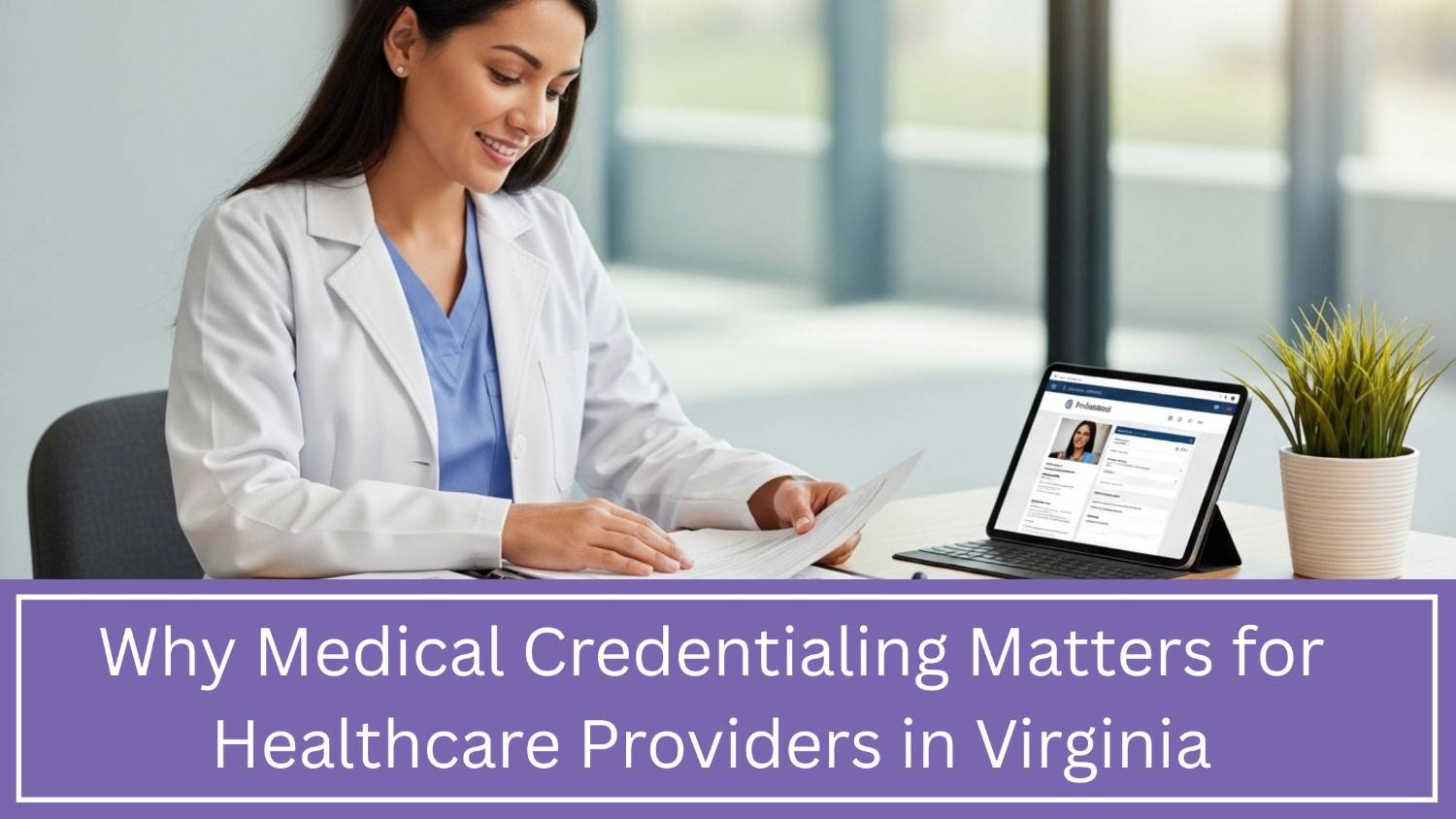
Why Medical Credentialing Matters for Healthcare Providers in Virginia
Healthcare providers can’t see patients or get paid until they finish credentialing. It’s a must-do check to confirm doctors and nurses are qualified, and insurers will work with them.
In Virginia, credentialing is a headache. Doctors and hospitals face delays, endless forms, and insurer red tape. Smart practices now outsource it—getting providers approved faster so cash keeps coming in. No frills, just results.
Without proper paperwork, doctors miss out on insurance payments. That’s lost income and unhappy patients. In Virginia’s busy healthcare market, quick credentialing is key for clinics and private practices.
This guide explains Virginia’s credentialing steps—why it matters, common issues, and how outsourcing saves time so your practice can focus on patients.
Understanding Medical Credentialing
Medical credentialing checks if doctors are qualified to treat patients and get paid. It’s like a background check for healthcare. Here’s what we verify:
- Where they trained
- Special certifications
- State license to practice
- DEA approval (for prescribing meds)
- Past jobs and references
- Any malpractice claims
Skipping this step? Your revenue stops.
Credentialing keeps doctors and nurses in-network—and paid. It’s how insurers verify they meet safety and quality standards before approving claims.
And it’s not a one-time checkbox. Providers must renew credentials regularly to stay compliant and keep payments flowing.
Why Credentialing Is Critical for Healthcare Providers
Credentialing directly affects a healthcare business’s money. Without it, insurers won’t pay providers—that’s cash left on the table.
But it’s not just about payments. Credentialing protects patients by checking doctors’ and nurses’ qualifications before they treat anyone.
Bottom line? No credentialing, no income. And no credentialing opens the door to patient risks.
However, credentialing drags. It eats up 3-4 months—too long.
That delay costs real cash. Idle doctors mean lost revenue. Every day wasted hits the bottom line.
Smart clinics outsource it. They get docs working faster. That’s how winners play.
The Healthcare Landscape in Virginia
Virginia has one of the best healthcare setups in the Mid-Atlantic. You get top hospitals, training hubs, and neighborhood clinics—all working together.
Top healthcare players in Virginia:
- Large hospital chains
- Specialized care clinics
- Same-day surgery centers
- Remote care services
- Mental health providers
This setup keeps care close to people while driving growth.
Virginia also has many Medicaid patients. To serve them, healthcare providers must sign up through Virginia’s Medicaid office (DMAS).
The state rolled out PRSS, a new online system, to handle provider sign-ups and renewals. It speeds things up—but clinics still deal with piles of forms and checks.
As more Virginians need care, credentialing eats up time. For hospitals and clinics, it’s a growing hassle behind the scenes.
Common Credentialing Challenges in Virginia
Medical credentialing eats time and patience. Doctors and clinics hit the same roadblocks:
1. Months, Not Minutes
Insurance verification companies crawl through degrees, licenses, and work history—each with its own slow-motion checklist. One hiccup? The whole timeline drags.
2. Application Errors
Most delays happen because applications aren’t filled out correctly.
Data shows 85% of applications have mistakes or missing info—this slows everything down. (Medwave)
Top issues:
- Missing papers
- Old CAQH profiles
- Wrong provider info
- Gaps in work history
Each error adds weeks to the process.
3. Multiple Payer Rules
Doctors work with many insurance companies.
Every insurer has different forms and steps. Juggling these takes time and can confuse staff.
4. Re-credentialing Rules
Your credentials aren’t a one-and-done deal.
To keep medical billing insurers, providers must renew their paperwork every 2-3 years. Skip this, and payers will drop you—no payments, no patients.
5. Credentialing Grind
It’s a paperwork marathon: chasing insurers, verifying licenses, updating hospital records.
Most small clinics can’t afford a full-time staffer just to babysit these deadlines.
The Rise of Medical Credentialing Service Companies
To manage these issues, many healthcare groups work with credentialing experts. These firms focus on signing up providers and checking their credentials. They take care of the whole process—handling paperwork, sending applications, and talking to payers.
Credentialing service companies help clinics:
- Cut paperwork
- Get approvals faster
- Avoid costly mistakes
- Boost cash flow
Data shows outsourcing cuts approval times by 30-50%, so you can bill sooner and get paid quicker.
Key Services Offered by Credentialing Companies
Medical credentialing firms help healthcare practices get paid. Here’s how they do it:
Insurance Enrollment
They handle provider sign-ups with:
- Medicare
- Medicaid
- Private insurers
This lets doctors bill for their work.
CAQH Updates
They keep provider profiles current in the CAQH system – the database that insurers check. No outdated info means no payment delays.
Primary Source Checks
We confirm doctor qualifications by checking directly with medical schools and licensing boards. No guesswork—just verified facts.
Renewal Tracking
Our team tracks deadlines so providers never miss re-credentialing. We handle paperwork before enrollment lapses, keeping their work uninterrupted.
Hospital Access Made Easy
Before doctors can perform surgeries or admit patients, hospitals need approval. We prepare and submit privilege applications—one less hurdle for busy providers.
Benefits of Outsourcing Credentialing
Healthcare organizations in Virginia see clear wins by outsourcing medical credentialing.
Faster Onboarding
Experts know insurer rules, cutting mistakes, and speeding approvals.
Less Paperwork
Staff focus on patients while specialists handle forms and verifications.
Higher Approval Rates
Our skilled team helps avoid mistakes and rejections in applications.
Better Cash Flow
Fast credentialing lets you see patients and get paid faster.
This boosts your practice’s income and keeps money moving.
Technology Trends in Medical Credentialing
Healthcare technology is changing how credentialing works. New tools make the process faster and easier.
Online Enrollment Systems
States now use digital portals for provider sign-ups. Virginia’s PRSS system lets doctors submit and track applications online.
Automated Credentialing
Software handles tasks like tracking documents and updating applications. This cuts manual work and reduces errors.
Artificial Intelligence
AI now helps credentialing teams verify provider details fast, spotting gaps in paperwork. Expect faster turnarounds as this tech grows smarter.
Data Analytics
Hospitals crunch numbers to see where credentialing slows down—fixing delays keeps enrollment moving smoothly.
Regulatory Changes Affecting Credentialing
Healthcare credentialing keeps changing. Now, clinics and hospitals must check provider licenses more often. Some need monthly checks, not just yearly. This means more compliance work. Credentialing firms help teams stay on track with these updates.
Future of Medical Credentialing in Virginia
The demand for medical credentialing services will keep rising as healthcare grows. Here’s why:
- More patients need care
- Telehealth is booming
- Insurance rules are tightening
- Digital tools are taking over
Smart clinics and hospitals are now using automated systems and outside help to handle credentialing. This means:
Doctors can start working faster
Patients get treated sooner
It’s simple: better credentialing equals better business.
Conclusion
Medical credentialing keeps healthcare running smoothly. It checks if providers are qualified, follows payer rules, and lets clinics get paid.
But it’s tough. Credentialing takes time—often months. Small errors make it take longer. Every day matters when payments wait.
Virginia healthcare teams face extra work: payer rules, Medicaid steps, and changing laws. Credentialing services help. They manage the details: paperwork, applications, insurer talks, and deadlines. Outsourcing this work cuts stress, speeds up new hires, and keeps money moving.
Simplify Credentialing with Practolytics
Managing medical credentialing in-house is tough. Missing papers, delays, and complex rules can hold up provider sign-ups and hurt your income.
Practolytics makes credentialing and provider enrollment easy for healthcare teams.
Our tools help clinics and hospitals:
- Get providers signed up quicker
- Cut down on errors
- Handle payer forms smoothly
- Track progress live
- Stay on top of healthcare rules
With experienced pros and smart tools, Practolytics makes credentialing easy and keeps your cash flow strong.
Virginia healthcare groups: Get providers working—and paid—faster. No credentialing headaches, just smooth approvals.
Read More – Prior Authorization Services for Podiatry : improving Patient Access and Care
Talk to Medical Billing Expert Today — Get a Free Demo Now!