
Urgent Care RCM Solutions to Boost Profitability
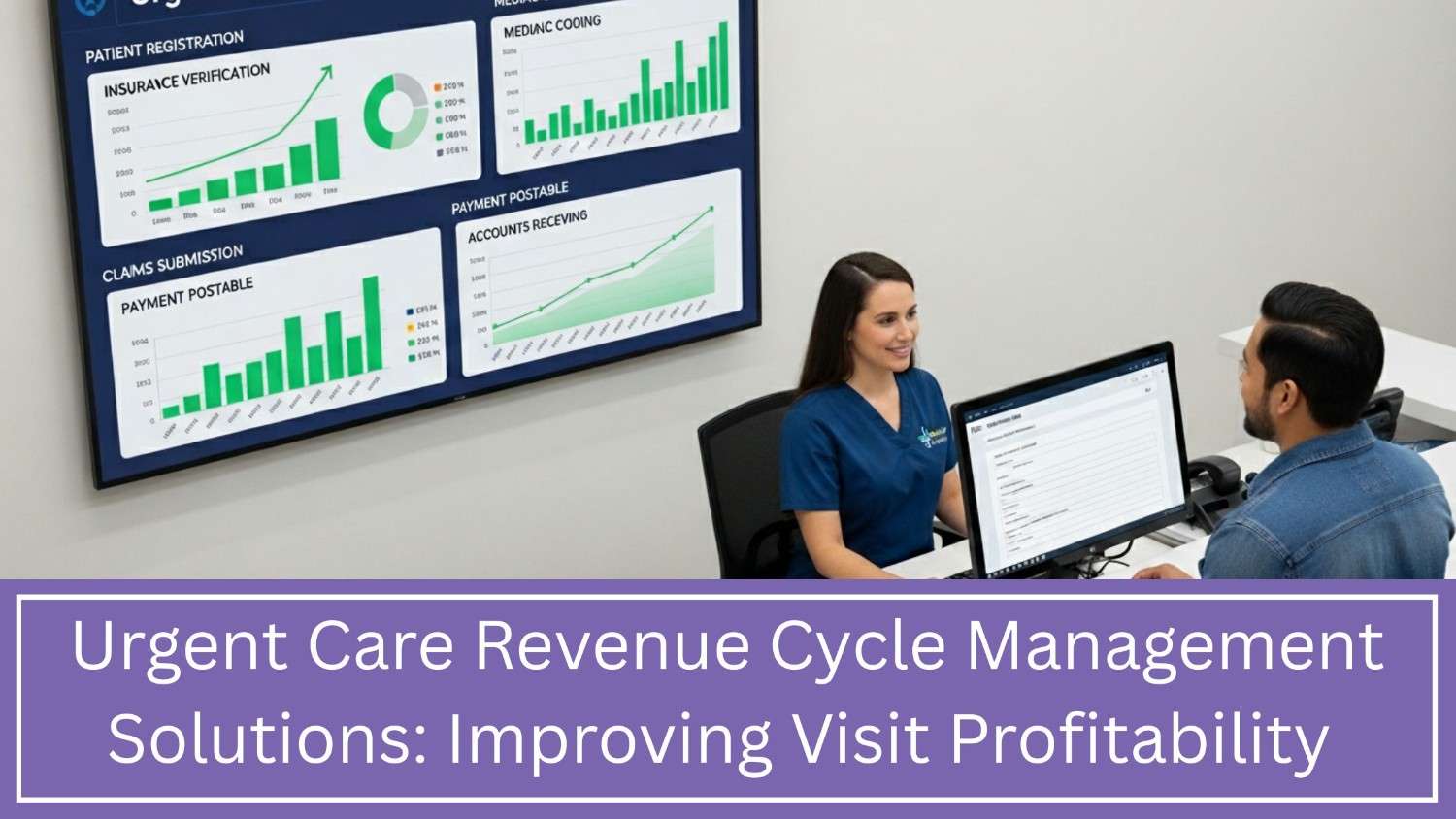
Urgent care facilities are characterized by a high volume of patients, quick turnaround times, and a wide range of payers. This makes Urgent Care RCM Solutions to Boost Profitability essential for protecting revenue and improving financial performance. Even a single mistake in the billing process can result in rejected or denied claims, delayed payments, and lost revenue.
A strong RCM program connects every financial step:
- Eligibility and benefits verification before visits
- Accurate medical coding for urgent care
- Claims scrubbing and timely submission
- Urgent care prior authorization support
- Denial management and appeals
- Urgent care accounts receivable follow-up
- Payment posting and reconciliation
- EHR integration and RCM automation
All that needs to be done is to ensure that every visit receives the right compensation. If the process is done in the correct manner and through the use of technology, it is possible for urgent care centers to improve their practice profitability.
CTA Button: Get Your Free Urgent Care RCM Assessment
Table of Contents
What Is Urgent Care Revenue Cycle Management?
Urgent care revenue cycle management handles the revenue flow from patient registration to the last payment. Since these clinics see many patients with various insurance plans, every step must run smoothly to keep profits steady.
An effective RCM process includes:
- Patient registration and insurance verification
- Eligibility and benefits verification
- Charge capture and medical coding
- Claims submission and scrubbing
- Payment posting
- Denial management
- A/R follow-up
- Patient collections
- Financial reporting
The process starts before the patient is seen. Checking insurance first catches dead policies, copays, and gaps in coverage. Correct coding then makes sure the final bill matches the care given.
In urgent care, speed is as vital as accuracy. Slow claims lead to more work and less cash. A connected RCM system links the front office to the billing team so errors are fixed faster.
CTA Button: Optimize Your Urgent Care RCM
Why Profitability Is Slipping in Urgent Care
High patient numbers don’t always mean high profits. Urgent care clinics lose revenue due to simple billing mistakes, slow workflows, complex payer rules, and unresolved A/R.
Common profitability problems include:
- Incomplete insurance information
- Eligibility errors
- Incorrect E/M coding
- Missed charges
- Claim submission delays
- Urgent care claim denials
- Underpayments
- Slow A/R follow-up
- Inconsistent patient collections
- Limited visibility into RCM performance
A claim denied after weeks of work wastes staff time and stalls payment. When this happens thousands of times, the lost revenue adds up fast.
Urgent care cash flow optimization needs more than just more patients. Clinics must find where they are losing revenue and fix the root cause.
Tracking clean claims, denial rates, A/R days, and collections gives practice owners a real look at the first-level profitability.
CTA Button: Find Your Revenue Leakage
Urgent Care Billing Codes You Can’t Afford to Get Wrong
Accurate coding drives your urgent care revenue. Clinics use a mix of visit codes, procedures, labs, and injections based on the services delivered.
Important coding considerations include:
- Correct E/M code selection
- Documentation supporting medical necessity
- Appropriate modifiers
- Accurate diagnosis coding
- Correct place of service
- Proper procedure and supply reporting
- Payer-specific billing requirements
Global coding of CPT S9083 is for urgent care clinics under specific billing schemes, and it shouldn’t necessarily replace regular E/M codes. It all depends on the terms of the agreement with the insurance company and the rules of billing.
Likewise, code POS 20 is used to indicate an urgent care clinic, but POS alone doesn’t decide how to be reimbursed.
Coding teams must check each payer’s rules instead of using one method for all claims. Clear notes, regular audits, and steady training boost urgent care coding accuracy while lowering your legal risks.
CTA Button: Audit Your Urgent Care Coding
Key Challenges in Urgent Care RCM
Urgent care billing handles many patients and different insurance rules. This often causes mistakes that hurt your cash flow and total profits.
Common issues include:
- Issues with Eligibility: The patient may be ineligible for care or coverage.
- Coding Issues: Accurate documentation is needed to code E/M levels and procedures.
- Different Policies: Different payers may have different payment and billing policies.
- Rejection: Inaccurate coding, eligibility, authorization, and documentation may lead to rejection.
- Growing A/R: Unresolved claims may build up your A/R fast.
- Technical Problems: Lack of technical coordination between EHRs and billing systems may cause extra work.
Automation can handle boring tasks like checking eligibility, scrubbing claims, tracking status, and posting payments. But tools need skilled people to fix errors and solve hard payer problems.
A winning plan blends clean coding, fast filing, and smart ways to stop and fix denials.
CTA Button: Solve Your Urgent Care Billing Challenges
How Practolytics’ RCM Solutions Improve Visit Profitability
Practolytics helps urgent care centers fix their billing flow, from the first visit to the final payment. We help you collect more revenue while cutting out the boring paperwork.
Depending on practice needs, support can include:
- Eligibility and benefits verification
- Medical coding for urgent care
- Claims submission and scrubbing
- Denial management services
- Prior authorization support
- Payment posting
- Urgent care accounts receivable follow-up
- Patient billing support
- EHR integration
- RCM automation and reporting
A proactive strategy finds the root cause of denied claims instead of fixing them one by one. If a payer denies claims for eligibility, fix the check-in process rather than fighting the denial later.
Combining prevention, recovery, and tracking helps urgent care centers improve their clean claim rate, lower their A/R days, and keep more cash on hand.
CTA Button: Talk to an Urgent Care RCM Expert
Key RCM Metrics to Track Profitability
Urgent care leaders need more than total cash to see how the business is doing. The right billing data shows where revenue is stuck, lost, or wasted on too much paperwork.
Key metrics include:
- Clean claim rate: Measures the number of claims filed without preventable mistakes.
- Denial rate: Percentage of claims that require further action.
- Days in A/R: Determines the speed at which amounts owing are collected.
- Net collections rate: Measures how well collectible amounts are actually collected.
- First pass resolution rate: Claims paid without any reprocessing.
- Payment cycle time: Measures the speed from filing to receiving payment.
- A/R aging: Focuses on older amounts owing.
- Visit-level reimbursements: Used to assess the financial performance of each service/payer.
Metrics should be tracked by payer, site, provider, and service. This reveals gaps that general averages often miss.
The goal is to use billing data to make smart changes that grow your urgent care practice profitability.
CTA Button: Review Your RCM KPIs
2026–2027 Trends Shaping Urgent Care RCM
Urgent care billing now relies more on technology. Clinics need to handle more patients without spending more on staff or losing revenue to billing mistakes.
Important trends include:
- Greater use of healthcare RCM automation
- Real-time insurance eligibility verification
- Automated claims scrubbing
- AI-assisted coding workflows
- Predictive denial analytics
- Electronic prior authorization
- Automated payment posting
- EHR and billing-system integration
- More detailed payer performance reporting
- Digital patient payment options
Automation can cut down on busy work, but urgent care clinics should not use it to hide bad processes. If your workflow is broken, software only makes it fail faster.
A better way is to find the slow spots, set clear KPIs, and then automate the right tasks.
As patient numbers and insurance rules change, urgent care centers with flexible billing systems will keep their work smooth and their revenue steady.
CTA Button: Future-Proof Your Urgent Care RCM
Should You Outsource Urgent Care Billing? (Checklist)
Outsourcing can help urgent care centers facing too many claims, hiring gaps, or messy paperwork. Before you choose a partner, take a hard look at your current revenue cycle honestly.
Consider outsourcing if:
- Your denial rate is consistently high
- Days in A/R continue to increase
- Billing staff turnover affects collections
- Claims are submitted late
- Eligibility errors are common
- Coding resources are stretched
- Staff spend too much time on manual follow-up
- You lack detailed RCM reporting
- Your practice is expanding locations
- You need scalable billing support
Outsource urgent care billing without losing control. A good partner gives you clear reports, set goals, regular updates, and ownership of results.
Before signing, check their specific experience, coding skills, tech, payer knowledge, onboarding, security, and how they handle denials.
The right partner works as part of your team, not just a company that files claims.
CTA Button: See If Outsourcing Fits Your Practice
Why Practolytics Is the Right RCM Partner for Urgent Care
Urgent care needs a billing partner who gets how patient flow, correct codes, and insurance rules impact your cash. Practolytics pairs deep industry know-how with smart tools to help your clinic balance these moving pieces.
Its RCM support can address:
- Eligibility and benefits verification
- Urgent care medical billing services
- Coding and claims processing
- Denial management
- A/R recovery
- Prior authorization
- Payment posting
- EHR integration
- RCM automation
- Performance reporting
The aim is to ensure improvements across the entire revenue cycle process instead of just one aspect of billing.
RCM reporting allows tracking the performance of clean claims, denials, aged accounts receivable, collection rate, and other financial metrics. This will help in identifying areas where improvement is needed and taking necessary actions.
For urgent care facilities that are looking to grow their business, an RCM framework can prove helpful.
CTA Button: Get Your Urgent Care RCM Audit
Frequently Asked Questions
1. What is urgent care revenue cycle management (RCM)?
The RCM process in urgent care entails the entire financial process involved in turning the visitation process into reimbursement. This entails a process of registration, verifying the patient’s eligibility for insurance, coding, billing, claims processing, posting payments, handling denials, A/R follow-ups, and collection from the patients. Since urgent care facilities usually handle high volumes of patients, any inefficiencies in the workflow will result in lost revenue.
2. Why do urgent care clinics have higher claim denial rates than other specialties?
Often, urgent care centers have to cope with large numbers of patients, many different types of insurance policies, and a variety of services rendered. This leads to the possibility of making eligibility mistakes, coding errors, mistakes in paying guidelines, authorization failures, and documentation issues. In addition, the regular turnover of staff may become an obstacle to proper operations. However, the problem does not lie in processing denials quickly.
3. What is CPT code S9083 and when should urgent care use it?
S9083 is a CPT code that defines the global charge associated with urgent care facilities. Its use is conditional on how the third party pays for the service provided. It should not be applied automatically in all urgent care encounters. The practice should consider how its payers compensate it when choosing between the use of S9083 and other codes.
4. What’s the difference between billing S9083 and standard E/M codes (99202–99215)?
S9083 represents a flat fee for urgent care, while 99202–99215 codes cover specific exam services. The right choice depends on your payer rules, contracts, and the actual care given. Urgent care clinics cannot assume one method works for everyone. Your billing team must check each payer’s rules before sending the claim.
5. How does Place of Service (POS) code 20 affect urgent care reimbursement?
POS 20 marks services done at urgent care. Using the right code tells payers where the visit happened, which helps claims move faster. But POS 20 alone doesn’t set the pay rate. Total payment depends on the payer, your contract, the codes used, and medical need. Always base your billing choice on clear records and set rules.
6. How can urgent care clinics reduce claim denials?
Start with a plan. Check insurance first, get all patient details, and follow the payer’s rules. Double-check your claims and make sure the notes match the service. Next, track why payments are denied. Fix the real cause of common errors instead of just correcting them one by one. A great system uses early checks, right coding, fast appeals, and regular team training.
7. What RCM metrics should urgent care centers track?
Urgent care centers should track, at a minimum: clean claim rate, denial rate, days in A/R, net collection rate, first-pass claim acceptance, A/R aging, payment turnaround, and reimbursement by payer. It is also useful to measure rates of eligibility error and reasons for denial. By looking at these measures by location, payer, provider, and type of service, problems hidden by practice-wide averages can be uncovered and leadership can be assisted in prioritizing revenue-cycle improvements.
8. Is it better to outsource urgent care billing or keep it in-house?
There is no single answer. In-house billing can give you direct control, while outsourcing can provide specialized expertise, technology, scalability, and additional staffing capacity. Outsourcing can make sense for practices with high denial rates, growing A/R, billing staff who are hard to retain, or internal teams lacking specialized expertise. Practices should evaluate the full cost and performance of each model, including staffing, technology, training, collections, and administrative workload.
9. How fast can urgent care clinics expect to get paid with better RCM?
The timeline depends on your payers, old debt, claim volume, and current billing health. Some wins, like faster checks and cleaner claims, happen fast. Real debt reduction takes a few billing cycles. We set baseline numbers before changing a workflow. This lets us track if your payment speed and claim quality are actually getting better.
10. How does Practolytics help urgent care clinics improve profitability?
Practolytics can assist urgent care practices with the entire revenue cycle process from eligibility verification through coding, claims submission, denial management, A/R follow-up, payment posting, and reporting. Technology-enabled workflows can cut down on repetitive administrative work, with experienced billing professionals managing exceptions and complex payer issues. By tracking metrics like clean claim rate, denial rate, days in A/R, and collections, practices can find revenue leakage and make targeted improvements.
CTA Button: Start Improving Your Urgent Care RCM

Read More – Prior Authorization Services for Podiatry : improving Patient Access and Care
Talk to Medical Billing Expert Today — Get a Free Demo Now!