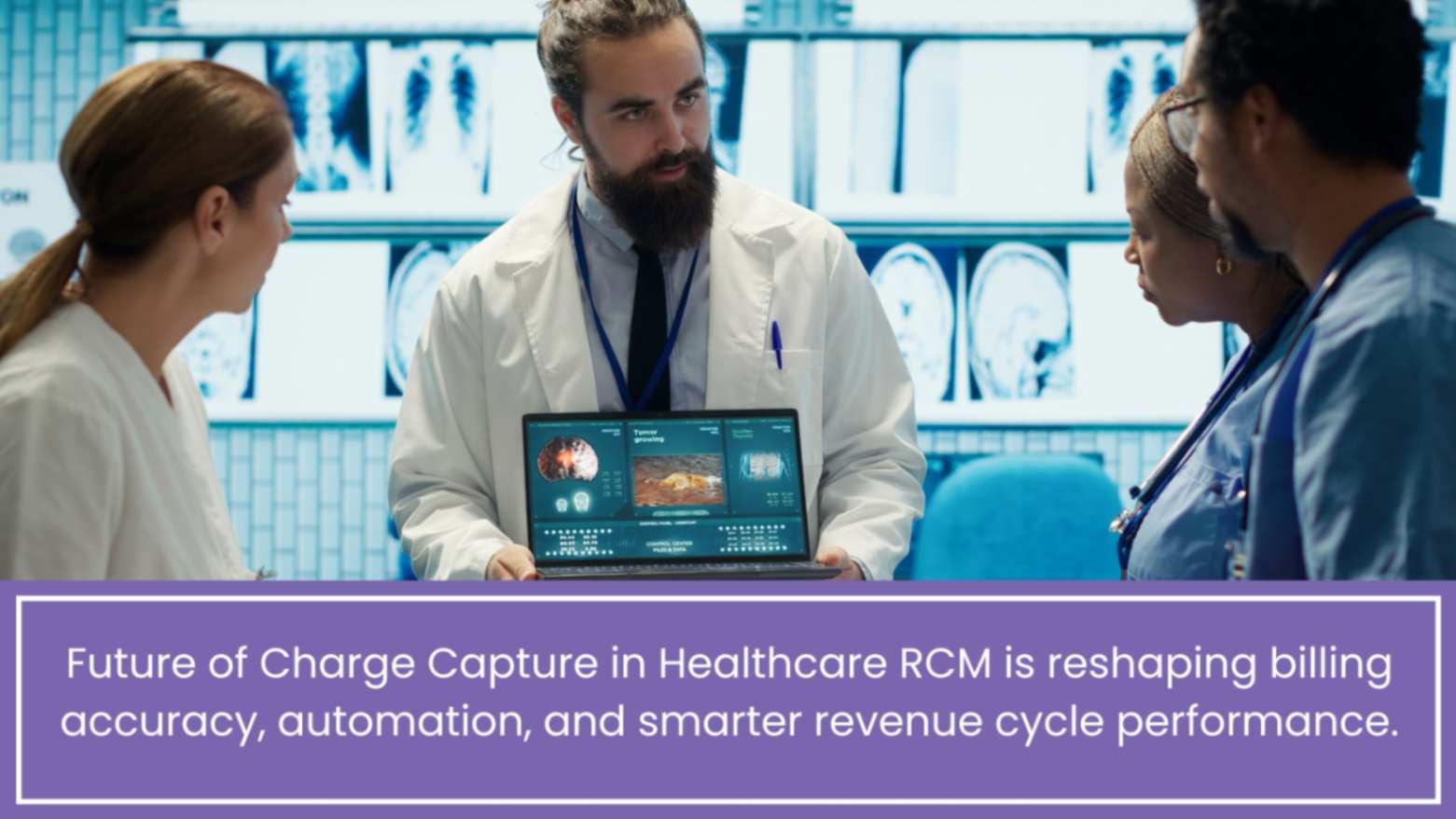
Future of Charge Capture in Healthcare RCM
Healthcare organizations today face constant financial pressure. Reimbursement models are changing. Documentation rules are stricter. And billing processes are becoming more complex.In this healthcare environment, charge capture plays a crucial role.
If services are not captured correctly, providers cannot bill for them.
At Practolytics, we often see practices losing revenue because of missed charges. Sometimes a service was performed but never documented. In other cases, documentation was delayed or incomplete.
These small issues can lead to major financial losses. That is why the Future of Charge Capture in Healthcare RCM is becoming a top priority for healthcare organizations.
Modern systems are designed to make billing easier and more accurate.
They help providers:
- Capture services instantly
- Reduce missed charges
- Improve coding accuracy
- Speed up claim submission
- Reduce billing errors
- Increase reimbursements
These innovations are driving new Charge capture trends in healthcare. Healthcare providers are now investing in smarter tools that support Revenue Cycle Management charge capture with automation and predictive insights.
The goal is simple. Capture every service accurately and bill it correctly.
Table of Contents
What is Charge Capture in Revenue Cycle Management?
Charge capture is the process of recording every billable service provided to a patient. Each service must be documented and converted into a billing code.
If this step fails, providers may lose revenue.
That is why Healthcare charge capture is one of the most important steps in revenue cycle management. A typical charge capture process includes several stages.
1.Service Documentation
First, the physician documents the services performed during the patient visit.
Examples include:
- Patient consultations
- Medical procedures
- Diagnostic tests
- Therapies
- Medical supplies used
Accurate documentation is essential.
Without it, coding and billing cannot be completed correctly.
2.Medical Coding
Next, medical coders translate documentation into standardized billing codes.
These codes include:
- CPT codes
- ICD-10 diagnosis codes
- HCPCS codes
Correct coding ensures proper reimbursement.
3.Charge Entry
Once coding is completed, charges are entered into billing systems. These systems prepare claims for submission.
4.Claim Submission
Finally, the claim is submitted to insurance companies. If any errors exist, the claim may be denied.
This is why healthcare organizations are focusing on Evolving charge capture in RCM. Modern tools help reduce manual work and improve billing accuracy.
Key Trends Transforming the Future of Charge Capture
Healthcare technology is evolving rapidly. Several new trends are shaping the Future of Charge Capture in Healthcare RCM.
Let’s look at some of the most important ones.
1.Real-Time Charge Capture
Traditionally, physicians documented services hours after seeing patients. This created problems. Doctors might forget small details. Some services were never recorded. Real-time charge capture solves this issue.
With real-time systems:
- Services are documented immediately
- Billing data is captured instantly
- Errors are reduced
These systems also help Streamline claims charge capture and reduce billing delays.
2.Mobile Charge Capture
Doctors often move between multiple locations during the day. Mobile charge capture tools allow them to record services using smartphones or tablets.
Benefits include:
- Faster documentation during round
- Easy access to billing systems
- Reduced paperwork
Mobile tools have become an essential part of modern Charge capture healthcare workflows.
3.Predictive Revenue Analytics
Predictive analytics is transforming billing processes. These tools analyze historical data and identify billing gaps.
For example, predictive systems can:
- Detect missing procedures
- Identify incomplete documentation
- Suggest additional billable services
These innovations support Predictive charge capture RCM and help providers recover lost revenue.
3.Revenue Cycle Analytics
Analytics platforms help providers monitor billing performance.
Dashboards can track:
- Charge lag days
- Coding accuracy
- Missed charge rates
- Denial trends
These insights support better decision-making and improve Accurate billing charge capture trends.
Role of Automation in Charge Capture
Automation is one of the biggest drivers of the Future of Charge Capture in Healthcare RCM. Manual billing workflows require significant effort from administrative teams. Automation simplifies these processes.
At Practolytics, we help healthcare providers implement automated Revenue Cycle Management charge capture workflows that improve efficiency and accuracy.
Let’s explore how automation helps.
1.Automated Documentation Review
Automation tools scan physician notes and check whether the documentation supports billing codes.
This helps ensure:
- Complete documentation
- Coding accuracy
- Compliance with payer rules
2.AI-Assisted Coding
Artificial intelligence can analyze clinical documentation and suggest correct billing codes. This improves coding speed and accuracy. It also supports AI tools for RCM charge capture.
Benefits include:
- Faster coding workflows
- Reduced human errors
- Improved documentation quality
3.Charge Reconciliation
Automation tools compare scheduled services with documented procedures. If something is missing, the system alerts billing staff. This helps identify missed charges and improves Charge capture trends in healthcare.
4.Automated Workflow Alerts
Billing teams often struggle to track incomplete documentation.
Automation tools send alerts when:
- Documentation is missing
- Charges are incomplete
- Claims need review
These alerts help Streamline claims charge capture and prevent revenue leakage.
5.Benefits of Automation
Automation brings several advantages.
Healthcare providers can experience:
- Faster billing processes
- Lower operational costs
- Fewer coding errors
- Improved compliance
- Reduced administrative workload
These improvements contribute to Cost savings charge capture healthcare.
Charge Capture in Value-Based Care Models
Healthcare reimbursement models are changing. Many providers are shifting toward value-based care. In these models, payments depend on patient outcomes rather than service volume. This shift affects the Future RCM charge capture strategies used by healthcare organizations.
Providers must now track more data.
This includes:
- Patient outcomes
- Preventive care activities
- Care coordination services
- Population health metrics
Modern Charge capture healthcare systems must support these requirements.
Key capabilities include:
- Integration with EHR systems
- Quality reporting tools
- Care management documentation
- Analytics dashboards
At Practolytics, we help practices adapt their Revenue Cycle Management charge capture processes to support both traditional billing and value-based care models.
Key Performance Metrics for Future Charge Capture Systems
Healthcare organizations must track performance metrics to improve billing processes. These metrics help identify gaps and optimize revenue. Here are some key indicators.
1.Charge Lag
Charge lag measures the time between service delivery and charge entry. Lower lag improves billing efficiency and speeds reimbursements.
2.Charge Capture Rate
This metric shows how many billable services are successfully captured. Improving this rate supports Charge capture trends in healthcare.
3.Coding Accuracy
Coding accuracy measures how correctly documentation is translated into billing codes. Higher accuracy reduces claim denials.
4.Denial Rate
Incomplete documentation often leads to claim denials. Monitoring denial rates helps improve Streamline claims charge capture.
5.Revenue Leakage
Revenue leakage refers to lost income caused by missed services or incorrect documentation. Reducing leakage improves Accurate billing charge capture trends.
Emerging Technologies Shaping the Next Generation of Charge Capture
Technology continues to reshape the Future of Charge Capture in Healthcare RCM. Several innovations are driving this transformation.
1.Artificial Intelligence
AI tools analyze clinical notes and identify billable services automatically. These technologies improve coding efficiency and support AI tools for RCM charge capture.
2.Natural Language Processing (NLP)
NLP tools read physician documentation and convert it into structured billing data.
Benefits include:
- Faster documentation review
- Improved coding suggestions
- Reduced manual work
3.Integrated EHR Platforms
Modern EHR systems integrate documentation, coding, and billing workflows. This integration supports Evolving charge capture in RCM and improves data accuracy.
4.Predictive Analytics
Predictive systems analyze billing patterns and identify potential revenue risks. These tools support Predictive charge capture RCM and help prevent missed charges.
5.Cloud-Based Revenue Systems
Cloud platforms provide flexible access to billing tools and analytics dashboards.
Advantages include:
- Real-time financial insights
- Better scalability
- Reduced IT costs
These platforms also support Cost savings charge capture healthcare initiatives.
Conclusion:
The Future of Charge Capture in Healthcare RCM is clearly moving toward smarter, faster, and more automated systems. Manual processes and delayed documentation simply don’t work anymore. Today’s healthcare practices need tools that capture services in real time, reduce missed charges, and improve billing accuracy without adding extra workload for physicians.
At Practolytics, we help providers simplify Healthcare rcm charge capture by combining automation, predictive analytics, and experienced revenue cycle support. Our goal is simple—we help practices capture every billable service, reduce administrative stress, and keep revenue flowing smoothly. As Charge capture trends in healthcare continue to evolve, practices that adopt modern technology and smarter workflows will be better prepared for long-term financial success.
1.How will automated charge capture impact my practice’s revenue accuracy in the future?
Automated systems make charge capture much easier. They scan documentation, identify billable services, and flag missing information before claims go out. This reduces missed charges and improves Accurate billing charge capture trends, helping practices protect their revenue and submit cleaner claims.
2.What technologies are shaping the future of charge capture in healthcare RCM?
Several technologies are shaping the Future of Charge Capture in Healthcare RCM. These include artificial intelligence, predictive analytics, integrated EHR systems, and automated documentation tools. Together, they help providers capture services faster, reduce errors, and improve overall billing efficiency.
3.Can AI-driven charge capture reduce missed charges in my medical practice?
Yes. AI systems analyze documentation and detect billing gaps. These AI tools for RCM charge capture help identify services that may otherwise be missed.
4. How will real-time charge capture improve billing efficiency for physicians?
Real-time systems allow physicians to document services immediately. This helps Streamline claims charge capture and reduces billing delays.
5. What role will EHR integration play in the future of charge capture?
Integrated EHR systems connect clinical documentation with billing workflows. This supports Evolving charge capture in RCM and improves data accuracy.
6. How can better charge capture reduce claim denials for my practice?
Accurate documentation and coding improve Revenue Cycle Management charge capture performance and significantly reduce claim denials.

ALSO READ – Simplifying Revenue Management: How Medical Billing Services Empower Small Practices
Talk to Medical Billing Expert Today — Get a Free Demo Now!