
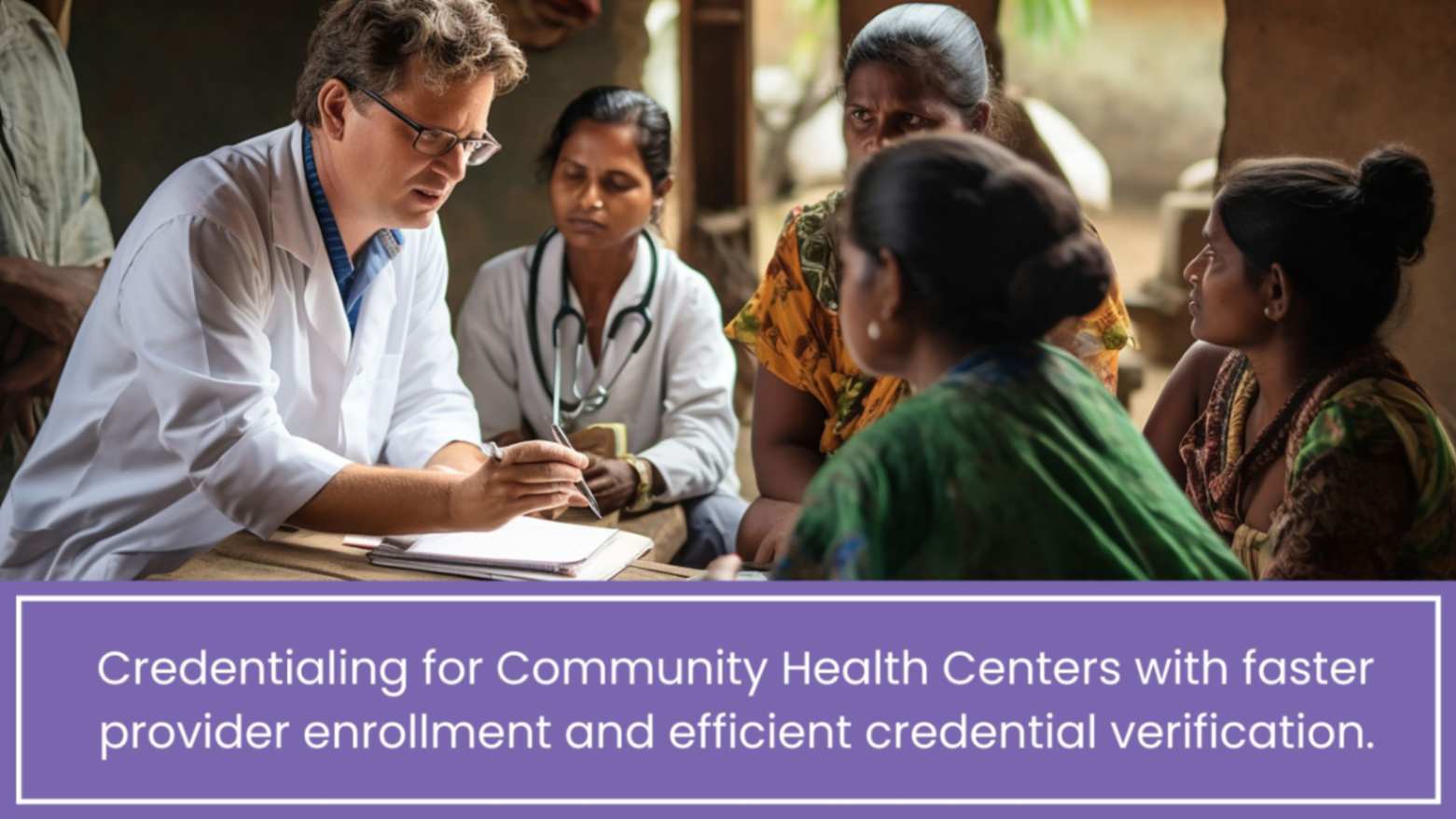
Credentialing for Community Health Centers
Community health centers help people every day. They care for families, seniors, and children in their local areas. Because of this, clinics must make sure every provider is qualified.
This is where Credentialing for community health centers becomes important.
Credentialing means checking a provider’s background before they start seeing patients. Clinics look at the provider’s education, licenses, and training. This helps confirm that the provider meets healthcare standards.
This step protects both patients and the clinic.
Without proper Medical credentialing Community Health Centers, clinics can face problems. Insurance claims may be rejected. Providers may not be approved to treat patients. Payments from insurance companies may also be delayed.
The full review system is called the CHC credentialing process.
For many clinics, this process takes time. Staff must collect documents, check provider details, and send applications to insurance companies.
Many community clinics have small teams. Managing these tasks alone can be difficult.
That is where we help.
At Practolytics, we make credentialing easier for healthcare organizations. Our Community Health Center Credentialing Services guide clinics through each step.
Through our CHC Provider Credentialing Services, we help with document collection, verification, and Health center provider enrollment Services. This helps providers start working sooner and allows clinics to focus on patient care.
Table of Contents
Why Credentialing is Critical for Community Health Centers?
Credentialing is not just paperwork. It protects patients and supports clinic operations.
For healthcare organizations, Credentialing for community health centers is essential.
1.Patient Safety
First, credentialing protects patient safety. Through CHC credentialing verification, clinics confirm that providers have the right education and training.
Clinics check:
- valid medical licenses
- completed medical education
- active certifications
This ensures patients receive safe care.
2.Insurance Billing
Providers must complete the CHC credentialing process before billing insurance companies.
Without approval, clinics cannot bill:
- Medicare
- Medicaid
- private insurance companies
Proper Medical credentialing Community Health Centers ensures clinics receive payment for their services.
3.Compliance
Healthcare organizations must follow many rules. Credentialing helps clinics meet these requirements. It supports compliance with healthcare regulations and payer policies. Because of this, Credentialing for community health centers is important for every clinic.
4.Clinic Efficiency
When credentialing runs smoothly, clinics operate better. Providers can begin seeing patients sooner. Clinics also avoid staffing gaps. Many healthcare organizations use Community Health Center Credentialing Services to improve efficiency.
Understanding Credentialing in Community Health Centers
The process of Credentialing for community health centers includes several steps. Each step confirms that a provider meets professional standards.
Step 1: Collect provider information
Clinics begin by gathering provider records.
These usually include:
- education history
- training records
- medical licenses
- board certifications
These details form the base of the Provider credentialing steps CHC.
Step 2: Verify credentials
Next comes CHC credentialing verification. Clinics confirm the provider’s records directly with official sources. These sources include licensing boards and educational institutions.
Verification ensures the information is accurate.
Step 3: CAQH credentialing
Many clinics also complete CAQH credentialing for health centers. CAQH is a shared system used by many insurance companies. Providers upload their credentials once, and insurers can review them.
Benefits include:
- less paperwork
- faster approvals
- easier updates
Step 4: Credentialing systems
Many clinics use Best CHC credentialing platforms to organize provider records. These systems help clinics track applications and monitor approvals.
Step 5: Initial credentialing
Once verification is complete, providers go through Initial credentialing community health centers. After approval, providers can begin seeing patients.
Step 6: Re-credentialing
Credentialing must be updated regularly. Providers complete Re-credentialing for CHCs every few years to keep credentials active.
Credentialing Requirements for Community Health Centers
Healthcare organizations must follow certain rules during Credentialing for community health centers.
These rules ensure providers meet professional standards.
Typical checks include verifying:
- medical school education
- residency training
- board certification
- state medical license
- DEA registration
- malpractice history
Clinics often use a Document checklist CHC credentialing to organize records.
This checklist helps teams collect documents quickly and avoid delays. Another important step is insurance enrollment.
Through Health center provider enrollment Services, providers apply to join insurance networks such as Medicare, Medicaid, and private insurers. The CHC Credentialing timeline usually ranges between 60 and 120 days.
At Practolytics, our CHC Provider Credentialing Services help clinics complete these steps smoothly.
Core Components of the Credentialing Process
A Best Credentialing for community health centers program includes several key stages.
1.Provider application
Providers first submit an application that includes their education, training, and work history. This begins the CHC credentialing process.
2.Credential verification
Next comes CHC credentialing verification, where clinics confirm credentials with official sources.
3.Insurance Enrollment
Providers then complete payer enrollment through Health center provider enrollment Services.
Many clinics also complete CAQH credentialing for health centers during this step.
4.Initial approval
After verification, providers complete Initial credentialing community health centers. This allows them to begin seeing patients.
5.Provider onboarding
Next comes Onboarding providers to Community Health Centers. This stage includes system access, training, and workflow guidance.
6.Re-credentialing
Finally, clinics track Re-credentialing for CHCs to keep provider credentials active.
Healthcare Credentialing Challenges in Community Health Centers
Managing Credentialing for community health centers can be difficult for many clinics.
Common challenges include:
1.Administrative workload
Credentialing requires collecting and reviewing many documents. This can overwhelm clinic staff.
2.Different payer rules
Insurance companies have different credentialing requirements. These differences can slow the CHC Credentialing timeline.
3.Small administrative teams
Many clinics operate with limited staff. Managing Community clinic Credentialing becomes challenging.
4.Missing documents
Incomplete records from the Document checklist CHC credentialing can delay approvals.
5.Tracking Renewals
Monitoring Re-credentialing for CHCs can also be difficult without proper systems.
Strategies to Improve Credentialing Efficiency
Improving Credentialing for community health centers doesn’t have to be complicated. A few simple steps can make the process much smoother.
Start with a clear Document checklist CHC credentialing. This helps clinics gather all the required documents early and avoid delays.
Using Best CHC credentialing platforms can also help. These tools make it easier to organize provider records and track applications.
It’s also important to keep an eye on the CHC Credentialing timeline. When clinics track timelines, they can quickly follow up if something is delayed.
Many clinics also work with experts who offer Community Health Center Credentialing Services. This helps reduce the workload for clinic staff.
At Practolytics, our CHC Provider Credentialing Services help clinics verify provider credentials, manage payer enrollment, and stay compliant with healthcare rules.
Conclusion:
Managing Credentialing for community health centers is an important part of running a clinic. Providers must be verified before they begin seeing patients, which helps protect patient safety and maintain compliance.
The CHC credentialing process usually includes collecting documents, completing CHC credentialing verification, submitting payer applications, and finishing Health center provider enrollment Services.
At Practolytics, our Community Health Center Credentialing Services help clinics handle these steps smoothly. We support everything from document management to Re-credentialing for CHCs, helping clinics onboard providers faster and focus more on patient care.
1. How long does credentialing take for doctors joining a community health center?
The CHC Credentialing timeline usually takes 60 to 120 days.
The exact time depends on the insurance company and how fast documents are verified.
The process usually includes:
- submitting provider documents
- checking medical licenses
- review by insurance companies
- final provider approval
Once these steps are done, the provider can begin treating patients.
2. What documents do physicians need for credentialing at community health centers?
Doctors must submit several documents listed in the Document checklist CHC credentialing.
Common documents include:
- medical license
- education certificates
- board certifications
- DEA registration
- malpractice insurance details
- work history
These records help complete Medical credentialing Community Health Centers.
3. Why is provider credentialing required before doctors can see patients in community health centers?
Credentialing for community health centers helps clinics confirm that providers are qualified to treat patients.
Clinics review provider education, licenses, and training before allowing them to work.
This process helps to:
- protect patient safety
- follow healthcare regulations
- meet insurance company requirements
It also allows providers to join insurance networks.
4. How does credentialing affect a physician’s ability to bill Medicaid and Medicare in community health centers?
Doctors must complete Health center provider enrollment Services before billing Medicare or Medicaid.
The CHC credentialing process confirms that the provider is approved by insurance payers.
Without this approval, clinics cannot submit claims or receive payment.
5. What is the difference between credentialing and privileging for doctors in community health centers?
Credentialing checks a provider’s background.
It confirms education, licenses, and professional experience.
Privileging is different.
It decides which procedures or services a provider can perform in the clinic.
Both steps help maintain safe and compliant healthcare services.
6. How often do physicians need to be recredentialed in community health centers?
Most providers complete Re-credentialing for CHCs every two to three years.
During this process, clinics review:
- medical licenses
- certifications
- professional records
- work history
This ensures the provider’s credentials stay valid and up to date.
Read More – Prior Authorization Services for Podiatry : improving Patient Access and Care
Talk to Medical Billing Expert Today — Get a Free Demo Now!