
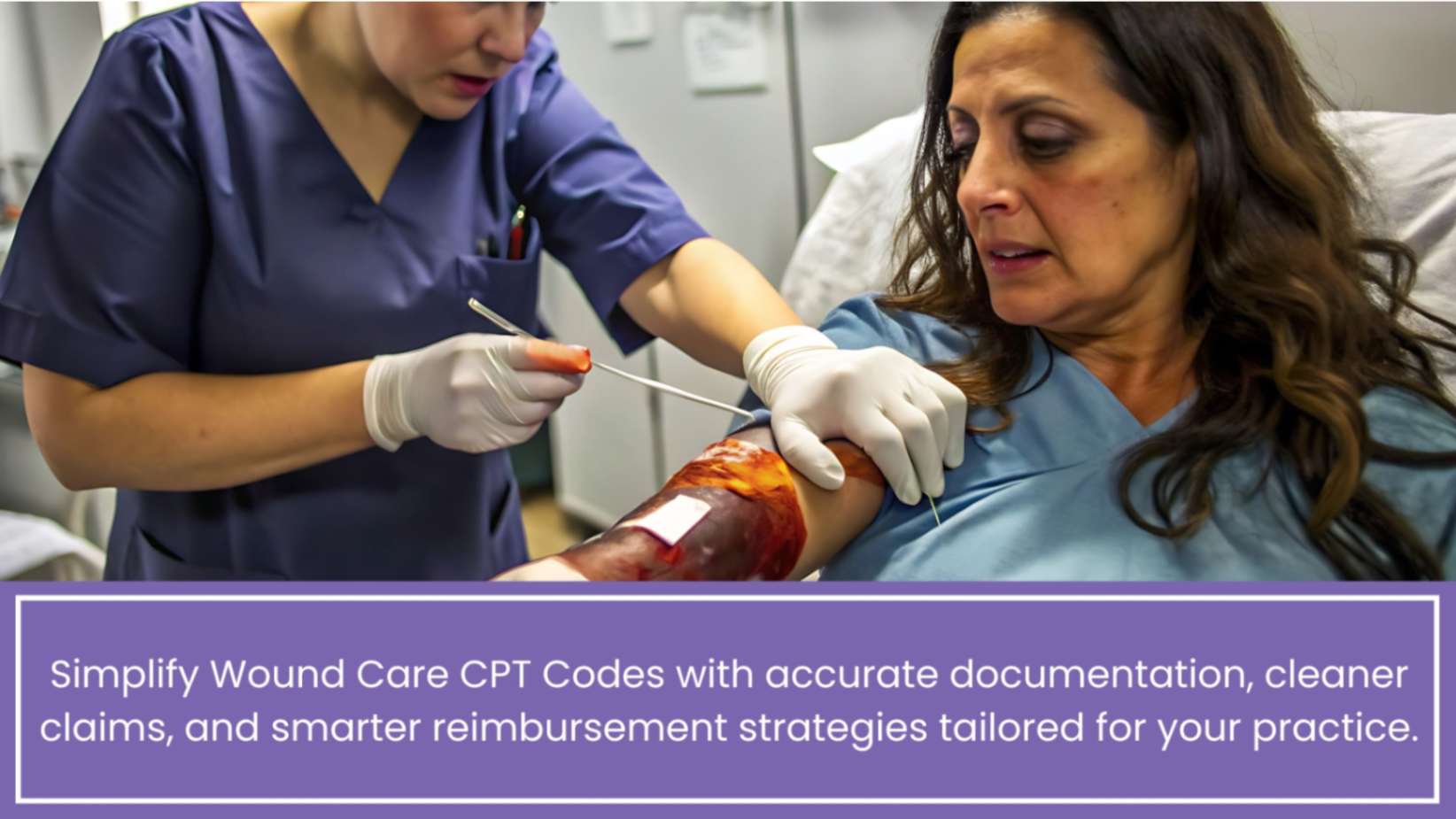
Wound Care CPT Codes
Getting paid on time starts with accurate coding. Many wound care practices lose money because of coding errors. Small mistakes can lead to denials and delayed payments. At Practolytics, we help providers improve their billing and coding process. We support more than 1,400 providers and over 180 practices across the United States. Our team processes nearly 5 million claims every year. In this guide, we explain wound care cpt codes in simple words. We also share easy billing tips that can help improve collections and reduce claim problems.
Wound care billing can be challenging. Different wounds need different codes. Every payer has its own rules. Even a small mistake can delay payment. That is why proper coding matters.
At Practolytics, we help providers improve billing and coding. We know how important clean claims are.
Good coding helps practices:
- Reduce denials.
- Improve cash flow.
- Increase collections.
- Save time.
- Avoid unnecessary rework.
This guide explains wound care cpt codes in simple words.
We will cover:
- Common codes.
- Debridement coding.
- Documentation requirements.
- Billing tips.
- Ways to reduce denials.
Table of Contents
Wound Care CPT Codes: The 2026 Comprehensive Billing Guide
Knowing the correct code is important. Wrong codes can lead to denied claims. They can also slow down reimbursements.
Common wound care cpt codes include:
- 97597 for selective debridement up to 20 square centimeters.
- 97598 for each additional 20 square centimeters.
- 11042 for subcutaneous tissue debridement.
- 11043 for muscle and fascia.
- 11044 for bone.
- 97605 for negative pressure wound therapy up to 50 square centimeters.
- 97606 for wounds larger than 50 square centimeters.
Choosing the right cpt code for wound care depends on:
- Wound size.
- Tissue depth.
- Procedure type.
- Medical necessity.
- Documentation.
Many providers keep a wound care coding cheat sheet nearby. This helps coders work faster and reduce mistakes. At Practolytics, we help practices improve coding accuracy and maximize revenue.
Why Accurate Wound Care CPT Coding Matters?
Good coding affects revenue. Poor coding creates problems.
It can lead to:
- Denials.
- Delayed payments.
- Lost revenue.
- More paperwork.
- Compliance risks.
Good wound care billing and coding helps practices:
- Get paid faster.
- Reduce errors.
- Improve collections.
- Increase cash flow.
- Stay compliant.
Coding mistakes are one of the main reasons claims are denied.
That is why accurate coding should always be a priority. At Practolytics, our team reviews claims carefully before submission. This helps reduce errors and improve collections.
Good wound care billing supports a healthy revenue cycle.
How to Choose the Right CPT Code for Wound Care?
Choosing the right wound care cpt code is important. Several things should be considered.
Look at Tissue Depth
Depth matters.
The provider should document whether the wound involves:
- Skin.
- Subcutaneous tissue.
- Muscle.
- Fascia.
- Bone.
Different tissue levels require different codes.
Measure the Wound
Measurements are important.
Always document:
- Length.
- Width.
- Depth.
- Surface area.
Missing measurements often cause denials.
Simple details make a big difference.
Understand Debridement Types
Many providers ask about cpt selective vs non selective wound debridement. Selective debridement removes only unhealthy tissue. Non-selective debridement is different. Surgical debridement reaches deeper tissue layers.
Common cpt codes for wound debridement include:
- 11044
- 11045
- 11046
- 11047
- 11048
Understanding cpt selective vs non selective wound debridement helps reduce billing mistakes.
Document Everything
Documentation is very important.
Include:
- Wound size.
- Tissue depth.
- Procedure details.
- Instruments used.
- Medical necessity.
- Patient response.
Strong notes support the correct cpt code for wound care. Good documentation also protects practices during audits.
Best Practices for Wound Care Coding
Simple habits can improve collections. They also reduce claim denials.
Keep Complete Notes
Never skip details.
Document:
- Measurements.
- Tissue depth.
- Procedure performed.
- Supplies used.
- Medical necessity.
Good notes improve coding accuracy.
Use a Coding Guide
Many practices use a wound care coding cheat sheet.
It helps:
- Save time.
- Improve accuracy.
- Reduce mistakes.
- Train new employees.
Keeping an updated wound care coding cheat sheet helps staff stay current.
Train Staff Often
Coding rules change.
Insurance companies update policies regularly.
Training helps teams:
- Reduce errors.
- Improve compliance.
- Increase collections.
- Build confidence.
Well-trained teams create fewer billing issues.
Submit Claims Quickly
Fast claims improve cash flow. At Practolytics, claims are submitted within 24 hours.
Quick submissions help practices:
- Receive payments sooner.
- Reduce aging claims.
- Improve revenue.
Review Denials
Denials should never be ignored. Our team reviews denials every day. This helps identify problems early.
Reviewing denials helps:
- Recover revenue.
- Reduce future errors.
- Improve claim quality.
Strong wound care billing and coding creates long-term success.
Advanced Strategies: Minimize Claims Denials & Audits
Denials slow down payments. The good news is that many denials can be avoided.
Match Diagnosis Codes Correctly
Diagnosis codes should support the procedure. Wrong diagnosis codes often lead to denials. Correct code pairing improves claim acceptance.
Review Claims Before Submission
Simple checks help prevent problems.
Review:
- Measurements.
- Modifiers.
- Provider signatures.
- Procedure notes.
Small reviews can prevent major delays.
Stay Updated on Payer Rules
Insurance companies change rules often. Knowing payer requirements helps improve clean claims. This reduces rework and improves collections.
Pay Attention to Debridement Coding
Auditors often review cpt codes for wound debridement.
Providers should clearly document:
- Tissue depth.
- Instruments used.
- Wound size.
- Medical necessity.
Clear notes help avoid audits.
Perform Internal Reviews
Internal reviews help find problems early.
Regular audits can:
- Improve coding quality.
- Reduce denials.
- Prevent revenue loss.
- Improve compliance.
At Practolytics, we monitor claim trends to identify problem areas.
Track Accounts Receivable
Old claims affect cash flow. Practices should follow up regularly. Quick follow-up helps improve collections. Our team aggressively works on accounts receivable balances. We focus on reducing AR days and improving payments.
Use Technology
Technology improves efficiency. Automation reduces manual work. Analytics help identify billing problems. At Practolytics, we use advanced tools to improve claim performance.
This helps practices:
- Increase collections.
- Reduce costs.
- Improve efficiency.
Work With Revenue Cycle Experts
Billing takes time. Providers should focus on patient care. We take care of the rest.
Practolytics provides:
- Medical billing.
- Medical coding.
- Credentialing.
- Denial management.
- Accounts receivable follow-up.
- Pre-authorizations.
- Reporting and analytics.
We support more than 1,400 providers and over 180 practices. Our team serves over 28 specialties. We process nearly 5 million claims every year. Our goal is simple.
We help practices improve revenue and reduce stress.
Conclusion
Accurate wound care cpt codes are important for every wound care practice. Small mistakes can lead to denied claims and delayed payments. Good coding and documentation improve revenue and reduce stress. At Practolytics, we help providers simplify billing and coding. Our experienced team works as an extension of your practice. We focus on accuracy, faster reimbursements, and better financial results. This allows providers to spend less time on paperwork and more time caring for patients.
FAQs
What are the most common wound care CPT codes?
Common wound care cpt codes include:
- 97606
- 97607
- 97608
- 97609
- 97610
- 97611
- 97612
These codes are widely used for debridement and negative pressure wound therapy.
How do I know whether to use selective vs surgical debridement?
It depends on tissue depth. Selective procedures remove unhealthy tissue only. Surgical procedures involve deeper tissue.
Always document:
- Depth.
- Wound size.
- Instruments used.
- Medical necessity.
Good notes support proper coding.
What documentation avoids common denials?
Include:
- Wound measurements.
- Tissue depth.
- Procedure details.
- Medical necessity.
- Progress notes.
- Provider signature.
Strong documentation improves wound care billing and reduces denials.
Which CPT codes apply to NPWT billing?
Negative pressure wound therapy usually uses:
- 97606
- 97607
Documentation should include wound size and medical necessity.
How do I link ICD-10 codes with wound care CPT codes effectively?
Link diagnosis codes with the procedure performed.
Include:
- Wound type.
- Severity.
- Measurements.
- Treatment details.
Clear documentation improves reimbursement and supports clean claims.
ALSO READ – The Importance of Documentation in Wound Care Revenue Cycle Management (RCM)
Talk to Medical Billing Expert Today — Get a Free Demo Now!