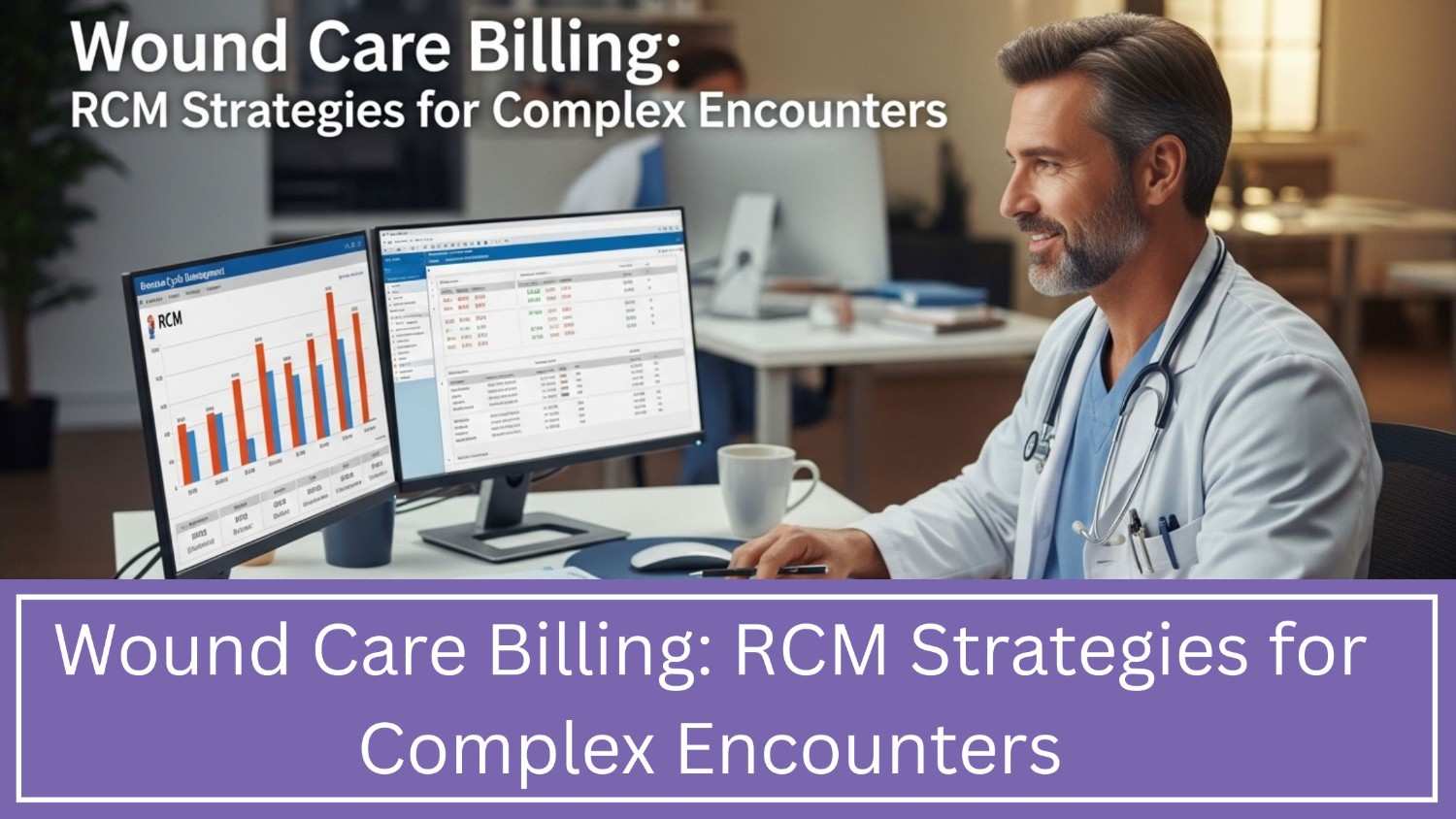
Why Wound Care Clinics Fail Without Full Billing
Wound care clinics do vital work, but billing problems quietly eat away at profits. Incorrect coding, unpaid claims, and delayed reimbursements waste time and cash. Why Wound Care Clinics Fail Without Full Billing comes down to missed details—skipping coverage checks, choosing the wrong codes, or ignoring denials. Cutting corners doesn’t save money; it loses it. When every billing step is handled end to end, revenue leaks close, rejections drop, payments arrive faster, and care teams stay focused on patients instead of paperwork.
Table of Contents
Why Wound Care Clinics Struggle Without Full-Service Billing
Running a wound care clinic is tough. You heal patients, but you also need a steady income. That’s why medical billing matters.
Many clinics deliver excellent care but struggle with billing. Slow or incorrect billing can lead to late payments, denied claims, and stressed staff. Cash flow suffers. Teams spend more time fixing paperwork than treating patients.
This blog shows why wound care clinics need expert billing support—and how the right partner keeps your clinic thriving.
What Is Wound Care Billing?
Wound care billing turns treatments into revenue. Here’s how it works:
- Check insurance coverage
- Code services correctly
- Send claims to payers
- Record payments
- Fix rejected claims
- Bill patients when needed
Every step keeps cash flowing.
Wound care is more than basic treatment. Patients often face:
- Diabetes
- Poor blood flow
- Burns
- Infections
- Ongoing care needs
Each case needs frequent visits, dressings, special supplies, and expert care. Proper billing for every service matters.
Why Billing Errors Hurt Clinics
When billing isn’t done right, clinics face real problems:
1. Late Payments
Mistakes on claims slow down insurance payouts. Without that cash flow, clinics struggle to cover payroll and supplies.
2. Rejected Claims
Wrong claims get thrown out. Fixing errors eats up staff time and cuts into profits. Every denial means extra work to refile.
3. Staff Stress
Billing takes work. When staff constantly fix errors throughout the day, they tend to burn out. This hurts care and costs good people.
4. Money Left Behind
Wrong codes and missed charges add up. One skipped wound care visit? That’s thousands gone—every time.
Why Wound Care Billing Is Hard
Let’s understand why wound care billing is tough.
1. Multiple Services, One Visit
A single wound care visit can include:
- Cleaning wounds
- Changing bandages
- Using vacuum therapy
- Skin grafts
- Lab work
- Doctor consultations
Each service needs its own billing code.
2. Different Payers, Different Rules
Wound care clinics deal with:
- Medicare
- Medicaid
- Private insurers
- Workers’ comp
- Managed care plans
Each payer has unique payment rules.
3. Complex Coding Rules
Wound care billing uses:
- CPT codes for treatments
- HCPCS codes for materials
- ICD-10 codes for conditions
Wrong codes mean denied claims.
4. Medical Necessity
Insurers need clear proof that services were needed. Weak notes lead to rejections.
5. Supplies and Devices
Special wound items like dressings or pumps need exact codes. Errors lose money.
Bottom line: Wound care billing demands precision, effort, and know-how.
The Cost of Bad Billing
When billing fails, money is lost.
Here’s what clinics deal with:
- Denied claims cut revenue by up to 30%
- Medical coding mistakes push payments back 1–2 months
- Unpaid claims often never get paid
- That hurts your bottom line.
One clinic struggled with a 25% denial rate before we streamlined their billing. After our fix? Denials fell below 5%. Revenue flowed faster.
Why does this matter? Because delayed payments hurt:
- Paychecks arrive late
- Supplies run low
- Upgrades get postponed
- Owners lose sleep
Billing isn’t paperwork—it’s keeping the lights on.
Step-by-Step: What Full-Service Billing Covers
Full-service billing puts everything in one place—no chasing paperwork or fixing mistakes later. Here’s the breakdown:
1. Insurance Check First
We verify coverage, wound care benefits, and approvals *before* the patient arrives. Less hassle, fewer denied claims.
2. Crystal-Clear Notes
Doctors detail the treatment, the reason for it, and progress. Straightforward notes lead to faster approvals.
No fluff, no surprises—just billing that works.
3. Accurate Coding
Our coders specialize in wound care billing. They get it right the first time:
- Correct procedure codes
- Accurate supply charges
- Precise diagnosis matching
4. Clean Claims
Every claim is checked twice. Fewer rejections mean faster payments.
5. Payment Tracking
We log every dollar the same day. Know what’s paid, what’s pending—no guesswork.
6. Denial Management
When claims get denied, pros handle it right:
- Spot the rejection reason
- Correct the core problem
- Send it back fast
- Stop repeats
7. Patient Billing
Patients pay more upfront now. Straightforward bills mean quicker payments. Full-service billing wraps it all together neatly.
Where Split Billing Fails
Many practices juggle billing in scattered steps:
- The front desk gathers patient details
- Doctors document visits
- Team assigns procedure codes
- Managers chase payments
- This disjointed process costs time and money.
- This looks good in theory, but here’s what actually happens:
- No one takes ownership.
- Mistakes pile up between teams.
- Money slips through the cracks.
- The same denials keep coming back.
Data proves it—practices using patchy billing systems wait 15–20% longer to get paid than those with end-to-end solutions.
Trending Changes in Billing (2025–2026)
Medical billing is evolving fast, and wound care practices can’t afford to lag. Here’s what’s changing:
1. Tech Is Handling the Grunt Work
Modern tools now:
- Check coverage in seconds
- Spot gaps in records
- Recommend accurate codes
- Process payments automatically
The days of manual entry are ending.
2. Insurers Play Hardball
Payers now require:
- Proof treatments are needed
- Every detail documented
- Perfect coding
Skip one step, and rejections pile up.
Adapt or get left behind.
3. Real-Time Insurance Checks
No more guesswork—verify coverage before treatment. Fewer denials, faster payments.
4. AI Catches Mistakes Early
Smart tools flag billing errors before claims are sent. Less backtracking, more clean submissions.
5. Patients Pay Faster When It’s Easy
Give them:
- Digital bills
- One-click payment
- No surprises
Result? Cash flow improves.
Real Problems Clinics Face Without Full-Service Billing
Let’s hear some common billing headaches:
Scenario 1: Skipped Approval
A clinic forgets to get pre-approval for wound care. The insurer denies payment. Now the team wastes half a day scrambling to fix it.
Scenario 2: Coding Mix-Up
A dressing change and debridement need separate codes. Someone lumps them together. The claim bounces back—more paperwork, more delays.
Scenario 3: Missed Insurance Update
A patient changes plans during care. The team misses it. The claim bounces, and now we redo the paperwork.
Scenario 4: Delayed Payment Log
Money arrives but sits unrecorded for days. The books show overdue balances that aren’t real, slowing collections.
Bottom line: When billing isn’t tracked end-to-end, these gaps cost time and cash.
Signs Your Clinic Needs Full-Service Billing
Ask yourself:
- Do payments come in late?
- Are rejections stacking up?
- Is your unpaid revenue older than 30 days?
- Does your team waste hours fixing errors instead of serving patients?
- Are bills confusing your patients?
If “yes” to any, your billing system is broken.
Benefits of Full-Service Billing
Full-service billing works for your bottom line:
1. Fast Cash Flow
Clean claims mean faster insurance payouts.
2. Less Hassle
Experts handle details, so denials drop.
3. Free Up Your Team
Staff spend time on care, not coding.
4. Clear Billing
Patients get simple, easy-to-read bills—fewer questions, faster payments.
5. Steady Cash Flow
Reliable payments keep payroll covered and fuel practice growth.
6. Smarter Tracking
Spot revenue trends and fix money drains before they hurt profits.
Trends Shaping Wound Care Billing in 2026
As we approach 2026, billing is changing fast:
1. Pay for Results
Clinics get paid for good patient outcomes, not just services. Accurate billing shows your work delivers.
2. See Your Money Now
Live dashboards track payments, rejections, and patterns so you always know where you stand.
3. Enhanced Denial Prevention Tools
Smart tools spot billing errors before claims are sent.
4. Patient-Friendly Payment Tools
Easy online pay, flexible plans, and simple bills help clinics collect faster.
Clinics with good billing partners win with these changes.
Young vs. Experienced Clinics: A Billing Problem
New clinics often handle billing themselves at first. Then they see how complex it is.
Smart clinics know better. They see billing differently:
It’s not an expense — it’s how you get paid.
Clear, steady processes and know-how keep cash flowing.
Key Takeaways
Wound care billing is tricky. You need to get it right.
- One mistake slows down payments.
- Insurance updates happen often—stay ready.
- Partial billing costs time and cash.
- End-to-end medical billing means steadier work, quicker results, and faster pay.
- Good tools save effort.
Clear bills mean happy patients and quicker money.
Conclusion: Practolytics and Better Billing for Wound Care Clinics
Wound care clinics don’t fail patients—they get stuck in billing headaches. The problem isn’t care quality. It’s paperwork piled too high to tackle alone.
Practolytics cuts through the mess. We fix billing so you can focus on healing.
Here’s how we help your clinic:
- Check insurance fast
- Code claims right the first time
- Stop denials before they happen
- Get paid faster
- See clear reports that make sense
No more guessing. Just smooth billing.
Practolytics mixes tech with billing pros who know wound care well.
- Stop chasing claims.
- Stop surprise denials.
- Stop slow payments.
Care for patients—we’ll handle billing.
Get paid fast.
Get paid right.
Every time. With Practolytics.

ALSO READ – Simplifying Revenue Management: How Medical Billing Services Empower Small Practices
Talk to Medical Billing Expert Today — Get a Free Demo Now!