
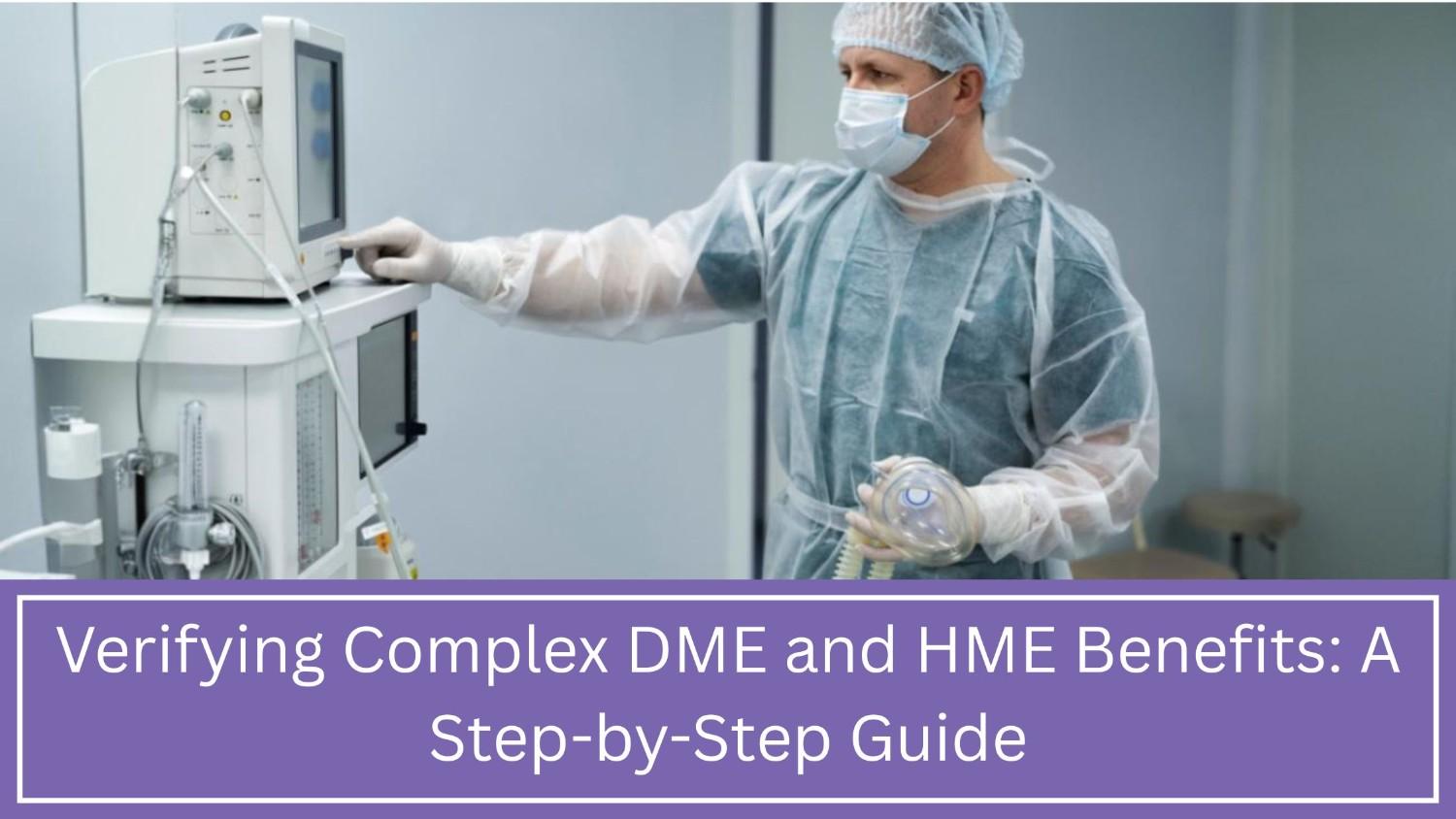
Verifying Complex DME and HME Benefits A Step-by-Step Guide
Verifying Complex DME and HME Benefits A Step-by-Step Guide explains why benefit checks in 2026 have become harder than ever. Rules keep shifting, insurers tighten their checks, and even minor errors lead to instant rejections. This guide walks you through every critical step: confirming eligibility, checking covered items, managing prior authorization, reviewing documentation, calculating patient responsibility, and avoiding delays. It also covers how AI-driven claims tools, real-time API integrations, Medicare updates, and growing home-care needs are changing the verification process. By following these steps, your clinic or DME/HME supply business can cut mistakes, reduce headaches, and speed up payment cycles.
Table of Contents
Why DME/HME Benefit Verification Matters More in 2026
Durable Medical Equipment (DME) and Home Medical Equipment (HME) help patients every day, including wheelchairs, CPAP machines, hospital beds, and more. But getting paid for them? That’s the hard part. Every order needs benefit checks, strict rules, and perfect paperwork.
By 2026, it’s gotten tougher. Insurance rules change daily. Tech complicates things. Denials pile up. Providers must confirm coverage right before shipping anything.
This guide breaks it down step by step—plain and practical—so clinics, DME suppliers, and billing teams cut mistakes, fight denials, and get paid faster.
1. More DME/HME claims mean more denials
Demand for home medical equipment is growing fast. Patients prefer home recovery, and hospitals discharge quicker. This pushes DME/HME orders to record highs.
But more claims bring more mistakes—insurers are rejecting them for:
- Missing patient notes
- Incorrect medical billing codes
- No prior approval
- Eligibility checks skipped
Data shows denials jumped 18–25% (2024–2026), hitting these hardest:
- Oxygen gear
- Power wheelchairs
- Diabetes monitors
- Braces
2. Payers tightened medical policies
Medicare, Medicaid, and private insurers now require:
- More paperwork
- Tighter proof of need
- Extra approval steps
- Different rules for renting vs. buying gear
Even tiny errors—wrong code, wrong dates, or missing forms—mean rejected claims.
3. Technology changed everything
AI, automation, and rapid technology now enable insurers to process claims in seconds. This speeds things up, but watch out—tiny mistakes get rejected quicker.
4. Higher patient responsibility
Deductibles, co-insurance, and rental-to-buy options often confuse patients. When costs aren’t clear, clinics face:
- Unpaid bills
- Too many phone calls
- Cancelled orders
Checking benefits upfront cuts these issues.
5. More audits
DME/HME audits are happening more often. Medicare and private insurers need solid proof before paying. Good records keep your money safe when they check.
Common Problems Clinics Face With DME/HME Verification
DME and HME claims take more work than standard claims. Common roadblocks teams face:
- Different rules for rentals vs buys
- Hard-to-use payer websites
- Lost patient notes
- Incorrect diagnosis codes
- Missing doctor sign-offs
- Slow prior auth approvals
- Forgetting to bill secondary insurance
- Payers requesting more details weeks later
Each delay means slower payments.
2026 Trends That Impact DME/HME Benefit Verification
1. Real-time insurance APIs
Most insurers now offer instant benefits checks through APIs, but coverage details vary. Some provide full breakdowns—others just confirm eligibility. Don’t assume consistency.
2. Electronic Prior Authorization (ePA)
Medicare Advantage and commercial plans are pushing ePA hard. If your practice still faxes forms, expect delays. Digital tools cut approval times in half.
3. Stricter docs for expensive gear
Power chairs, oxygen tanks, and glucose monitors need a paper trail:
- In-person visits
- Chart notes
- Test results
- Pre-approval
- Proof they’re still needed
Skip steps, and claims get denied.
4. Home care demand surges
Aging patients and cost-cutting push more DME to homes. Clinics face rising workloads and tighter margins.
5. AI claims crackdown
Insurers now use bots to scan paperwork, catching errors instantly. Results:
- Denials hit faster
- Mistakes cost more
- Fewer “human exception” approvals
6. Medicare Advantage gets tougher
2026 rule changes mean:
- New billing codes to learn
- Less time for approvals
- More hoops to jump through
Step-by-Step Guide: Verifying Complex DME/HME Benefits in 2026
Below is a streamlined process to speed up your clinic’s claims processing.
Step 1: Get all patient details upfront
Before contacting insurers or verifying coverage, ensure you have:
- Full patient info (name, DOB, contact)
- Copies of both primary and secondary insurance cards
- Referring to the doctor’s name and NPI
- Exact service date and location
- Correct diagnosis code (ICD-10)
- Specific equipment code (HCPCS)
- Number of units needed
- Clear note if rental or purchase
Incomplete paperwork leads to delayed payments. Get it right the first time.
Step 2: Check Eligibility and Plan Type
Confirm that insurance is valid by answering:
- What plan does the patient use?
- What are the active coverage dates?
- Medicare Advantage or Original Medicare?
- Medicaid: primary or secondary payer?
- Any plan exclusions or carve-outs?
Many insurers partner with DME suppliers:
- Medicare: local DME providers
- UnitedHealthcare: Optum
- Aetna: CareCentrix
- Medicaid: specialized DME vendors
Always verify the correct supplier for medical equipment.
Step 3: Verify Coverage for the Specific DME/HME Code
Coverage differs by plan. Verify this first:
- Is HCPCS code ______ covered?
- Rental-only or purchase-only option?
- Can it convert from rental to purchase?
- Is it a capped rental?
If covered:
- Required docs?
- Prior auth needed?
- Allowed amount?
If denied:
- Alternative options?
- Secondary coverage available?
This cuts down on unexpected rejections.
Step 4: Check Prior Authorization Rules
Many items need approval first:
- Wheelchairs
- CPAP machines
- Hospital beds
- Oxygen gear
- Custom orthotics
- CGM devices
- Breast pumps
- Infusion pumps
Ask insurers:
- Is prior auth needed?
- What medical notes do they want?
- Which forms to send?
- How fast do they decide?
- How long does approval last?
Always note the PA reference number.
Step 5: Confirm Patient Out-of-Pocket Costs
Patients must understand their costs upfront.
Ask insurers about:
- Unpaid deductible
- Visit fees
- Shared costs
- Rental fees (if any)
- Full price (if buying)
- Rental caps
Clear cost talks prevent:
- Arguments
- Missed visits
- Unpaid bills
Step 6: Validate Physician Documentation
Documentation must prove medical need:
- In-person visit
- Signed notes
- Clear diagnosis
- Past treatments tried
- Lab reports
- Medicine orders
Claims get denied when:
- Notes repeat
- Dates don’t match
- No signatures
- Need isn’t clear
Strong records protect your payments.
Step 7: Check Frequency Limits and Replacement Rules
Most DME coverage has set timelines:
- Braces: Replace every 1–3 years
- Wheelchairs: 5-year cycle
- Nebulizers: 5-year limit
- CPAP supplies: Monthly or quarterly
- CGM sensors: Fixed schedule
Key questions for payers:
- When was the last device issued?
- Is replacement approved?
- What proof is required?
This cuts duplicate claims and rejections.
Step 8: Verify Secondary Insurance (If Any)
Secondary insurance can help pay for:
- What’s left on your deductible
- Your share of costs (coinsurance)
- Rental fees for equipment
Key checks before billing:
- Who pays first? (COB)
- Is Medicare secondary? (MSP)
- Medicaid rules if it’s your backup plan
Get COB wrong, and claims get denied. Fast.
Step 9: Document Everything Clearly
Keep a basic DME/HME checklist with:
- Payer contact name
- Call date
- Case reference number
- Coverage details
- Prior authorization numbers
- Patient costs
- Usage limits
- Rental vs. purchase rules
Clear records shield your clinic from audit risks.
Step 10: Share Findings With Billing and Clinical Teams
Once verification is done:
- Share details with billing.
- Tell the clinical team about PA guidelines.
- Notify the patient of payment.
- Add files to EHR.
This ensures a smooth workflow.
Real Issues That 2026 Clinics Are Reporting
Based on recent data from healthcare providers:
1. More claims are denied when chart notes are missing
This happens most with wheelchairs and breathing machines.
2. Slow systems cause delays
Medicaid and other payer websites often crash or run too slowly.
3. Prior authorizations keep rising
Doctors now send 20–30% more requests for medical equipment approvals.
4. Patient cost confusion
Families struggle with unexpected bills.
5. Medicare Advantage wants more details
They check clinical notes more than Original Medicare.
6. Rent or buy rules shifted
Some plans push rentals to cut initial costs.
2026 Quick Tips to Avoid DME/HME Denials
- Always check the plan rules before starting.
- Use EPA tools—they speed up approvals.
- Know when exams must be in person.
- Recheck rental eligibility each month.
- Avoid vague notes—be specific.
- Update payer policies monthly.
- Fix denial codes at the source.
Tiny tweaks save big time weekly.
Recent News and Updates That Matter
1. Medicare adjusts 2026 DME pricing
Oxygen, mobility gear, diabetes supplies, and braces now have updated pay rates.
2. CMS tightens ePA deadlines
Medicare Advantage must approve or deny requests faster—no delays.
3. AI spots missing forms in seconds
Private insurers cut paperwork headaches by auto-flagging gaps.
4. Medicaid shifts DME suppliers
States drop old vendors, lock in new contracts for equipment.
5. Insurers ditch prior authorization on cheap items
Some low-cost products now skip approval red tape.
How Practolytics Helps With DME/HME Verification
Practolytics supports healthcare businesses nationwide by simplifying insurance verifications and approvals.
Here’s how we help your clinic or DME/HME business:
1. Insurance Coverage Checks
We verify patient benefits, coverage limits, and out-of-pocket costs—so you know what’s approved before delivery.
2. Prior Authorizations Made Easy
Our team handles paperwork fast, submitting complete requests to insurers without delays.
3. Denials? We Fix Them
If insurers push back, we craft strong appeals to recover lost revenue.
4. Works with Your System
Syncs smoothly with AdvancedMD EHRs and billing—no manual re-entry, just seamless workflow.
5. Live tracking
Clinics get instant updates on every equipment request.
6. Flexible support
Your team scales up or down based on patient demand.
7. Straightforward updates
Easy-to-understand info. No jargon. Just clear outcomes.
Practolytics helps clinics speed up payments, cut denials, and keep patients on track with the right gear.
Conclusion — DME/HME Verification Made Simple for 2026
DME/HME benefit checks got tougher in 2026. But your clinic doesn’t need to struggle. Stick to this easy workflow: verify eligibility, check coverage, confirm docs, know costs, and track everything.
Payers change rules often. Healthcare Prior authorizations stay tight. But with the right system, you can cut denials, save hours, and speed up approvals.
If DME/HME verifications slow you down, Practolytics helps. They handle checks, auths, denials, and billing—freeing your team for patient care, not forms. Less waiting. Fewer rejections. Steadier cash flow.
Read More – Prior Authorization Services for Podiatry : improving Patient Access and Care
Talk to Medical Billing Expert Today — Get a Free Demo Now!