
Insurance Conundrum in Couples Therapy: Challenges and Solutions
Couples show up for therapy together, but insurance was never really built to see it that way. This guide is written for healthcare professionals and practices. It covers the insurance conundrum in couples therapy navigating challenges and solutions for better reimbursement. We go through the CPT codes involved, why claims get denied so often, and what actually protects your reimbursement. We also cover how we, at Practolytics, support behavioral health practices through this.
Table of Contents
Couples Therapy Insurance Billing: Challenges and Solutions for Better Reimbursement
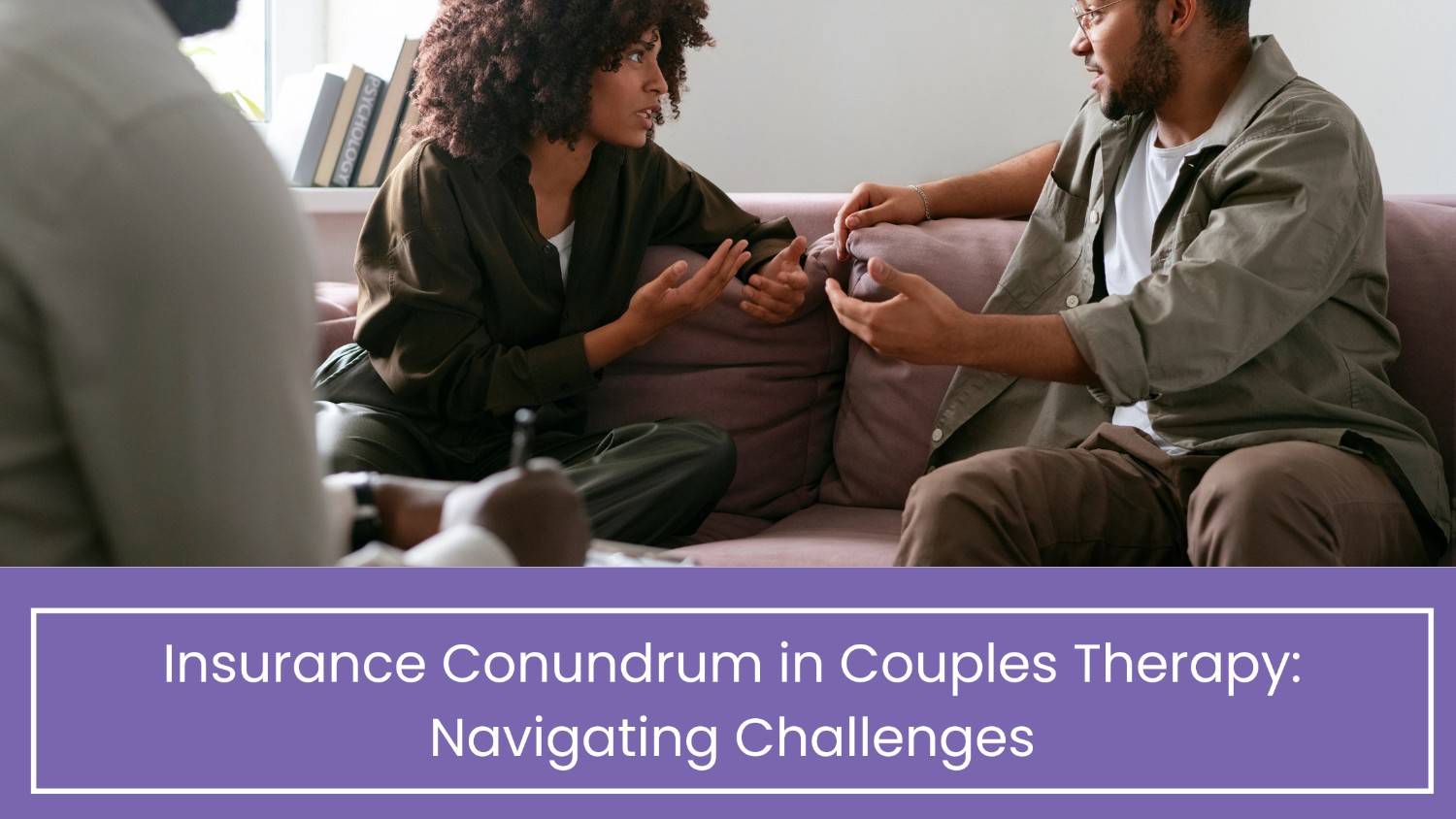
Say a couple comes in for therapy. Both partners are in the room, both are talking, both are clearly part of the work. But insurance doesn’t see two patients sitting on your couch. It sees one, and everything about how you bill that session depends on figuring out exactly who that one person is.
That’s the real conundrum here. Insurance was built around treating an individual’s diagnosed condition, not a relationship. Couples therapy has to fit into that framework somehow, and a lot of claims get denied simply because that fit wasn’t documented clearly. Let’s walk through how this actually works.
Why Is Insurance Billing for Couples Therapy So Complicated?
The complication comes down to one core mismatch. Insurance covers treatment for a diagnosed individual. Couples therapy treats a relationship.
- Most insurance plans require a single “identified patient,” meaning one partner has to carry the actual mental health diagnosis being treated.
- The other partner is technically present as part of that identified patient’s treatment, not as a covered patient in their own right.
- Insurance generally won’t cover therapy aimed purely at improving communication or resolving conflict, since that isn’t treatment for a diagnosable condition.
- You can’t bill both partners’ insurance plans for the same session, and you can’t bill it as two separate individual sessions either.
How is couples therapy billed really comes down to threading this needle. One diagnosed patient, one insurance plan, and a clear clinical reason the partner needed to be in the room.
Understanding CPT Codes for Couples Therapy
Two codes cover almost all couples and family therapy billing, and picking the right one depends entirely on who was actually present.
- CPT 90847 covers conjoint psychotherapy with the identified patient present. This is the code you’ll use most often for a standard couples session, with a typical length of 50 minutes and a minimum of 26 minutes to bill it at all.
- CPT 90846 covers family or couples therapy without the identified patient present, used when you’re meeting with the partner alone as part of that patient’s treatment.
- You can’t bill 90847 and 90846 on the same day for the same patient, and most payers won’t allow 90847 alongside an individual therapy code like 90837 on that same date either.
- Telehealth sessions need the correct modifier, typically 95 or GT depending on the payer, or the claim risks getting flagged for the wrong place of service.
Couples therapy cpt codes sound simple once you know the pattern, but the details around who’s present, and why, are exactly where claims tend to fall apart.
Common Couples Therapy Insurance Billing Challenges
A handful of recurring issues account for most of the denials practices like yours run into.
- Using Z63.0, the code for relationship distress, as the only diagnosis on the claim. This code describes a life circumstance, not a treatable mental health condition, and most payers won’t reimburse it as a standalone primary diagnosis.
- Missing documentation explaining why the partner’s presence was clinically necessary for the identified patient’s treatment, not just helpful in a general sense.
- Confusion over which partner is actually the identified patient, especially in practices that don’t clearly establish this from the very first session.
- Billing 90847 when the identified patient wasn’t actually present, which creates a direct mismatch between the code and the clinical note.
- Missing prior authorization on plans that cap the number of covered family or couples sessions.
None of these are exotic mistakes. They’re the everyday reality of couples therapy billing, and they show up constantly across practices doing genuinely good clinical work.
How to Improve Couples Therapy Reimbursement?
A few consistent habits protect your reimbursement far more than any single fix.
- Establish one identified patient clearly, from the very first session, and keep billing consistent to that person going forward.
- Use a real ICD-10 diagnosis for that patient, typically an F-code like depression, anxiety, or PTSD, not a relationship code alone.
- Document the clinical reason the partner needed to be present, tied specifically to the identified patient’s treatment goals.
- Check for prior authorization requirements or session caps before treatment starts, not after a denial shows up.
- Avoid switching which partner is “the patient” between sessions, since this creates confusing, inconsistent records that raise red flags during review.
Improve charge capture accuracy and reimbursement together by treating these steps as part of your intake process, not an afterthought handled once billing already feels stuck.
Documentation Best Practices for Couples Therapy Claims
Strong documentation is really your best defense here, both for getting paid and for protecting your practice if a claim ever gets reviewed.
- Name every person present in the session, and their relationship to the identified patient.
- Include a specific line connecting that session to the identified patient’s diagnosis and ongoing treatment plan.
- Record actual session length, since both CPT codes have minimum time requirements attached.
- Keep notes distinct from session to session, avoiding generic language that could apply to any patient on any day.
- Reference the treatment plan directly, showing that couples or family therapy is a deliberate, documented part of that plan, not a one-off addition.
What to Do When a Couples Therapy Claim Is Denied?
Denials happen even with careful billing, and how you respond matters just as much as how you submitted the original claim.
- Review the specific denial reason first, rather than assuming it’s simply a documentation problem.
- Check whether the diagnosis code used actually supports medical necessity, or whether Z63.0 ended up standing alone.
- Confirm the correct CPT code was used for who was actually present in that specific session.
- Strengthen the medical necessity language in your appeal, tying the session clearly back to the identified patient’s treatment.
- Track denial patterns over time, since a repeat issue points to something worth fixing in your process, not just that one claim.
How Revenue Cycle Management Can Support Behavioral Health Practices?
This is where we come in. At Practolytics, we help behavioral health practices manage the specific complexity couples and family therapy billing involves.
- We help confirm the identified patient and diagnosis are documented clearly and consistently.
- We review CPT code selection against session documentation before claims go out.
- We track prior authorization and session limits, so your practice doesn’t get caught off guard.
- We manage denials actively, identifying the real cause instead of just resubmitting the same claim.
- We support behavioral health practices with the same care we bring to every specialty we work with.
Conclusion
Couples therapy billing sits at a genuine mismatch between how insurance is built and how relationship-based care actually works. Understanding the identified patient concept, using the right CPT code, and documenting medical necessity clearly is most of what stands between a clean claim and a denial. At Practolytics, we help behavioral health practices navigate this consistently. If couples therapy billing has been a source of denials, we’d love to help fix that.
FAQs
Does insurance cover couples therapy?
Yes, but only when it treats a diagnosable mental health condition in one identified patient.
- Pure relationship or marriage counseling, without a covered diagnosis, generally isn’t reimbursable.
- Coverage depends on the specific plan, and some cap the number of sessions allowed.
- The partner attending is considered part of the identified patient’s treatment, not a separately covered patient.
What CPT code is used for couples therapy?
CPT 90847 when the identified patient is present in the session. CPT 90846 when the identified patient is not present, but a partner or family member is. The correct code depends entirely on who was actually in the room. These two codes generally can’t be billed together for the same day.
What is CPT code 90847?
It covers conjoint psychotherapy with the identified patient present. Typical session length is 50 minutes, with a minimum of 26 minutes required to bill it. It requires a real mental health diagnosis for the identified patient, not a relationship code alone. It’s the code most commonly used for a standard couples therapy session.
What is CPT code 90846?
- It covers family or couples therapy without the identified patient present.
- It’s used when you’re meeting with a partner or family member as part of the identified patient’s treatment.
- It carries the same documentation expectations as 90847, just without the patient physically there.
- It cannot be billed the same day as 90847 for the same patient.
Who is the identified patient in couples therapy?
The partner whose diagnosed mental health condition is actually being treated. This person’s diagnosis is what supports medical necessity for the whole course of treatment. It should be established clearly from the first session, and kept consistent going forward. Switching who’s considered the patient between sessions creates confusing, inconsistent documentation.
Whose insurance is billed for couples therapy?
- The identified patient’s insurance plan, and only that plan.
- You cannot bill both partners’ insurance for the same session.
- You also cannot split a couples session into two separate individual claims.
- Billing stays tied to the one identified patient throughout treatment.
Why do couples therapy insurance claims get denied?
- Using a relationship code like Z63.0 as the sole, primary diagnosis.
- Missing documentation explaining why the partner’s presence was clinically necessary.
- Using the wrong CPT code for who was actually present that session.
- Missing prior authorization on plans that limit covered sessions.
Does medical necessity matter for couples therapy reimbursement?
Yes, it’s really the foundation the whole claim rests on.
- The identified patient needs a genuine, diagnosable condition, not just relationship difficulty.
- Documentation has to tie the couples format directly to treating that condition.
- Without clear medical necessity, most payers will deny the claim regardless of how the code was billed.
How can Practolytics help with couples therapy billing?
- We help confirm the identified patient and diagnosis are documented consistently.
- We review CPT code selection against actual session documentation.
- We track prior authorization and session limits specific to each payer.
- We manage denials by identifying the real cause, not just resubmitting.
- We bring the same specialized attention to behavioral health billing that we bring to every specialty we support.
ALSO READ – Eliminating Prior Authorization Delays: Boosting Efficiency in Physical Therapy Billing
Talk to Medical Billing Expert Today — Get a Free Demo Now!