
Risk Adjustment Coding and Why It Matters for Healthcare
Risk Adjustment Coding is no longer just a coding topic—it’s a financial, compliance, and quality conversation. As payment models shift toward value-based care, accurate risk capture directly impacts reimbursement, provider performance scores, and audit risk. At Practolytics, we see many practices lose revenue not because care wasn’t delivered, but because documentation didn’t fully reflect patient complexity. In this guide, we break down how risk adjustment works, why specificity matters, and how providers can avoid costly errors. Our goal is simple: help you document smarter, code accurately, and protect the revenue you’ve already earned—without adding more administrative burden.
Risk adjustment coding has quietly become one of the most powerful drivers of healthcare reimbursement. Yet, it’s also one of the most misunderstood. Many providers still think of it as “extra documentation” or something only Medicare Advantage plans worry about. The reality is very different.
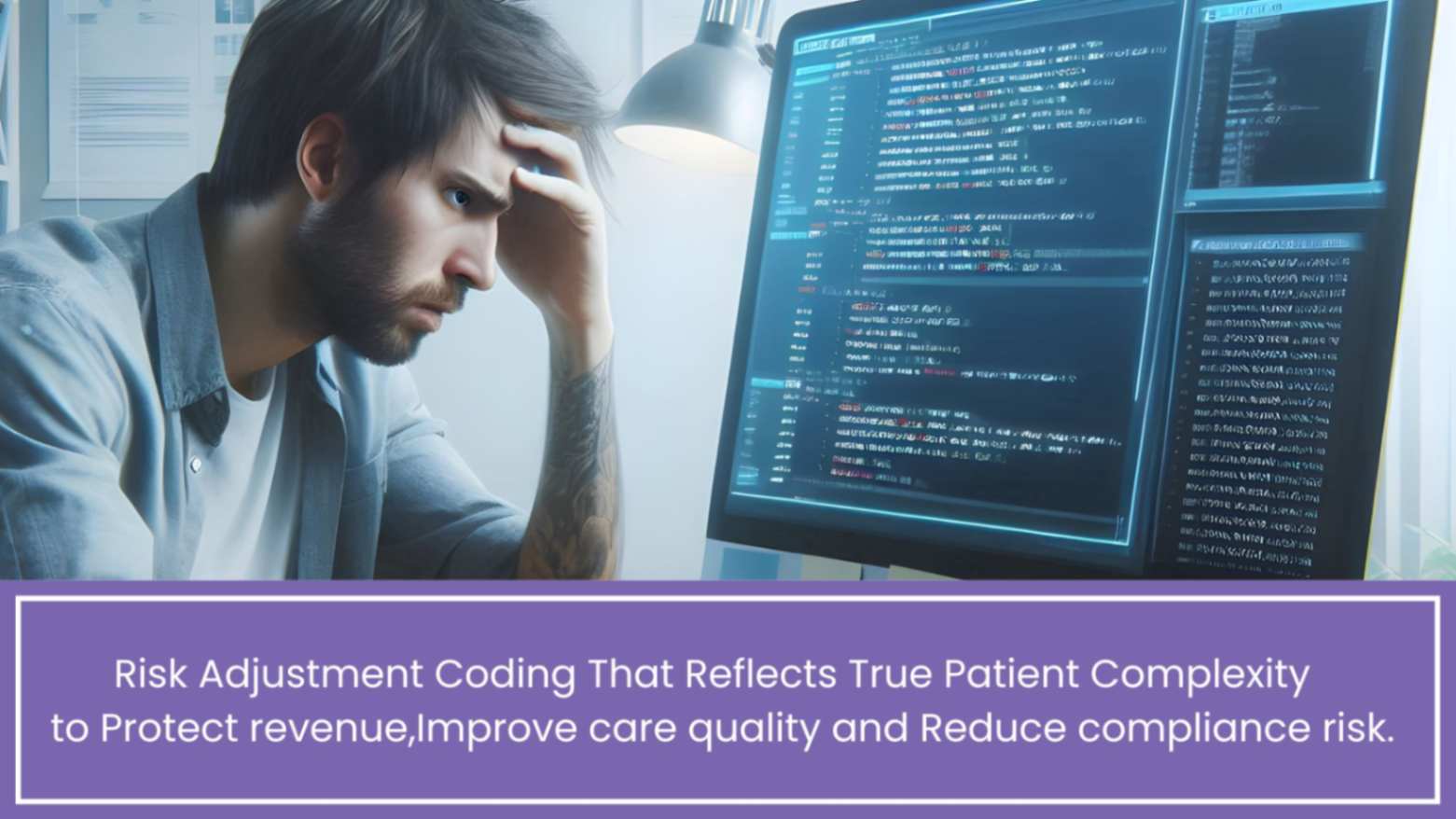
Risk Adjustment Coding and Why It Matters for Healthcare comes down to one core idea: accurately capturing how sick your patients truly are. When documentation and coding fail to reflect patient complexity, payment models assume patients are healthier than they actually are. That gap directly impacts revenue, staffing decisions, care coordination, and even quality rankings.
At Practolytics, we work closely with providers to close that gap—without turning documentation into a nightmare.
Table of Contents
Why Risk Adjustment Coding Is Now a Financial Imperative?
Risk adjustment used to feel optional. Today, it’s a financial necessity.
Payers now rely heavily on risk-adjusted models to determine reimbursement, shared savings, and quality bonuses. Medicare Advantage, ACA plans, and many commercial payers calculate payments based on diagnosis-driven risk scores. If those diagnoses aren’t fully captured, your revenue takes a hit—even when care delivery is excellent.
Here’s why it matters more than ever:
- Payers are tightening audits
- Quality scores affect public rankings
- Value-based contracts reward accuracy, not volume
- Under-coding is now just as risky as over-coding
This is where risk adjustment and healthcare revenue intersect. Accurate coding ensures you’re paid appropriately for the care you provide—not penalized for incomplete documentation.
What Is Risk Adjustment Coding?
At its core, risk adjustment coding in RCM is the process of translating patient conditions into diagnosis codes that reflect disease severity and complexity.
These codes—primarily ICD-10—feed risk models that predict future healthcare costs. The more accurate the coding, the more accurate the risk score.
This is why risk adjustment and ICD-10 codes must work hand in hand. A vague or unspecified code can dramatically understate patient risk, even if the condition is well-managed clinically.
Risk adjustment depends on:
- Clear provider documentation
- Accurate ICD-10 selection
- Annual recapture of chronic conditions
- Compliance with payer guidelines
Without all four, risk scores fall short.
How Risk Adjustment Works in Healthcare Payment Models?
Risk adjustment influences how payers calculate expected cost of care. Patients with multiple chronic conditions generate higher risk scores, which translate into higher payments to support their care needs.
Here’s a simplified breakdown:
1.Provider documents conditions during encounters
2.Coders assign appropriate ICD-10 codes
3.Diagnoses feed risk models (HCC, RAF, etc.)
4.Risk scores determine reimbursement levels
This is where how risk adjustment affects coding accuracy becomes critical. One missing diagnosis can lower a patient’s risk score for an entire year.
Strong clinical documentation improvement and risk adjustment processes ensure diagnoses are supported, current, and compliant—reducing audit exposure while maximizing accuracy.
Why Risk Adjustment Coding Matters for Healthcare Providers?
For providers, risk adjustment isn’t just about payment—it’s about sustainability.
Accurate risk adjustment supports:
- Fair reimbursement
- Better care coordination
- More accurate patient population insights
- Reduced audit risk
The advantages of risk adjustment coding extend beyond revenue. When risk scores reflect reality, care teams can allocate resources more effectively, identify high-risk patients earlier, and demonstrate true clinical complexity.
From our experience at Practolytics, practices that invest in risk adjustment coding benefits for providers see stronger financial stability and better performance under value-based contracts.
Connection Between Risk Adjustment and Value-Based Care
Value-based care rewards outcomes, efficiency, and patient complexity—not just services rendered.
Risk adjustment is the foundation that makes value-based care fair.
Without accurate risk capture:
- High-acuity providers look inefficient
- Quality scores appear weaker
- Benchmarks become unrealistic
This is why risk adjustment and provider reimbursement are inseparable. Accurate coding ensures providers aren’t penalized for treating sicker populations.
Strong risk adjustment coding for quality scores allows performance to be measured in context—protecting providers who care for complex patients.
Common Challenges in Risk Adjustment Coding
Let’s be honest—risk adjustment isn’t easy.
Common challenges in risk adjustment coding include:
- Time-limited visits
- Overuse of unspecified codes
- Missed chronic condition recapture
- Documentation-coding disconnect
Following risk adjustment coding guidelines and risk adjustment documentation requirements helps avoid these pitfalls.
We recommend focusing on:
- Problem list accuracy
- Annual chronic condition review
- Specificity in assessment and plan
- Consistent provider education
These best practices in risk adjustment coding reduce errors and support compliance.
Common Errors and How to Fix Them
Many practices struggle with risk adjustment coding errors and solutions simply because processes aren’t aligned.
Typical errors include:
- Copy-paste documentation without updates
- Unsupported diagnoses
- Inconsistent coding across visits
Applying risk adjustment coding compliance tips and routine internal reviews minimizes these risks.
Regular risk adjustment auditing best practices help catch gaps early—before payers do.
How Practolytics Supports Risk Adjustment Success?
At Practolytics, we don’t just code—we partner.
Our end-to-end RCM model supports:
- Accurate documentation workflows
- Specialty-specific coding expertise
- Real-time compliance monitoring
- Audit-ready reporting
We align risk adjustment with your broader revenue cycle, ensuring risk adjustment and healthcare revenue work together—not against each other.
With 1400+ active providers, 180+ practices, and coverage across 31 states, our teams understand the nuances of payer expectations and specialty-specific risk models.
Conclusion:
When we talk about Risk Adjustment Coding in Healthcare, it really comes down to one simple thing: telling the truth about your patients. Not a rushed version. Not a shortened version. The full, accurate picture of who they are and how complex their care actually is.
Today, healthcare payments are no longer based only on what you do during a visit. They’re based on how sick your patient population is expected to be over time. If your documentation doesn’t reflect that reality, the system assumes your patients are healthier than they truly are. That gap affects reimbursement, quality scores, benchmarks, and even how your practice is evaluated compared to others.
We see this every day. Providers deliver excellent care, manage multiple chronic conditions, and spend time coordinating treatment—but the documentation doesn’t always capture it clearly enough. As a result, revenue is left on the table, and practices feel pressure without understanding why.
At Practolytics, our goal is not to make providers document more. It’s to help them document smarter. Small changes in how conditions are assessed, linked, and updated can make a big difference in risk capture—without turning visits into paperwork marathons. When documentation and coding work together, practices stay compliant, audits become less stressful, and payments finally match the level of care being delivered.
Risk adjustment isn’t about finding loopholes or pushing boundaries. It’s about accuracy. When the full patient story is documented clearly and coded correctly, everyone benefits—the provider, the payer, and most importantly, the patient.
1. Why does my documentation need to be so specific?
Because payment models depend on what’s clearly written, not what’s implied. If a condition isn’t described with enough detail, it may not count toward risk adjustment at all. Specific documentation helps coders select the correct ICD-10 code and shows payers that the condition is real, current, and being managed. It also reduces confusion during audits and protects you if your claims are reviewed later.
2.Do I have to document every chronic condition at every visit?
No. You don’t need to list every chronic condition at every encounter. However, chronic conditions must be addressed and documented at least once each year to be captured for risk adjustment. That annual confirmation tells payers the condition still exists and is being actively managed. Even a brief status update is enough if it’s clear and relevant to the visit.
3.Does accurate risk adjustment actually increase my income?
In many cases, yes—but more importantly, it prevents revenue loss. Accurate risk adjustment ensures your patient population is represented correctly, which supports fair reimbursement under value-based and risk-based contracts. Many providers lose money not because they overcode, but because they under-document conditions they manage every day.
4.Is this just a fancy way of “upcoding” to get more money?
No. Risk adjustment is about accuracy, not exaggeration. Upcoding means reporting diagnoses that aren’t supported by the medical record. Proper risk adjustment only captures conditions that are documented, evaluated, and clinically valid. When done correctly, it’s fully compliant and reflects the true complexity of your patients.
5.What happens if I use “unspecified” codes?
Unspecified codes may be acceptable in some situations, but they often don’t impact risk scores and can raise audit concerns. Overusing them can lead to missed risk capture and lower reimbursement. When your documentation supports more detail, using specific codes helps ensure conditions are counted correctly and reduces future compliance risk.
ALSO READ – The Importance of Documentation in Wound Care Revenue Cycle Management (RCM)
Talk to Medical Billing Expert Today — Get a Free Demo Now!