
A Quick Examination of How Your Eligibility and Benefits Verification
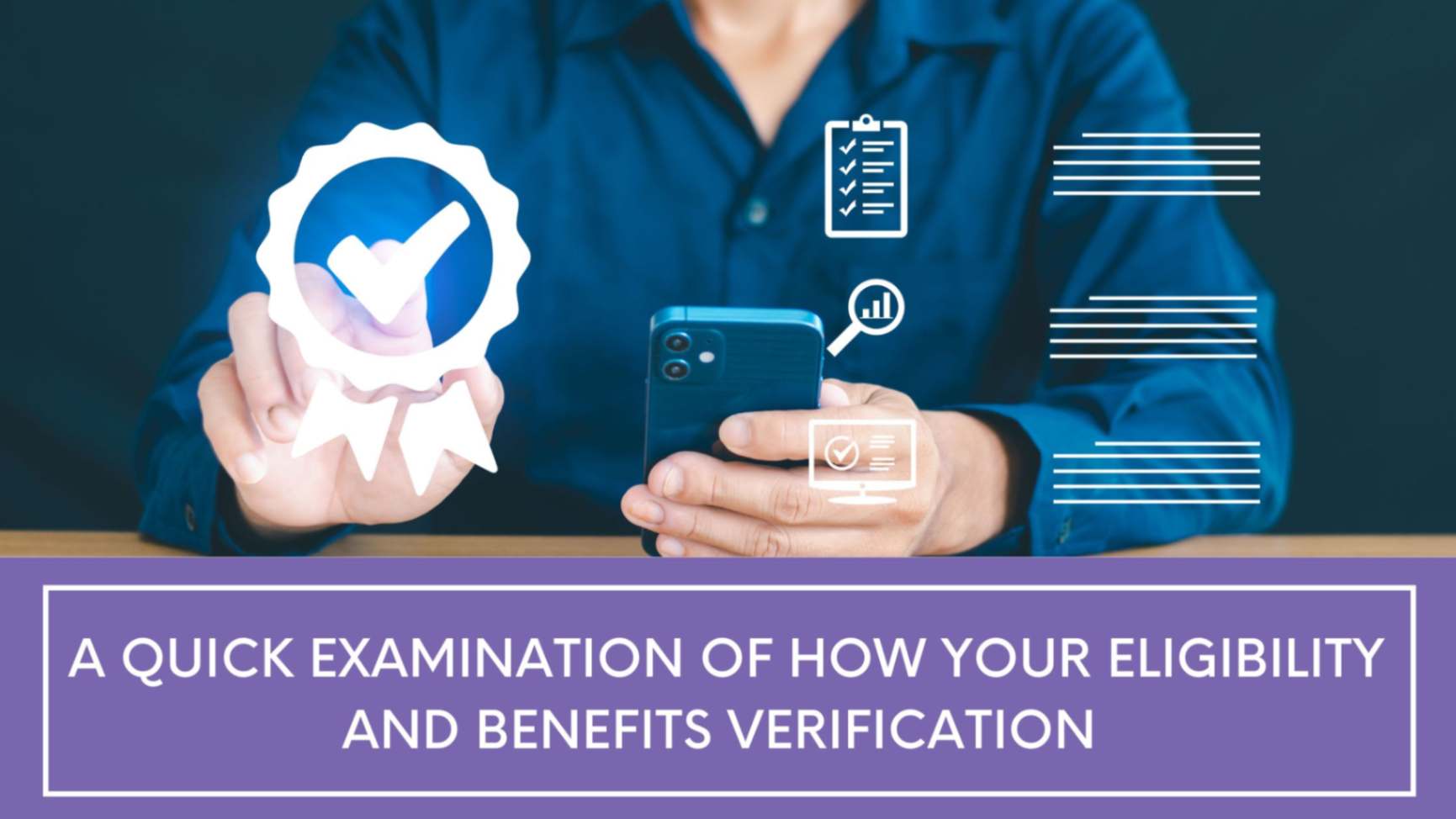
A quick examination of how your eligibility and benefits verification show why an active insurance card is only the starting point. Practices must confirm that coverage is effective for the date of service, the provider is in network, the planned service is covered, and the patient’s cost share is current. They also need to identify referral rules, visit limits, exclusions, coordination of benefits, and prior authorization requirements before care begins. A consistent front end process gives staff clearer answers, helps patients get ready for expected costs, and cuts down avoidable billing rework. The goal is not just to get an “active” response. It is to turn payer information into an accurate, documented financial clearance decision.
Eligibility asks, in plain terms, whether a patient’s policy is active on the date of service. Benefits verification goes a bit farther, like it looks under the hood. It checks whether the planned service is actually covered, which network rules kick in, how much of the deductible is left, what copay or coinsurance could show up, and if an authorization or referral is required. This split matters, because an “active” reply does not mean they will pay, not automatically.
People often underestimate the scale. In 2024 the CAQH Index said 31.5 billion medical eligibility and benefit verifications were done, which is a 5% annual increase. CAQH also estimated that more automation across everyday administrative exchanges could save the medical industry about $18.4 billion per year. Eligibility is already mostly electronic, but payer replies can still be incomplete, plan-specific rules add friction, and staff follow-up creates extra tasks. A solid process basically blends an electronic response with human review, especially when the outcome looks unclear
Table of Contents
Why Eligibility Verification Is the First Line of Defense Against Denied Claims?
Insurance problems surface early, even when practices discover them late. A policy may have terminated, the member ID may be wrong, the patient may have switched plans, or the service may fall outside the patient’s network. Other claims fail because a required referral or authorization was never obtained. Front-end verification catches these issues before they become unpaid balances, appeals, or uncomfortable billing calls.
Denials are not a minor exception. Experian Health’s 2025 State of Claims survey found that 41% of responding providers said at least one in ten claims was denied, up from 38% in 2024. The survey covers denials broadly, so it does not prove that eligibility caused every denial. It does show why practices cannot treat verification as a box-checking task. The safest approach is to train staff on how to check patient eligibility at scheduling, repeat the check close to the visit, and document the exact response.
Verification also protects the patient relationship. When staff check deductible status, verify co-pay amounts, and complete an out-of-pocket maximum check, they can provide a more defensible estimate before care. It is still an estimate, not a guarantee, because claims are adjudicated after the payer receives coding and clinical details.
How to Build a Reliable Eligibility Verification Routine?
Start at scheduling. Capture the patient’s legal name, date of birth, address, subscriber relationship, member and group numbers, payer name, and clear images of both sides of the insurance card. Compare these fields with the EHR instead of assuming last visit’s information remains correct. Run an instant eligibility verification when the appointment is created, then repeat the real-time insurance check 24 to 72 hours before the visit and again after any coverage change.
Use the following benefit verification checklist for every scheduled service. The table separates a basic eligibility response from the details staff must actively confirm.
|
Checkpoint |
What to confirm |
Risk if missed |
|
Coverage |
Effective and termination dates for the service date |
Inactive-plan denial |
|
Network |
Rendering provider, facility, and service location |
Out-of-network payment or patient balance |
|
Patient cost |
Remaining deductible, copay, coinsurance, and OOP maximum |
Inaccurate estimate or weak upfront collection |
|
Service benefit |
Covered service, exclusions, visit or frequency limits |
Noncovered-service denial |
|
Administrative rule |
Referral, prior authorization, precertification, or notification |
Authorization-related denial |
|
Other coverage |
Primary payer and coordination-of-benefits order |
Wrong-payer rejection or delay |
Table: Minimum verification fields for a service-level review.
Build exception queues rather than forcing staff to read every clean response. Flag inactive coverage, name mismatches, missing benefit fields, other insurance, high patient responsibility, network uncertainty, referral rules, and services that may need authorization. If you automate insurance eligibility, set a clear owner and deadline for every exception. Automation without follow-up simply produces faster unresolved work.
Document the payer, channel, date and time, representative or reference number, response details, and next action. Reverify recurring patients periodically and before high-cost services. Practices asking how to verify insurance coverage fast should focus on accurate data capture and exception handling, not speed alone.
Key Benefits of a Strong Eligibility & Benefits Verification Platform
A useful insurance eligibility tool should support real-time and batch inquiries, connect with the practice management system, normalize payer responses, and preserve an audit trail. Batch verification checks the next day’s schedule at once, while real-time checks handle new appointments and last-minute changes.
The business benefits are practical: fewer manual portal logins, earlier identification of coverage gaps, more consistent estimates, cleaner claims, and less rework. A reliable patient benefit lookup also helps staff explain financial responsibility without searching multiple payer sites during check-in. Good reporting should track response success, unresolved exceptions, eligibility-related denials, verification timing, and collections before service.
Do not buy a platform based only on a “real-time” label. Test payer reach, response completeness, batch limits, EHR integration, security controls, downtime procedures, and the ability to display service-level benefits. Even with good software, understanding insurance benefits requires trained staff who can recognize when the 271 response is incomplete or contradictory.
How to Contact Payers for benefits Verification
Start with the payer’s provider portal or a HIPAA 270/271 eligibility transaction. If the response lacks service-level detail, call the provider-services number shown on the card or portal. Have the patient identifiers, provider NPI and tax ID, date of service, place of service, planned CPT or HCPCS codes, diagnosis when relevant, and facility details ready.
Ask direct questions: Is the policy active for the service date? Is the rendering provider and facility in network? What deductible, copay, coinsurance, and out-of-pocket amounts apply? Are there visit or frequency limits? What insurance coverage limits or exclusions apply? Is a referral required? Finally, verify prior authorization needs, including the responsible utilization-management vendor and submission deadline.
Record the representative’s name or ID, call reference number, date, time, and exact answer. If the portal and representative disagree, escalate and keep both records. Never tell a patient that payment is guaranteed. State that benefits are quoted by the payer and remain subject to eligibility, coding, medical necessity, plan terms, and claim adjudication.
Conclusion:
A dependable eligibility process does more than just confirm that an insurance card is active. It sort of links coverage, the network status, patient responsibility, service limits, referrals, and authorization rules to the real visit. You can use electronic and batch checks for speed, then route unclear responses to trained staff before care actually starts. Reverify close to the service date, document every result, and keep track of eligibility-related denials. That combo gives patients clearer cost expectations and gives the revenue cycle a cleaner claim from the start. No verification can 100% guarantee payment, but a weak one almost guarantees avoidable rework.
1. How does batch eligibility verification save time?
It sends eligibility inquiries for a bunch of scheduled patients in one go, generally overnight or just before the workday. That way, staff can focus on exceptions, not endlessly checking every account by hand. How much time it saves really depends on how many appointments are coming through, how good the payer responses are, and if the results get handed over smoothly into the EHR.
2. Is it better to verify eligibility in-house or outsource it?
Neither option is, like, inherently better. In-house groups give you more precise control and faster back-and-forth communication, but then you still need staffing, training, and coverage when people are out or on absences. Outsourcing can bring in extra bandwidth and also longer operating hours, yet the whole process has to be audited for things like accuracy, turnaround time, security, documentation, and even how good the escalation really is.
3.What information is needed to run an eligibility check?
Most checks usually want the patient’s legal name, date of birth, member ID, payer, service date, and provider identifiers. Sometimes group number plus subscriber details plus the relationship to the subscriber, service type, and planned procedure info might be asked for, just to make sure the benefit review feels complete.
4. Should eligibility be verified for every visit or just new patients?
Make sure you verify every visit. Coverage, employer plan details, how benefits accumulate, network participation, and the authorization rules can shift between appointments, sometimes quietly. Doing only new-patient verification leaves the practice exposed to midyear changes in plans, as well as terminated coverage, and you’ll only notice after.
5. Why do claims get denied even when the patient has insurance?
Active insurance doesn’t automatically mean that every service is payable, not really. A claim can still be rejected over odd things like wrong demographics , a noncovered service, network limits or restrictions , and then missing authorization—also coordination of benefits confusion and coding errors too. Add medical necessity rules, the filing deadline that got missed, or benefits that are already exhausted, and you can see how it goes.
ALSO READ – Boost Your Profitability by Eligibility and Benefits Verification
Talk to Medical Billing Expert Today — Get a Free Demo Now!