
Medical Credentialing Services Companies in Seattle
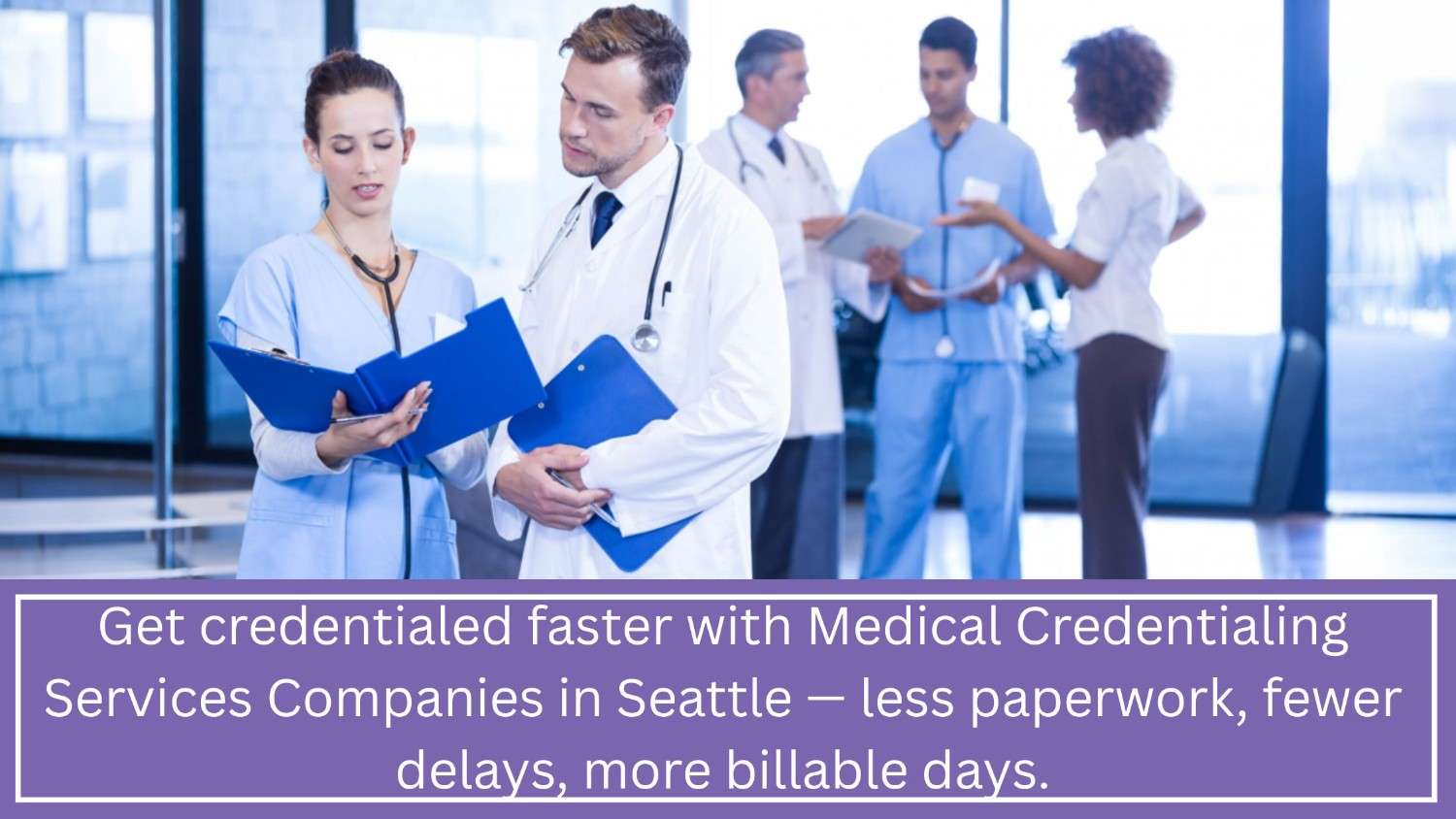
If you’ve started a clinic, hired a new physician, or added telehealth, you’ve probably felt the credentialing drain: forms, portals, phone waits, and months of uncertainty. Medical credentialing services companies in Seattle remove that drain. They handle enrollment with commercial payers, Medicare, and ProviderOne (Washington Medicaid), coordinate hospital privilege , and keep re-credentialing from becoming a surprise crisis. For Seattle practices — from solo docs to multisite groups — a local medical credentialing company in Seattle that knows regional payers and hospital systems can shave weeks off timelines, reduce denials, and stop revenue from leaking. This guide explains how and what to look for.
Table of Contents
Briefly introduce Medical Credentialing Services Companies in Seattle
Let’s be blunt: credentialing is the least glamorous part of running a clinic, but it’s also the gatekeeper to getting paid. No one likes it, and almost everyone underestimates how fiddly it is. That’s exactly why Medical credentialing services in Seattle exist — to take the paperwork, the follow-ups, and the stress off your team.
Think of them as the operational engine that quietly gets your providers enrolled with payers, adds them to hospital rosters, and keeps track of every expiration so nothing slips. A good provider credentialing services in Seattle vendor will ask for the right documents upfront, know which payer wants what, and push the submission so you actually get an Effective Date you can rely on.
If you’re opening a clinic, adding new providers, or expanding telehealth across state lines, hiring Seattle medical credentialing specialists is not a luxury — it’s practical triage. You want someone who can handle the mess and give you clean timelines and clear next steps.
Core Components of Effective Credentialing Services in Seattle
Credentialing isn’t magic. It’s process — repeated, tracked, and done carefully. Here are the parts that make a vendor good (or not):
Document collection and verification
The basics: license, DEA, board certificates, CV, malpractice info, education/residency primary source verifications. A top medical provider credentialing in Seattle team collects, checks, and stores these securely, then flags gaps immediately. No guessing.
Payer enrollment know-how
There are different ways to handle Medicare, commercial plans, and ProviderOne (Washington Medicaid). The professional credentialing services Seattle providers have are very experienced in knowing the specific filling out of forms, the peculiarities of portals and the timeframes for processing applications of the significant regional payers. That means you save weeks of effort into redoing the work.
Hospital privileging support
Privileging is its own headache: proctoring logs, procedure histories, and committee timelines. Vendors that handle credentialing services for doctors in Seattle will coordinate with medical staff offices so hospital privilege timelines and payer enrollments happen in harmony.
Tracking and transparent timelines
You should never wonder where you stand. Reliable suppliers offer visual tools that indicate the items waiting for action, the dates when they were handed in, and the periods when they are expected to get the nod. Get the indicators: enrollment duration, the rate of acceptance at the first attempt, and the time leading to the effective date.
Re-credentialing and maintenance
Credentialing is still in progress. An efficient outsourced medical credentialing services Seattle company not only automates the reminders for re-credentialing but also takes care of the renewals before they turn into issues.
Compliance and audit readiness
Saving documents that comply with HIPAA, carrying out exclusions/sanction checks, and having folders that are ready for audits are essential tasks that cannot be compromised. The top-notch medical credentialing and enrollment services in Seattle always check for provider sanctions and keep the records in good condition as part of their proactive work.
Human touch + process automation
Automation helps, but the human element is crucial for hospital committees and tricky appeals. Look for vendors who combine tech with clinician-reviewed documentation.
Seattle Healthcare Ecosystem & Credentialing Demand
Seattle is a unique market. You’ve got massive integrated systems, nimble clinics, mental health networks, growing telehealth players, and federally qualified health centers — all competing for the same payer panels and hospital privileges. That creates specific credentialing demands:
Local payer nuances
- Regional insurers and Seattle-area networks often have local rules. A generalist credentialing shop might miss those quirks; a Seattle medical credentialing specialist knows them. That saves you from resubmissions.
Hospital-specific privileges
- Big systems in Puget Sound frequently ask for extra documentation beyond standard credentials. Simulation training, proctoring records, or specialty procedure logs might be requested. A vendor familiar with local hospitals will already have those templates ready.
Telehealth and multi-state practice
- If your practice offers telehealth across Washington — or hires providers licensed in other states — you’ll face cross-jurisdictional enrollment issues. Physician enrollment and credentialing in Seattle firms experienced with telehealth can manage MTAs, state licensure checks, and payer rules for remote care.
Medicaid/ProviderOne expertise
- Washington’s ProviderOne has its own portal and timelines. Missteps here cost weeks. Look for vendors with a track record in Medical credentialing services in Seattle who have proven ProviderOne workflows.
Small clinics vs. large groups
- Solo providers need affordable, hands-on service; large groups want systems and scale. Seattle’s credentialing market supports both — but know which you need: boutique help or enterprise-grade processes.
Competitive Landscape of Seattle Credentialing Services
You’ll typically see three vendor types in the Seattle market:
Boutique local firms
- These are credentialing obsessives who know local hospitals, networks, and payer staff. High-touch, responsive, and great for small practices or specialties.
National firms with local teams
- These firms bring standardized processes and scale. Good for multi-site groups that value consistent SLAs. Check whether they have local account managers — that local bridge matters.
EHR or software-first providers
- There are EHR systems that provide credentialing modules or they collaborate with credentialing companies. Although integration can be easy, it may create some issues: the technology can help with monitoring but cannot convince a hospital committee.
How to choose
- If you want speed and local knowledge, prioritize boutique or national firms with local presence. If you need long-term maintenance across multiple clinics, a national player with strong Seattle experience and advancedMD EHR integration may be better.
Questions to ask vendors
- What’s your average time-to-effective-date for Medicare and ProviderOne?
- Do you handle hospital privileging? Which Seattle hospitals have you worked with?
- Can you provide references from Seattle clinics?
- How do you handle re-credentialing and expirations?
Pricing models
- Vendors charge differently: per-payer-per-provider, flat monthly subscriptions, or upfront onboarding plus maintenance. Small clinics often prefer per-payer fees for initial enrollment; multisite groups value predictable monthly contracts.
Integration of Technology & Automation
Technology should make credentialing invisible — not replace the human work. The right tech stack does three things:
Makes document management painless
- Secure portals for uploading credentials, auto-reminders for expirations, and primary source verification tracking. That reduces the “lost email” problem.
Improves transparency
- Dashboards with real-time status, audit trails, and effective dates mean you don’t have to keep asking vendors for updates.
Automates routine tasks without removing humans
- Pre-populating forms from EHR data, rules-based checks against payer requirements, and automated re-credentialing reminders free up human reviewers to focus on edge cases (peer-to-peer letters, privileging committees).
What to avoid
- Platforms that promise “fully automated credentialing” without clinician oversight. Automation can pre-fill but a human should always validate, especially for hospital privileging and complex enrollment exceptions.
Advanced capabilities that matter
- EHR integration to update provider files once credentialing completes.
- Analytics that show which payers take longest or which items cause rejections.
- Secure, audit-ready storage for easy retrieval during audits.
In short: tech is a multiplier — when combined with experienced credentialing specialists, it speeds things up and prevents mistakes.
Conclusion
Credentialing is the operational backbone of any medical practice — the quiet work that decides whether your providers can bill and your clinic gets paid. For Seattle providers, working with experienced Medical credentialing services in Seattle reduces months of uncertainty, prevents revenue loss, and keeps hospital privileging on track. Choose a vendor that blends local payer knowledge, strong hospital relationships, transparent timelines, and smart automation. That combo turns credentialing from a recurring headache into a predictable, manageable part of running your practice — freeing you to focus on patients, not paperwork.
FAQs
Do you handle hospital privileging in addition to insurance enrollment?
Yes. Many medical credentialing services in Seattle offer both payer enrollment and hospital privileging. Privileging requires extra documentation (procedure logs, proctoring evidence) and committee coordination — so confirm the vendor’s track record with the specific hospitals you plan to work with.
How do you handle Medicare and Medicaid (ProviderOne) enrollment?
A quality physician credentialing services Seattle vendor will submit Medicare applications, manage PECOS updates, and handle ProviderOne (Washington Medicaid) filings. They’ll track portal messages, request supplemental documentation, and aim for clean submissions to avoid delays.
What are your fees—is it per payer or a flat monthly rate?
Fee models vary: per-payer/per-provider fees are common for initial onboarding; flat monthly rates work well for ongoing maintenance, re-credentialing, and multi-provider groups. Ask for total cost estimates that include re-credentialing cycles so you know the true long-term price.
What is the “Effective Date,” and when can I actually start billing?
The “Effective Date” is when a payer recognizes the provider as enrolled and will accept claims. Depending on the payer, it may be the application submission date or the date of payer approval. The partner responsible for your credentialing must notify you in writing about the Effective Date and give you notice of any retroactive billing windows that are permitted.
What specific documents do I need to provide to get started?
Standard initial documents include: active medical license, DEA certificate (if applicable), board certifications, CV, malpractice insurance declarations, W-9, primary source verifications for education and training, and any hospital privileging records. A customized checklist will be provided by your medical credentialing firm located in Seattle.

ALSO READ – Simplifying Revenue Management: How Medical Billing Services Empower Small Practices
Talk to Medical Billing Expert Today — Get a Free Demo Now!