
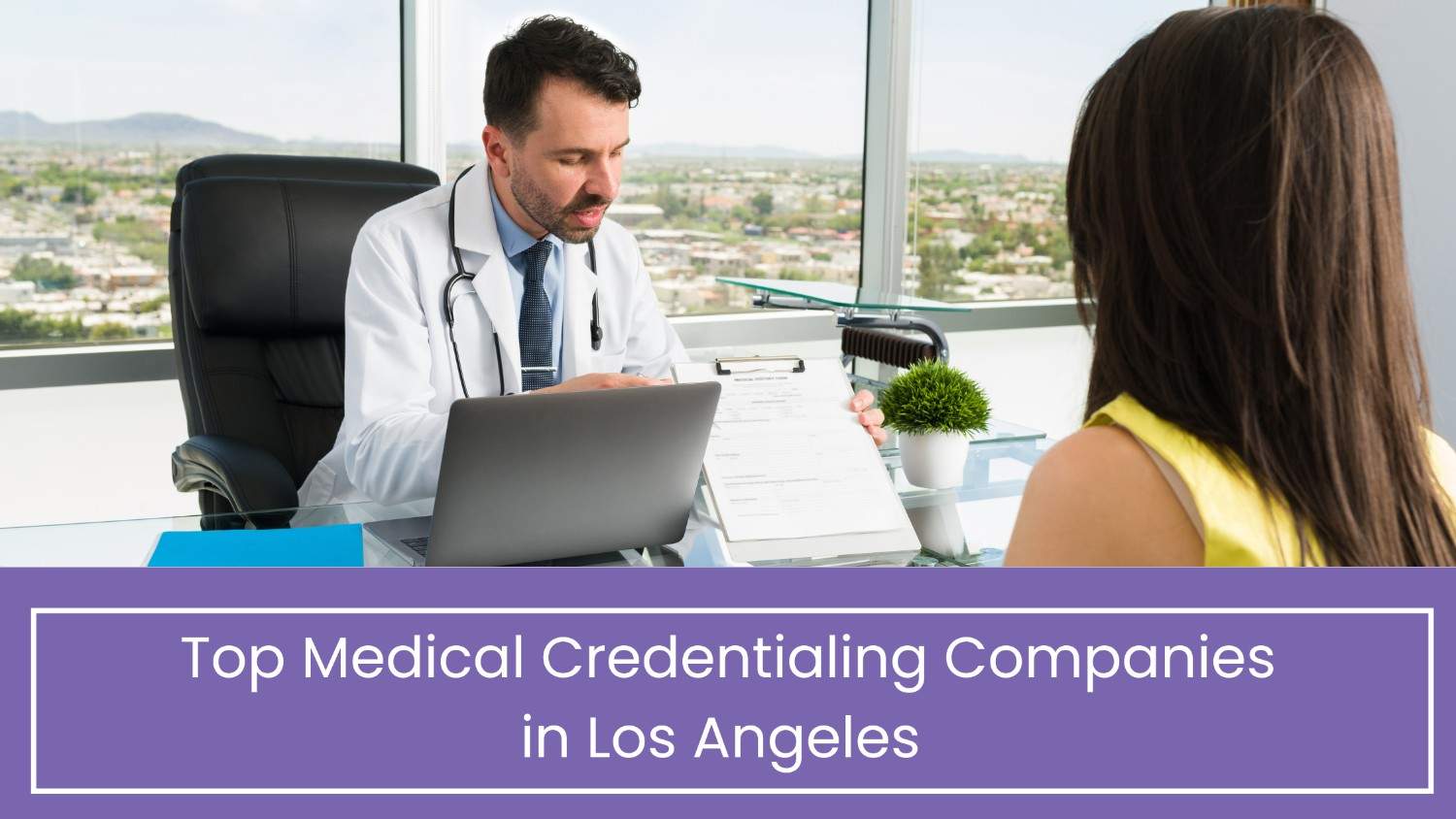
Medical Credentialing Companies in Los Angeles
Medical credentialing companies in Los Angeles are getting providers approved with payers, hospitals, and health systems without avoidable delay. In Los Angeles, that matters because every month lost to credentialing is a month of lost billable services. Medicare enrollment is handled through PECOS, and CAQH remains a major data management and credentialing tool used across the industry. California Medi-Cal also requires provider enrollment through its own system.
A practical credentialing partner should do more than submit forms. It should keep licenses current, track payer deadlines, manage re-credentialing, and prevent mismatches between an application and a practice’s tax, NPI, and location data. That is the difference between a clean launch and a months-long enrollment mess.
Current credentialing pressure in California
|
Current fact |
Why it matters |
|
Medicare enrollment uses PECOS |
Faster, paperless enrollment reduces avoidable delays. |
|
CAQH serves 1,000+ health plans and 4 million+ provider records |
Accurate provider data matters across many payer networks. |
|
Medi-Cal provider enrollment is handled by DHCS Provider Enrollment Division |
California has its own enrollment path, separate from Medicare. |
|
Some California plans use 90-day credentialing determinations |
Delays can quickly become compliance and revenue problems. |
Sources: CMS, CAQH, DHCS, and Health Net California provider guidance.
Credentialing pressure points
Medicare PECOS ███████████
CAQH data maintenance ███████████████
Medi-Cal enrollment █████████████
Re-credentialing cycles ██████████
Table of Contents
Why Medical Credentialing Is Non-Negotiable for LA Healthcare Providers
The short version: no credentialing, no clean reimbursement. Right? Medicare makes you enroll if you’re a provider, or a supplier serving Medicare patients—and CMS kind of says it straight up: use PECOS for enrollment and updates. And in California, Medi-Cal follows the same lane: provider enrollment through DHCS. Medi-Cal telehealth providers have to jump through extra hoops—like you need to be licensed in California, enrolled as a Medi-Cal rendering provider or NMP, and also affiliated with an enrolled provider group. Not optional. It’s basically the price of entry.
That is why medical credentialing services near me and credentialing services near me searches are usually urgent, not exploratory. Providers are trying to start seeing patients, get paid, or rejoin a payer network after a gap. In Los Angeles, where many practices compete in tight payer networks, slow credentialing can block revenue before the first visit is ever billed.
High Cost of Credentialing Delays in Los Angeles
Credentialing delays are expensive because they do not stop at paperwork. They push back first appointments, delay payer enrollment, and create staff rework when applications come back incomplete. CAQH says centralized provider data helps reduce administrative burden and errors, which is exactly what practices lose when the process is done manually or inconsistently.
California payer rules can also make the timeline tighter. Health Net’s California provider guidance says credentialing determinations are made within 90 calendar days of a completed application, and if that does not happen, provisional approval may apply in some cases. That means even in a regulated environment, the clock matters. A practice that starts late is already behind.
What Makes Practolytics the Preferred Credentialing Partner in Los Angeles?
Practolytics positions itself as a credentialing and RCM partner that handles provider enrollment, licensing support, payer applications, and compliance-driven workflow. Its Los Angeles credentialing page lists its own internal service logic and includes a local competitor comparison, which is unusual enough to show the topic is already active in the market. Its services page also emphasizes document collection, payer-specific checklists, and faster turnaround times for commercial insurance, Medicare, Medicaid, and specialty networks.
What makes that useful is not marketing fluff. It is process. The best insurance credentialing services and provider credentialing services are the ones that reduce missing-document errors, protect timelines, and keep the provider profile aligned across Medicare, Medi-Cal, CAQH, and commercial payer portals. That is where medical credentialing services stop being clerical work and become revenue protection.
How to Choose the Right Medical Credentialing Company in Los Angeles?
Choosing among best provider credentialing services healthcare credentialing companies, and credentialing consulting company options should come down to five things: payer knowledge, California experience, document discipline, turnaround visibility, and re-credentialing control. If a vendor cannot explain Medicare PECOS, CAQH maintenance, and Medi-Cal enrollment in plain language, it is not a serious partner.
You should also ask whether they handle specialty and facility enrollment. A laboratory credentialing service does not follow the same rhythm as a physician practice, and telehealth providers face different enrollment and licensing constraints. California telehealth guidance makes that clear: the provider must be licensed in California and enrolled properly for Medi-Cal-covered telehealth services. A one-size-fits-all vendor will miss that.
The blunt truth is that credentialing companies are easy to advertise and hard to evaluate. The real test is whether they can keep an application moving when payer portals, state enrollment, and internal documentation all disagree. That is where many insurance credentialing services near me searches end in disappointment. A polished website is not execution.
Why Practolytics Is the first1 Choice for Medical Credentialing in Los Angeles?
Practolytics is positioned as the strongest option because it combines credentialing with broader revenue-cycle support. That matters because credentialing problems rarely stay isolated. They spill into billing, enrollment, contracting, and reimbursement. Practolytics also claims fast timelines for Medicare, Medicaid, commercial insurance, and specialty networks on its service page, which is exactly the kind of operational promise Los Angeles practices care about.
Its local Los Angeles article also shows that it understands the regional market enough to compare itself against other active competitors, including Credentialing USA, Medeye Solutions, Synergy MSO, and U.S. Medical Billing Solutions. That is a sign the market is already crowded, but not necessarily well served. The winner is the partner that keeps provider records clean, payer submissions consistent, and revalidation on schedule.
Conclusion:
Credentialing is not glamorous, but it decides whether a practice can bill, collect, and grow. In Los Angeles, where payer complexity and competition are both high, the wrong credentialing partner creates real financial drag. The right one shortens enrollment time, reduces denials, and keeps provider data aligned across Medicare, CAQH, Medi-Cal, and commercial plans. That is why top medical credentialing companies in Los Angeles should be judged on execution, not slogans. A good partner does not just submit forms. It protects revenue before it is ever at risk.
1. Why should I choose Practolytics over other credentialing companies in Los Angeles?
Because Practolytics combines credentialing with broader RCM support and publishes a Los Angeles-specific credentialing page that shows local market awareness. It also claims faster timelines for multiple payer types on its service page.
2. Can a new medical practice get credentialed before opening in Los Angeles?
Yes, in practice a lot of those enrollment steps can be staged before launch, but the actual payer ok really sits on who the payer is and on whether the provider’s documentation is fully done. For example, Medicare enrollment goes through PECOS, while California Medi-Cal uses its own enrollment flow.
3. Is the credentialing process HIPAA compliant?
It can be, but only if the company uses proper safeguards, access controls, and handling procedures for protected data. CAQH and the payer enrollment systems are set up around secure provider and data management, but the vendor still has to run the whole process correctly.
4. Which payer networks do credentialing companies in Los Angeles typically enroll with?
Typically, Medicare, Medi-Cal, commercial health plans, and specialty payer networks. California provider rules can be a little different by payer, so the “exact list” of networks really depends on the practice , and the specialty too.
5. Do telehealth providers in California need separate credentialing?
Often yes in practice but it still, depends on state licensure and payer enrollment rules. For Medi-Cal telehealth , DHCS says the provider has to be licensed in California, properly enrolled, and affiliated with an enrolled provider group .
6. Is re-credentialing different from initial credentialing in Los Angeles?
Sure, initial credentialing kind of gets the provider inside the network, ok. After that, re-credentialing is what keeps them there. But if revalidation, or even renewal, gets missed , then the provider can run into payment delays or plain network problems. And CMS also maintains revalidation procedures in the Medicare enrollment systems, so it’s not just local, ya know.
ALSO READ – Medical Credentialing Services: A Guide a Healthcare Providers
Talk to Medical Billing Expert Today — Get a Free Demo Now!