
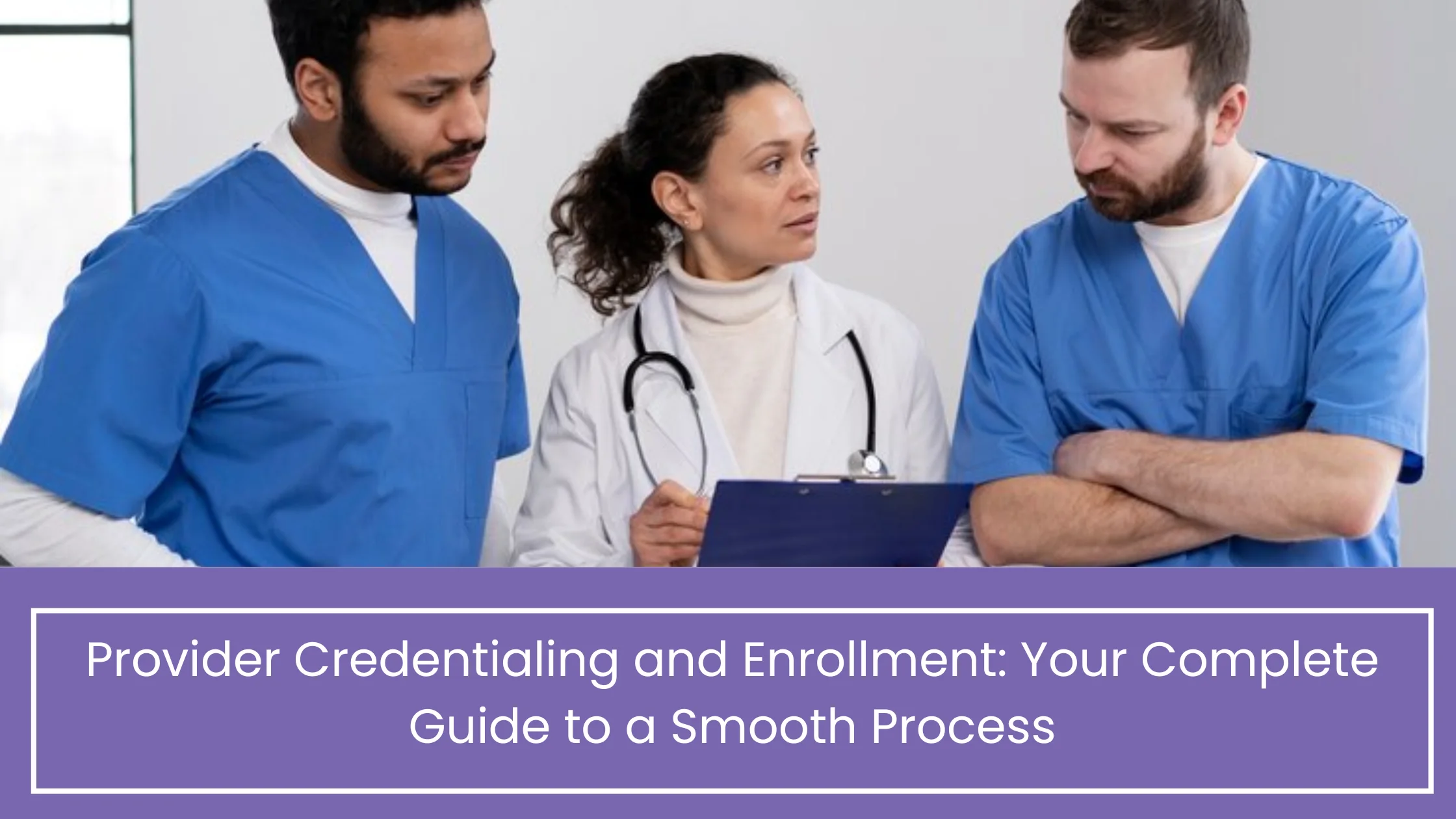
Provider Credentialing and Enrollment: Your Complete Guide to a Smooth Process
Healthcare practices already manage a wide range of daily responsibilities, from patient care and appointment scheduling to insurance verification and billing operations. On top of these demands, credentialing and enrollment tasks often add another layer of complexity. Applications, missing documentation, payer follow-ups, and approval delays can quickly impact the efficiency of any practice. Mastering Provider Credentialing and Enrollment: A Complete Guide for Healthcare Professionals simplifies this complex process with clear and practical insights. At Practolytics, we support healthcare organizations with reliable provider enrollment and credentialing services, helping teams reduce administrative burden and focus more on delivering quality patient care.
Table of Contents
Introduction: Mastering Provider Credentialing and Enrollment: A Complete Guide for Healthcare Professionals
Every healthcare office understands how frustrating paperwork can be. Most days are already packed with patient visits, billing tasks, insurance calls, and scheduling issues. Then credentialing work starts adding even more pressure.
Insurance companies ask for documents repeatedly. Some applications need corrections. Follow-ups can take weeks. In many cases, providers submit everything on time and still wait a long time for updates or approvals.
That is why provider credentialing has become such an important part of healthcare operations today. That is one of the biggest frustrations many practices deal with today. This is why provider credentialing has become such an important part of healthcare operations.
When credentialing gets delayed, everything else slows down too.
Practices may deal with:
- Delayed insurance payments
- Claims sitting unpaid
- Providers waiting for approvals
- Patients facing network issues
- Staff spending hours on follow-ups
Many offices simply do not have enough time to manage the entire process properly while also handling daily patient care.
That is where our team helps. At Practolytics, we work with healthcare providers across the United States to make the complete provider credentialing process easier to handle.
We help practices with:
- Enrollment applications
- Document collection
- Insurance follow-ups
- CAQH updates
- Credential tracking
Instead of practices spending hours calling insurance companies, our team handles the communication and keeps the process moving.
We believe healthcare providers should spend more time with patients and less time dealing with paperwork delays. This guide explains how medical provider credentialing and enrollment work in real-world healthcare settings and what practices can do to avoid common problems.
What Is Provider Credentialing and Enrollment — and Why Does It Matter in 2026?
Let us keep this simple.
Provider credentialing means insurance companies check whether a provider is qualified to treat patients.
They review things like:
- Medical licenses
- Education
- Certifications
- Work history
- Malpractice insurance
After that comes enrollment in medical billing.
This is the step where providers get connected with insurance companies so they can receive payments for patient services.
Both steps matter. If credentialing is delayed, payments can also get delayed. In 2026, insurance companies are more strict than before. They want updated provider information all the time. Even small errors can create problems. This is why healthcare provider credentialing is now a big part of healthcare operations.
At Practolytics, we help healthcare providers manage provider enrollment and credentialing services without the usual stress and confusion.
The Complete Provider Credentialing Process: Step-by-Step Verification Guide
The credentialing process for providers may look complicated at first, but it becomes easier when it is handled in the right way. Here is how the provider credentialing process usually works.
Collecting Provider Documents
Everything starts with paperwork.
Insurance companies ask for documents like:
- Medical license
- DEA certificate
- Board certifications
- NPI details
- Malpractice insurance
- Tax information
One missing document can slow things down. That is why our team checks everything carefully before submission.
Verifying Provider Information
Insurance companies verify provider details from official records.
They check:
- License status
- Education
- Certifications
- Work history
This step is a major part of medical provider credentialing.
Managing CAQH Profiles
Most insurance companies use CAQH during credentialing. CAQH stores provider details in one place.
We help providers:
- Complete CAQH profiles
- Upload documents
- Update information
- Keep profiles active
This helps improve the overall provider credentialing process.
Submitting Applications
After verification, applications are submitted to insurance companies.
This may include:
- Medicare enrollment
- Medicaid enrollment
- Commercial insurance enrollment
Every payer has different rules and timelines.
Following Up With Insurance Companies
This is the part many practices struggle with. Applications can sit for weeks without updates if nobody follows up properly.
At Practolytics, we regularly contact insurance companies and track:
- Application status
- Missing documents
- Corrections needed
- Approval updates
This helps improve provider enrollment and credentialing services for healthcare practices.
Provider Enrollment: How to Get In-Network with Insurance Payers?
Most patients prefer in-network providers. That is why enrollment matters. The enrollment process in healthcare helps providers join insurance networks and receive reimbursements.
The process usually includes:
- Filling out payer applications
- Sending provider documents
- Verifying practice information
- Setting up payment details
Simple in theory. But every insurance company follows different steps, timelines, and rules. Some applications move fast. Others take months. At Practolytics, we simplify enrollment in medical billing for healthcare providers across the United States.
We help with:
- Medicare enrollment
- Medicaid enrollment
- Commercial payer enrollment
- Recredentialing
- Enrollment updates
Our goal is simple. We help providers avoid delays and get approved faster.
Credentialing Timelines: What to Expect and How to Speed Up the Process?
One of the first questions providers ask is:
“How long will this take?”
The answer depends on the payer and the application quality. Most healthcare provider credentialing timelines look like this:
- Medicare: around 45–90 days
- Commercial insurance: around 60–120 days
- Medicaid: sometimes longer
Delays usually happen because of:
- Missing paperwork
- Incorrect information
- Expired licenses
- CAQH issues
- Slow payer responses
At Practolytics, we help speed up the credentialing process for providers by staying organized and following up regularly. Small details make a big difference in credentialing.
Why Outsource Provider Credentialing? Key Benefits of a Managed Credentialing Service?
Credentialing takes time. A lot of time.
Most healthcare teams are already busy managing patients, billing, scheduling, and office operations. Adding credentialing work creates more pressure. This is why many practices outsource provider credentialing today.
Less Paperwork Stress
Credentialing involves constant paperwork and follow-ups. We handle that work for healthcare practices.
Faster Approvals
Our team understands payer requirements and processes. This helps improve approval speed for health insurance credentialing.
Better Cash Flow
Delayed credentialing usually means delayed payments. Strong provider enrollment and credentialing services help providers start billing sooner.
Better Organization
We help practices stay updated with:
- Renewals
- Provider records
- Enrollment changes
- Expiring licenses
This helps reduce administrative confusion.
How Practolytics Manages Provider Credentialing and Enrollment End-to-End?
At Practolytics, we handle the complete provider enrollment and credentialing services process from start to finish.
We support healthcare practices across the United States with:
- Credentialing applications
- Medicare enrollment
- Medicaid enrollment
- Commercial payer enrollment
- CAQH management
- Recredentialing
- Insurance follow-ups
- Document tracking
Today, we support:
- 1400+ active providers
- 180+ healthcare practices
- 28+ medical specialties
- 31 states across the United States
We also support Revenue Cycle Management services like:
- Medical billing
- Medical coding
- Pre-authorizations
- Denial management
- Accounts receivable follow-up
Our team works closely with healthcare providers to reduce delays and simplify the process.
What Healthcare Providers Say About Practolytics Credentialing Services?
Many providers come to us after dealing with credentialing delays for months.
Some practices struggle with:
- Delayed approvals
- Missing paperwork
- Rejected applications
- Poor communication
- Payment delays
We help practices improve the complete provider credentialing process through better organization and regular follow-ups.
Healthcare providers choose Practolytics because we provide:
- Quick updates
- Better communication
- Organized workflows
- Dedicated support
- Accurate documentation review
We make the process easier for healthcare teams.
Conclusion
Credentialing and enrollment are now part of everyday healthcare operations. Without proper approvals, providers can face delays with claims and insurance payments. For many practices, keeping up with payer requirements, paperwork, and follow-ups becomes difficult while also managing patient care. At Practolytics, we help healthcare providers simplify the complete provider credentialing and enrollment process in a more organized and manageable way. Our team handles the paperwork, payer communication, and tracking so practices can avoid unnecessary delays and spend more time focusing on patients instead of administrative work.
FAQs
What is the difference between credentialing and enrollment?
Provider credentialing checks a provider’s qualifications and background. Enrollment in medical billing connects providers with insurance companies for payments.
Both are needed before providers can bill insurance companies.
How long does the provider credentialing and enrollment process take?
Most healthcare provider credentialing processes take between 45 and 120 days. The timeline depends on the insurance payer and document accuracy.
What documents are required for provider credentialing?
Common documents include:
- Medical license
- DEA certificate
- Board certifications
- Malpractice insurance
- NPI details
- Tax documents
These documents support the provider credentialing process.
What is CAQH ProView and why is it important for credentialing?
CAQH ProView stores provider information in one place. Insurance companies use it during health insurance credentialing. Updated profiles help reduce delays.
How much revenue does a practice lose due to credentialing delays?
Practices can lose revenue when insurance approvals take too long. Strong provider enrollment and credentialing services help reduce payment delays and billing interruptions.
What are the most common mistakes made during provider credentialing?
Some common mistakes include:
- Missing documents
- Incorrect information
- Expired licenses
- CAQH issues
- Poor follow-ups
These mistakes can slow down the credentialing process for providers.
Does provider credentialing apply to telehealth providers?
Yes. Telehealth providers also need medical provider credentialing and payer enrollment. Insurance companies still verify provider qualifications and licenses.
Why should a healthcare practice outsource provider credentialing?
Outsourcing helps practices:
- Save time
- Reduce paperwork
- Improve approvals
- Reduce delays
- Improve reimbursements
Professional provider enrollment and credentialing services also help practices focus more on patient care.
How does Practolytics handle credentialing from start to finish?
At Practolytics, we manage the full provider credentialing process.
Our services include:
- Document collection
- CAQH management
- Payer enrollment
- Follow-ups
- Recredentialing
- Status tracking
We help healthcare providers simplify credentialing from beginning to end.
ALSO READ – Navigating the Cybersecuirty Landscape in Healthcare Coding in 2024
Talk to Medical Billing Expert Today — Get a Free Demo Now!