
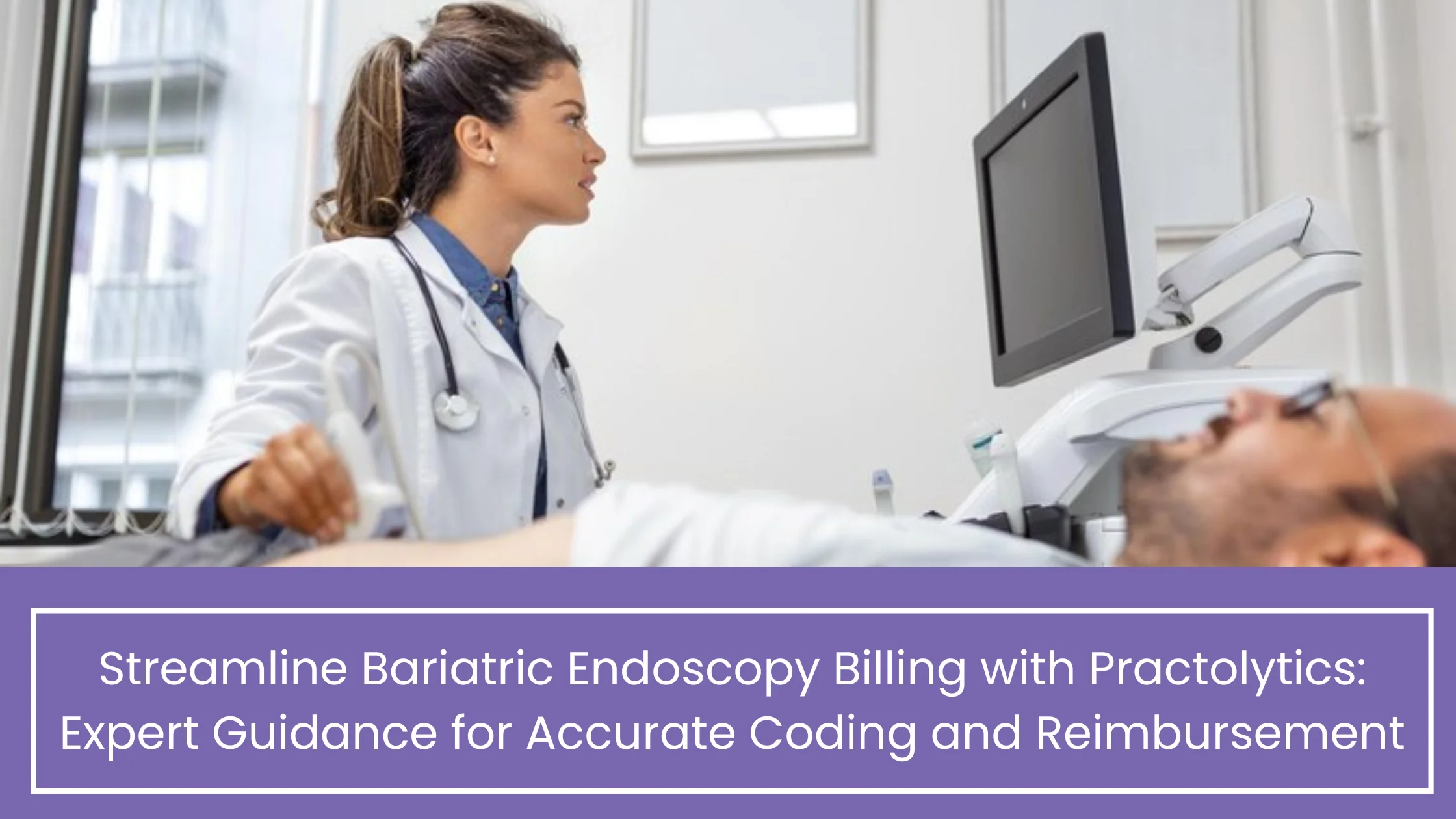
Streamline Bariatric Endoscopy Billing with Practolytics: Expert Guidance for Accurate Coding and Reimbursement
Bariatric endoscopy billing is one of the hardest parts of gastro billing today. Codes change. Payer rules shift. Small mistakes lead to denials fast. That’s why mastering bariatric endoscopy billing how practolytics simplifies the process matters so much for practices doing this work. In this guide, we cover what makes this billing hard. We walk through the codes that trip people up. And we show how we, at Practolytics, help practices get paid faster with fewer denials.
Bariatric endoscopy is growing fast. More patients. More procedures. More codes to track. Billing for it isn’t simple. One small mistake, and a clean claim turns into a denied one. Then it sits stuck for weeks, waiting on a fix that could have been avoided from the start.
We work with practices doing this billing every day. We’ve seen what trips people up. We’ve seen what works. This kind of billing sits between two fields at once, gastro care and bariatric care. That means it carries the coding rules of both. A team that only knows one side often misses something on the other. Let’s break it down.
Table of Contents
What Is Bariatric Endoscopy Billing?
Bariatric endoscopy billing covers the coding and claims work for weight loss procedures done through a scope. No open surgery needed.
This includes things like:
- Endoscopic sleeve gastroplasty (ESG) billing, a common non-surgical weight loss method.
- Intragastric balloon billing, for placing and removing a balloon.
- Transoral outlet reduction (TORe) coding, used after weight comes back post-surgery.
- Post-bariatric surgery billing, for follow-up care and fixes.
Each one needs its own coding path. Mix them up, and claims get denied fast.
Common Challenges in Bariatric Endoscopy Billing
This billing comes with real problems. Here’s what we see most:
- Codes for newer procedures aren’t always understood by payers yet.
- Some procedures need an unlisted procedure code 43999. This needs extra proof to back it up.
- Payers often want very specific proof before they pay.
- Anastomotic stricture endoscopy claims can get flagged if notes don’t explain the need clearly.
- Small coding errors can cause a chain of denials across many claims.
- Teams new to this work often use simple gastro rules where bariatric rules should apply instead.
Medical billing for bariatric endoscopy takes real care. Rushed coding almost always leads to problems later. Practices that treat this like normal gastro billing tend to see more denials than those who slow down and give it the attention it needs.
Bariatric Endoscopy Billing Process: Step-by-Step Workflow
Here’s how the process usually works, step by step:
- The provider writes down the procedure and why it was done.
- The coding team checks the notes and picks the right CPT and ICD-10 codes.
- The claim gets checked for mistakes before it goes out.
- The claim goes to the payer.
- The payer reviews it. They pay, deny, or ask for more info.
- If needed, the team follows up or appeals a denial.
A clean process here means fewer delays. Fewer headaches too. Skip even one step, and the whole thing slows down. Practices that skip the final check often see a wave of denials that trace back to that same missed step, weeks after the claim first went out the door.
CPT and ICD-10 Coding Considerations for Bariatric Endoscopy
Coding right is everything in this field. A few key things to know:
- Bariatric endoscopy CPT codes 2026 keep updating as new procedures become common.
- CPT code 43889 applies to certain bariatric fix-up procedures. It needs careful notes.
- Endoscopic balloon dilation has its own coding path, separate from other bariatric work.
- ICD-10 E66.01 (morbid obesity) is often needed to show the medical reason for these claims.
- Z98.84 (bariatric surgery status) shows a patient’s surgery history. This matters for follow-up billing.
Get these codes right the first time, and you get a much higher clean claim rate. That means far fewer headaches later. It also means less time spent fixing claims that could have gone through clean the first try, and less time spent explaining the same mistake to a payer more than once.
How Practolytics Simplifies Bariatric Endoscopy Billing?
This is where we help. At Practolytics, we built our process around the exact problems bariatric endoscopy billing brings.
Here’s what we do:
- Our coders check the notes closely before sending any claim.
- We track medical necessity documentation carefully. So claims have the proof payers want.
- We stay current on payer-specific documentation requirements, since these change a lot.
- We manage prior authorization bariatric surgery requests early. This cuts down delays later.
- We follow strong bariatric claim denial management steps. We catch issues before they grow.
Our goal is simple. Fewer denials. Faster payment. Less stress for your billing team. We treat each claim as its own case. We don’t run everything through one generic process.
Benefits of Outsourcing Bariatric Endoscopy Billing
A lot of practices choose outsourced bariatric coding services instead of doing this in-house. Here’s why:
- AAPC-certified coders bring real, specialized skill to tricky procedures.
- Outsourcing usually leads to a higher first-pass claim acceptance rate. That means fewer resends.
- Staff get more time back for patients instead of chasing paperwork.
- A dedicated team catches errors before they turn into denials.
- HIPAA-compliant billing steps keep patient data safe the whole way through.
For many practices, outsourcing this one area makes a real difference in how fast claims get paid. It also takes pressure off staff who might otherwise be learning this coding on the fly, all while still handling their normal day-to-day work at the same time.
Why Choose Practolytics for Bariatric Billing?
We built our approach around real bariatric revenue cycle management needs. Not some generic process borrowed from another field.
Here’s what sets us apart:
- We know the coding details specific to bariatric endoscopy work.
- Our team supports gastroenterology medical billing across many related procedures, not just bariatric alone.
- We bring strong revenue cycle management (RCM) for gastroenterology practices, from coding through collections.
- We keep things clear, so you always know where a claim stands.
- We shape our process to fit your practice size, small clinic or larger group.
If bariatric billing has been a headache for your practice, we’d love to show you a smoother way.
Conclusion
Bariatric endoscopy billing doesn’t have to stay this stressful. With the right coding know-how and a clear process, claims move faster and denials drop. This billing rewards practices that treat it as its own thing, not just part of normal gastro billing. Practices that make this shift usually notice the difference within the first few billing cycles alone. At Practolytics, we built our process around these exact problems, so your practice gets paid right and on time. If you’re ready for a smoother billing process, let’s talk about how we can help.
FAQs
What is bariatric endoscopy billing?
Bariatric endoscopy billing covers the coding and claims work for weight loss procedures done through a scope, without open surgery. This includes balloon placement, sleeve gastroplasty, and fix-up procedures after weight comes back. Each one needs its own codes and proof to get approved right.
Why is bariatric endoscopy billing complicated?
It’s hard because codes for newer procedures aren’t always understood by every payer. Some procedures need extra proof to show medical need, and small coding errors trigger denials fast. Staying on top of code changes and payer rules takes real, steady effort.
What procedures are included in bariatric endoscopy billing?
This usually covers:
- Endoscopic sleeve gastroplasty.
- Intragastric balloon placement and removal.
- Transoral outlet reduction for weight regain.
- Post-bariatric surgery follow-up and fixes.
- Endoscopic balloon dilation for related issues.
Each one needs its own coding approach.
How can accurate coding improve bariatric reimbursements?
Accurate coding means claims match exactly what happened and why it was needed. This leads to a higher clean claim rate and fewer denials. When codes and notes line up right, payers process claims faster. Payment comes in without needless delays or rejections, and staff spend less time going back to fix the same claim twice.
What causes bariatric billing claim denials?
Common causes include missing proof of medical need, mismatched codes, and claims sent without the right prior authorization. Newer procedures sometimes get flagged simply because a payer hasn’t fully updated their process yet. Careful notes help avoid most of these problems early.
Does bariatric endoscopy require prior authorization?
Often, yes. A lot of payers want prior authorization before they approve these procedures. This matters even more for newer or less common ones. Getting this authorization set up early helps avoid delays and denials once the claim actually gets sent for payment.
How does Practolytics help with bariatric billing?
We check notes closely, track payer-specific rules, and manage prior authorization requests early. Our coders bring real, specialized skill to these tricky procedures. We follow strong denial management steps too, catching issues early before they turn into bigger revenue problems down the road.
Can outsourcing bariatric billing improve revenue?
Yes, for many practices. Outsourcing brings specialized coding skill and usually leads to a higher first-pass claim acceptance rate. That means fewer resends, faster payment, and less staff time spent chasing denied claims. It also frees your team up to focus more on patients.
What documentation is needed for bariatric procedure billing?
Notes should clearly show the procedure done, the medical reason behind it, and any relevant patient history, including past bariatric surgery where it applies. Clear, detailed notes back up medical need and help claims move through payer review without extra back and forth.
ALSO READ – Mastering Wound Care Billing Codes for RCM Success
Talk to Medical Billing Expert Today — Get a Free Demo Now!