
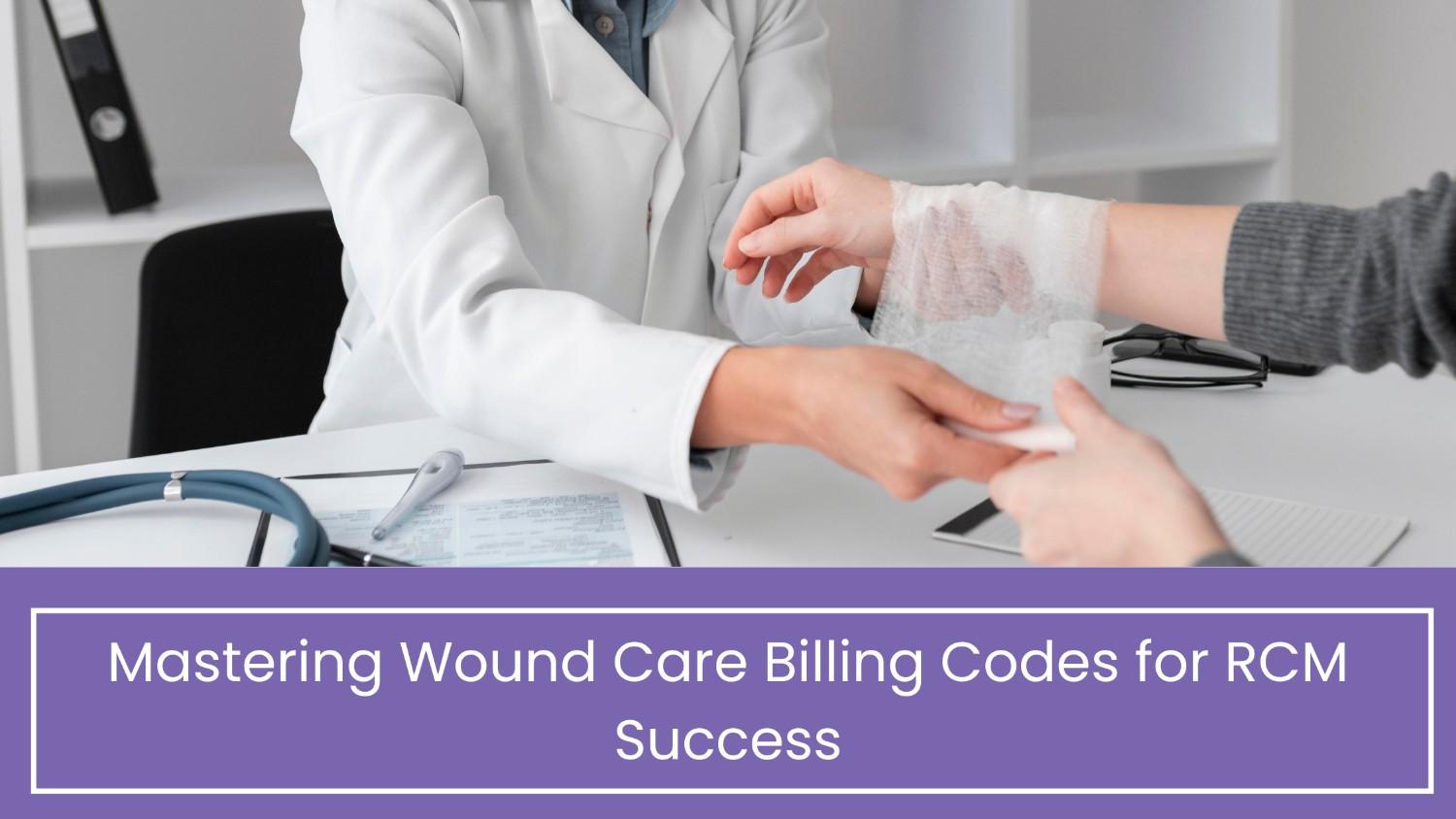
Mastering Wound Care Billing Codes for RCM Success
Complete Guide to Wound Care Billing Codes for Optimal Revenue Cycle Management Wound care billing can be complex, and small errors in coding or documentation can delay payments and reduce revenue. Many practices face avoidable claim denials due to incorrect codes and incomplete records. In this guide, we simplify wound care billing by covering key coding practices, documentation tips, common challenges, and reimbursement strategies, along with how Practolytics helps providers improve accuracy, reduce denials, and optimize revenue cycle management.
If you handle wound care claims, you already know the challenges. One patient visit may need several codes. Different payers may have different rules. Even a small mistake can create a problem.
We see this every day.
A claim gets denied because the diagnosis code is wrong. A claim gets delayed because important notes are missing. Then your staff has to spend more time fixing the problem. That means more work and a longer wait for payment. The good news is that many of these issues can be avoided.
With the right coding and good documentation, wound care billing becomes much easier. In this guide, we explain everything in simple terms.
Table of Contents
Complete Guide to Wound Care Billing Codes for Maximum Reimbursement
Every wound care claim tells a story. The diagnosis tells the payer what the problem is. The procedure code tells the payer what treatment was provided. The medical record supports both.
If one part is missing, the payer may deny the claim. That is why wound care billing matters so much. Every wound care visit should include clear notes.
Document:
- Wound location
- Wound size
- Wound depth
- Type of wound
- Signs of infection
- Treatment provided
- Healing progress
These details may seem small. But they often decide whether a claim gets paid. Many practices focus on coding alone. But coding and documentation work together. Strong wound care rcm processes help make sure claims are complete before they are submitted.
When that happens, practices often see:
- Fewer denials
- Faster payments
- Better collections
- Less work for staff
Why Accurate Wound Care Billing Codes Matter for Revenue Cycle Management?
Let’s keep it simple.
If the coding is wrong, the claim may not get paid. If the documentation is incomplete, the claim may not get paid. If the diagnosis does not support the treatment, the claim may not get paid. That is why coding accuracy matters. One important part of every claim is the icd 10 code for wound care.
This code explains why the patient needed treatment. The payer looks at this code before approving payment. If the diagnosis code is missing or incorrect, problems start.
Accurate wound care billing and coding helps practices:
- Reduce denials
- Improve claim approval rates
- Get paid faster
- Reduce billing headaches
Small improvements can make a big difference over time.
Understanding Wound Care Billing Codes
There are three main code types used in wound care billing.
CPT Codes
CPT codes describe the treatment. These codes tell the payer what was done.
Examples include:
- Debridement
- Wound treatment
- Negative pressure wound therapy
- Skin substitute application
The code must match the treatment documented in the chart.
ICD-10 Codes
ICD-10 codes describe the diagnosis. The correct wound care icd 10 code helps show why treatment was needed.
Common diagnoses include:
- Diabetic ulcers
- Pressure ulcers
- Venous ulcers
- Surgical wounds
- Traumatic wounds
Accurate wound care icd 10 coding is important because diagnosis codes support medical necessity. Providers should also stay updated on changes related to wound care icd 10 guidelines.
Choosing the right icd10 code for wound care can help prevent denials.
HCPCS Codes
HCPCS codes are often used for products and supplies.
Examples include:
- Skin substitutes
- Biological products
- Wound care supplies
All of these codes work together to create a complete claim.
Most Common Wound Care CPT Codes and Their Applications
Several CPT codes are commonly used in wound care.
Debridement Codes
Debridement is the removal of dead tissue. It helps wounds heal properly.
Common code groups include:
- 11042
- 11043
- 11044
- 11045
The correct code depends on:
- Tissue depth
- Wound size
- Tissue removed
Documentation should support the code billed.
Negative Pressure Wound Therapy
This treatment is often used for difficult wounds.
Providers should document:
- Wound condition
- Treatment details
- Patient response
Skin Substitute Applications
Some wounds need advanced treatment. Skin substitutes may be used when standard treatment is not enough.
Documentation should include:
- Product name
- Amount used
- Wound measurements
- Medical necessity
The better the documentation, the easier it is to support reimbursement.
Essential Documentation Requirements for Wound Care Billing
Good documentation helps providers get paid. It really is that simple. Payers want proof that treatment was necessary.
Every visit should include:
- Wound location
- Wound measurements
- Wound depth
- Drainage
- Infection status
- Treatment details
- Progress notes
Providers should also document changes from one visit to the next.
For example:
- Is the wound healing?
- Is it getting larger?
- Is infection improving?
- Has the treatment changed?
These details help support continued care. They also support the correct wound care icd 10 code assignment. Many denials happen because documentation is incomplete.
Common Wound Care Billing Challenges and How to Avoid Them
Most billing problems are avoidable. Let’s look at some common issues.
Coding Errors
Wrong codes can lead to denials.
Examples include:
- Wrong diagnosis code
- Wrong procedure code
- Mismatched coding
How to avoid it:
- Train staff regularly
- Review claims before submission
- Perform coding audits
Missing Documentation
Incomplete notes create problems.
How to avoid it:
- Use templates
- Review charts before billing
- Educate providers
Medical Necessity Denials
Payers need proof that treatment was needed.
How to avoid it:
- Document wound progression
- Explain treatment decisions
- Include detailed notes
Delayed Claim Submission
Late claims can delay payment.
How to avoid it:
- Submit claims quickly
- Track claim status
- Follow up regularly
A strong wound care billing process helps reduce these issues.
Best Practices to Improve Wound Care Reimbursement
Improving reimbursement does not always require big changes. Small improvements often produce good results.
Focus on Documentation
Clear notes support coding. Clear notes support payment.
Verify Insurance Early
Check coverage before treatment whenever possible. This helps avoid billing surprises.
Monitor Denials
Every denial teaches something. Look for patterns. Fix recurring problems.
Review Claims Regularly
Small errors are easier to fix before submission.
Work With Experts
Experienced billing teams understand coding rules and payer requirements. Strong wound care rcm processes help improve collections and reduce lost revenue.
Why Healthcare Providers Choose Practolytics for Wound Care Billing?
We know wound care billing can be challenging. Rules change. Coding updates happen. Payer requirements change often. Many practices do not have time to manage everything internally.
That is where we help.
At Practolytics, we provide complete revenue cycle management support.
Our services include:
- Medical billing
- Medical coding
- Denial management
- Eligibility verification
- Prior authorizations
- Accounts receivable follow-up
- Claims management
We support more than 1,400 providers. We work across more than 28 medical specialties. Our goal is simple. Help providers reduce denials and improve revenue.
When you work with us, you get a team focused on:
- Faster claim submission
- Better collections
- Improved cash flow
- Reduced billing errors
Get Expert Wound Care Billing Support!
Managing wound care billing takes time. Keeping up with coding changes takes even more time. Many providers simply do not have enough resources. That is why outsourcing can help. Our team works as an extension of your practice.
We help with:
- Coding accuracy
- Documentation review
- Denial reduction
- Claims follow-up
- Revenue cycle management
We focus on the billing process so your team can focus on patient care.
Conclusion
Wound care billing does not have to be complicated. The right diagnosis code, proper documentation, and accurate coding can make a big difference. Small mistakes often lead to denials and delayed payments. Strong wound care billing and coding practices help reduce these problems. At Practolytics, we help providers improve wound care medical billing, strengthen wound care rcm, and get paid faster. Our goal is simple. Help your practice keep more of the revenue it earns.
FAQs
What are the most commonly used wound care billing codes?
Common wound care billing codes include debridement codes, wound treatment codes, negative pressure wound therapy codes, and skin substitute application codes.
How do CPT codes differ from ICD-10 codes in wound care billing?
CPT codes describe the treatment provided. ICD-10 codes describe the diagnosis. Both are needed for claim submission.
What causes wound care claim denials?
Common reasons include coding mistakes, missing documentation, medical necessity issues, and claim submission errors.
How can healthcare providers improve wound care reimbursement?
Providers can improve reimbursement by using accurate coding, maintaining good documentation, tracking denials, and reviewing claims regularly.
What documentation is required for wound care billing?
Documentation should include wound size, location, depth, treatment details, healing progress, and medical necessity.
What are HCPCS codes used for in wound care?
HCPCS codes are commonly used for wound care supplies, skin substitutes, and biological products.
Can outsourcing wound care billing improve revenue?
Yes. Outsourcing can help reduce errors, improve collections, speed up payments, and strengthen revenue cycle performance.

RECOMMENDED TO READ – Common Wound Care Billing Pitfalls and How to Avoid Them: Tips for RCM Success
Talk to Medical Billing Expert Today — Get a Free Demo Now!