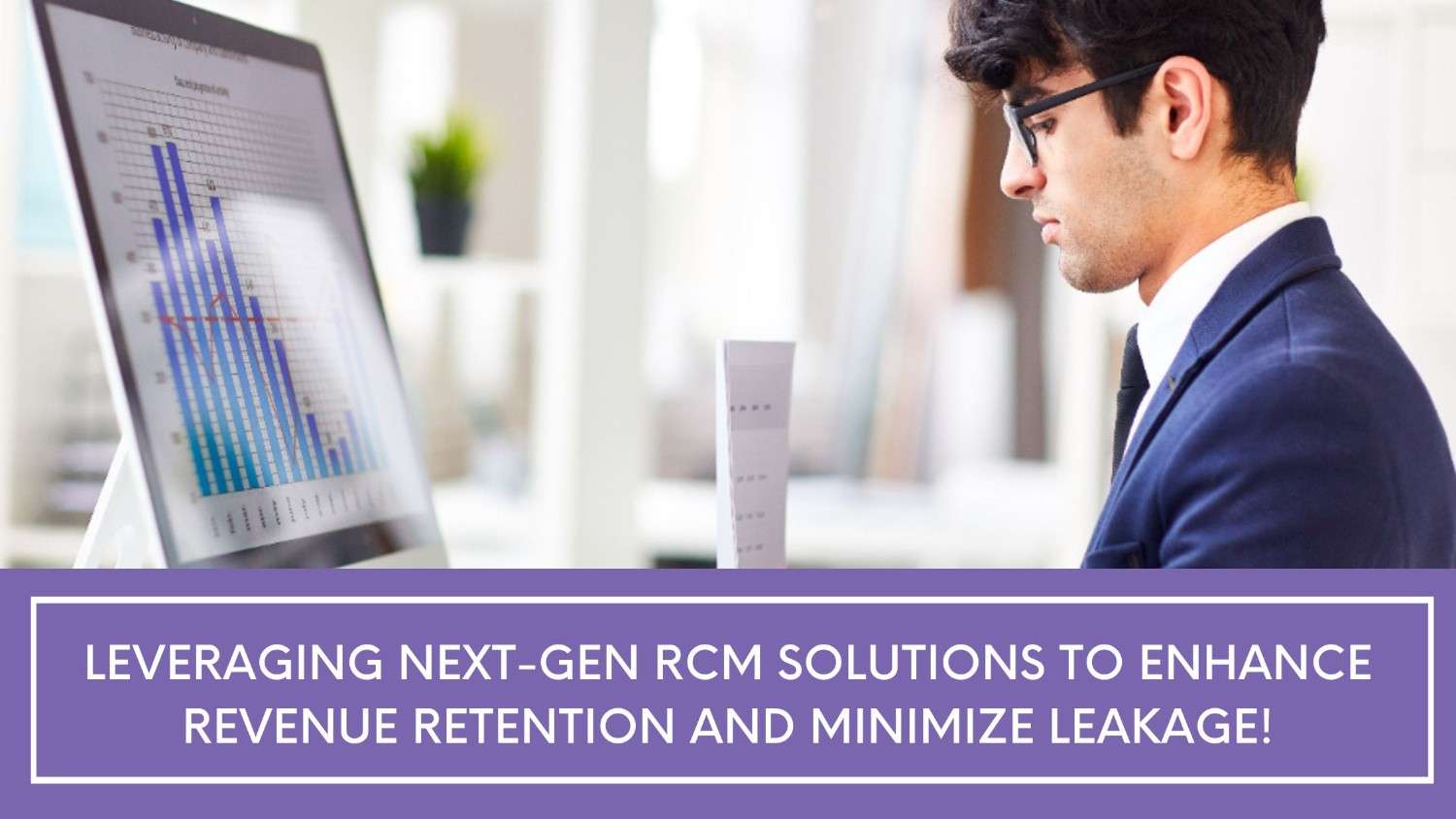
Leveraging next-gen RCM solutions to enhance revenue retention and minimize leakage!
Healthcare facilities may encounter a range of cash flow challenges during the revenue cycle, including incorrect patient intake, coding errors, claim rejections, underpayments, and balance theft. Next Gen RCM solutions to enhance revenue retention help identify and resolve these revenue leakage factors before they cause significant financial damage by combining expert professionals, process automation, and real-time data analysis. These next-gen revenue cycle management solutions can improve billing accuracy, strengthen payment collection, reduce revenue leakage, and support more consistent financial performance.
Revenue cycle management in healthcare is turning from a cost center into a profit center by ensuring that not a penny is lost in the revenue cycle.
A comprehensive approach can connect the following:
- Real-time insurance eligibility verification before appointments
- Accurate medical coding and claims scrubbing
- Prior authorization services and payer follow-up
- Claim denial prevention and denial root-cause analysis
- Automated payment posting and reconciliation
- Patient payment transparency and collections
- RCM KPIs such as clean claim rate, AR days, and net collection rate
The objective is clear: stop lost revenue, get paid faster, and boost your medical practice profitability.
CTA Button: Optimize Your Revenue Cycle
Table of Contents
What Is Revenue Leakage in Healthcare?
Revenue leakage occurs when clinics provide care but miss out on full payment. These gaps hide in messy workflows, meaning you won’t spot them without a close review of your billing records.
Common examples include:
- Claims denied because eligibility was not verified
- Services performed but never captured or billed
- Medical coding errors that reduce reimbursement
- Underpayments that are never identified or appealed
- Claims rework caused by preventable errors
- Payer reimbursement delays and aging accounts
- Uncollected patient balances
- Missed prior authorization requirements
- Incorrect contract or payer reimbursement assumptions
Next-generation revenue cycle optimization strategies leverage automation and expertise to detect and resolve revenue leakage points. Beyond calculating a medical practice’s profitability, the software can help operators locate where revenue is being lost, why it is happening, and how to prevent it from recurring.
CTA Button: Find Your Revenue Leakage
Where Revenue Leakage Really Happens (Front-End vs. Back-End)
Revenue leakage isn’t just a billing issue. It begins at check-in and continues through claims, payments, and your A/R follow-up process. This is why good revenue cycle management services fix both the start and the end of your workflow.
Front-end leakage
- Patient intake errors
- Incorrect demographics or insurance information
- Missed eligibility and benefits verification
- Unidentified patient financial responsibility
- Missing prior authorization
- Incomplete documentation
Back-end leakage
- Medical coding errors
- Claim rejections and denials
- Missed underpayments
- Incorrect payment posting
- Delayed A/R follow-up
- Uncollected patient balances
Real-time eligibility, auto-workflows, scrubbing tools, and denial analysis link these steps. Fixing front-end errors before you send claims cuts down on claims rework, denials, and cash flow disruptions in healthcare, which can decrease significantly. This ensures your healthcare business runs smoothly and gets faster payments.
CTA Button: Strengthen Your RCM Workflow
The Real Cost of RCM Inefficiency
RCM inefficiency does more than add paperwork. It hits your cash flow, staff morale, and your profit. Even a full clinic can fail financially if revenue stays tied up in denied claims or old unpaid bills.
Key warning signs include the following:
- Increasing accounts receivable (AR) days
- Declining clean claim rate
- Rising denial or rejection volume
- Falling net collection rate
- Increasing claims rework
- Growing patient balances
- Repeated payer reimbursement delays
- High staff time spent correcting preventable errors
Modern RCM technology stops you from just reacting to billing errors and starts protecting your cash. AI spots patterns in denied claims and payer habits, while smart data shows which accounts need a look. Your team then steps in to fix errors, fight wrong denials, and stop the same problems from happening again.
The result is a clearer, faster way to manage payments and improve healthcare cash flow optimization.
CTA Button: Identify Your RCM Bottlenecks
Frequently Asked Questions
1. What is revenue leakage in healthcare RCM?
Revenue leakage is money your clinic loses because of simple mistakes. This happens through wrong codes, missed bills, denied claims, or unpaid patient balances.
2. How much revenue do medical practices typically lose to leakage?
There are no standard percentages that apply to every practice. Leakage depends on many factors such as the specialty, a mix of payers, billing practices, denial rates, coding accuracy, contract language, and collection capability. A practice-specific revenue audit beats a generic one every time.
3. What are the most common causes of revenue leakage?
Frequent causes include entry errors, eligibility gaps, missing approvals, coding mistakes, denied claims, low payments, poor follow-up, slow payer payouts, and incomplete patient billing.
4. How does eligibility and benefits verification prevent revenue leakage?
Verification of insurance eligibility ensures coverage. It prevents claim rejections prior to service by allowing verification of active coverage, incorrect insurance information, copays, deductibles, and other benefits and policies in real time.
5. What role does denial management play in reducing leakage?
Denial management finds why claims failed, fixes the ones you can get paid for, and spots trends. Good services don’t just win back lost cash; they stop the same mistakes from happening again to protect your bottom line.
6. Can technology alone stop revenue leakage, or do I need a team too?
Technology can perform rule‐based, repetitive processes and can identify patterns, but it cannot replace the judgment of appropriate human oversight. The best RCM model will incorporate RCM automation, claims scrubbing, and predictive analytics while still leveraging the expertise of billing specialists who can investigate and resolve exceptions.
7. How is next-gen RCM different from traditional medical billing?
Traditional billing mostly handles claims and collecting revenue. Modern RCM does more by linking eligibility, coding, denials, and payments into one clear plan. This shift turns simple billing into a full strategy to grow and protect your total revenue.
8. Is outsourcing RCM services safe and cost-effective for small practices?
It can hurt your growth when you lack the people or tools to manage billing. A good billing partner should offer tight security, clear reports, smooth workflows, and data that proves they are hitting your financial goals.
9. How quickly can a practice see results after improving its RCM process?
The timeline varies based on your current state and the specific goals we must hit. Fixing claims and eligibility is usually fast. However, lowering AR days, getting missing payments, and stopping denials takes more time and steady tracking.
10. How do I know if my practice has a revenue leakage problem?
Look for patterns that suggest revenue leakages: low collection rates, increasing average age of receivables (AR), high denial rates, a high volume of claims rework, unanticipated underpayments, low clean claim rates, growing patient balances, and large disparities between expected and realized reimbursements. Conducting a comprehensive RCM audit may help identify revenue leakage.
CTA Button: Get Your RCM Performance Assessment

ALSO READ – Essential Tips for Error-Free Orthopedic Billing and Coding: Boost Your Practice’s Financial Health
Talk to Medical Billing Expert Today — Get a Free Demo Now!