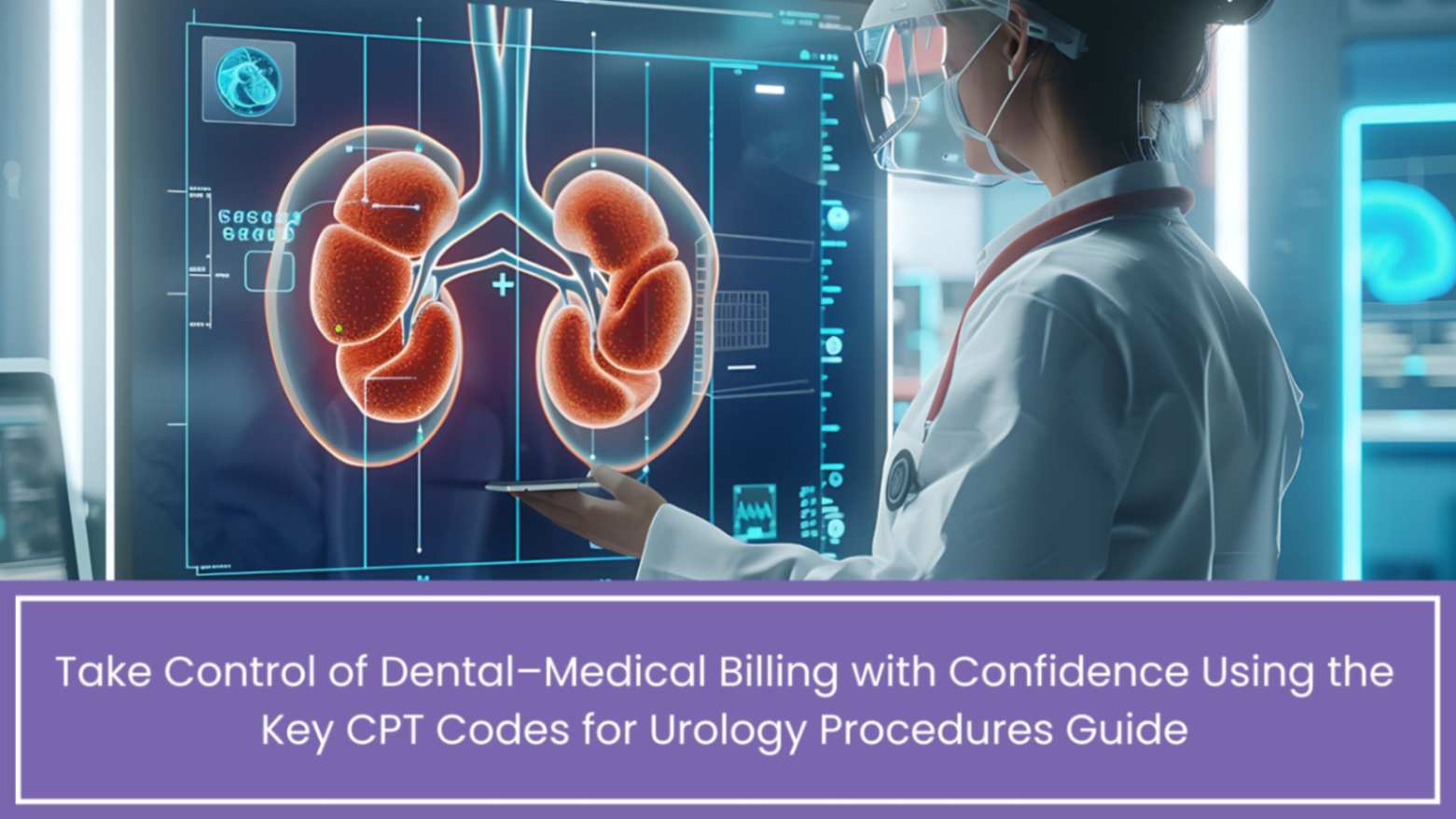
Key CPT Codes for Urology Procedures
At Practolytics, we help practices simplify the complex world of dental–medical cross coding using accurate documentation, clean claims, and proven workflows. Understanding the Key CPT Codes for Urology Procedures may feel unrelated to dentistry at first, but in reality, mastering CPT and ICD-10 logic is what strengthens your ability to code dental services correctly for medical payers. We bring decades of revenue cycle expertise, reduce denials, improve clinical documentation, and help you maximize reimbursement ethically and efficiently. With our support, your team can confidently navigate medical necessity requirements, expand coverage options for patients, and keep revenue flowing without administrative stress.
If you run a dental office today, you’ve probably noticed one major shift—patients expect their medical insurance to cover more than just traditional healthcare services. And honestly, they’re not wrong. Many dental procedures are medically necessary, and when that’s true, cross coding for dental offices becomes a powerful tool. At Practolytics, we work closely with practices that want to improve reimbursement, reduce denials, and streamline their workflow. Cross coding connects dentistry and medicine through accurate documentation, proper code selection, and a deep understanding of payer rules.
What surprises many dental teams is that medical billing isn’t actually harder—it’s just different. From dental medical insurance verification to medical necessity documentation for dental claims, every step plays a role in maximizing revenue. And that’s why learning cross coding is no longer optional—it’s a competitive advantage.
Table of Contents
Why Dental–Medical Cross Coding Matters Today?
Patients increasingly rely on medical insurance for treatments related to trauma, infection, systemic disease connections, TMJ, sleep apnea, and oral surgery. With rising out-of-pocket costs, patients appreciate when dental teams know how to bill medically when appropriate.
Cross coding is especially important now due to:
- Higher dental claim denials
- Treatment expansions like medical billing for oral surgery procedures
- More payers recognizing dental-to-medical overlap
- Increasing demand for dental procedures billed to medical insurance
With the right approach, you can turn confusing payer rules into clear pathways to reimbursement. We help dental teams make that shift—from uncertainty to confidence—by building workflows around dental to medical billing process, documentation tips, and precise dental claim medical coding.
Most Common ICD-10 Codes in Dental Cross Coding
Medical insurers are strict about ICD-10 coding, especially for trauma, pathology, and systemic conditions. Some of the most frequently used categories in dental-medical billing include:
- ICD-10 codes for dental conditions such as K08.89, K06.9, K02.9
- Medical codes for dental trauma (S02- series for fractures, S01- series for lacerations)
- TMJ-related codes for cross coding for TMJ treatment
- Sleep disorder codes for medical coding for sleep apnea dental appliances
Even though the focus keyword touches on Key CPT Codes for Urology Procedures, the underlying skill—understanding how CPT codes work across specialties—sharpens your overall medical coding accuracy. When your team understands code structure, bundling logic, and medical necessity guidance used in other specialties, they become stronger cross-coders.
At Practolytics, we teach teams how to build diagnosis-procedure linkage so claims pass payer scrutiny the first time.
Financial Impact on Dental Practices
The financial potential of dental-medical cross coding is massive—and often underestimated. Many procedures commonly performed in dental settings are eligible for medical reimbursement, especially those related to:
- Infection management
- Bone grafting
- Trauma care
- Sleep apnea treatments
- Oral surgery
- TMJ therapy
When done correctly, cross coding can:
- Increase case acceptance
- Lower patient out-of-pocket burden
- Improve practice revenue
- Reduce dependence on traditional dental insurance
- Accelerate collections through optimized medical claim submission for dental services
Practices also often recover revenue that would otherwise be written off due to dental claims denied by medical insurance. With Practolytics, your denials drop dramatically because our experts monitor payer updates, maintain compliance, and streamline documentation requirements—making your revenue cycle stronger than ever.
Best Practices for Dental–Medical Cross Coding
Over the years, we’ve helped hundreds of practices refine their workflows. Here are the most reliable strategies we recommend:
1. Start with Accurate Verification
Every cross-coded claim begins with proper dental medical insurance verification. Payers vary widely—some cover trauma only, while others reimburse for sleep apnea appliances or TMJ.
2. Strengthen Documentation
Medical claims depend heavily on clinical detail. Always include:
- Onset
- Symptoms
- Diagnostic findings
- Radiographs
- Medical history relevance
- Medical necessity documentation for dental claims
3. Know When to Use Medical Billing services
Procedures involving trauma, pathology, systemic links, or surgery often qualify under medical billing services for dental procedures.
4. Use Accurate CPT Codes
Whether you’re coding dental surgery or learning from adjacent specialties like CPT codes for dental surgical procedures, understanding the structure of CPT rules is essential.
Even exposure to unrelated specialties—like studying Key CPT Codes for Urology Procedures—helps develop sharper coding instincts.
5. Submit Clean, Complete Claims
Avoid delays by following payer formats for medical claim submission for dental services. Missing documentation is the #1 reason for denials.
6. Train Your Team
Your administrative and clinical staff should understand:
- dental medical cross coding guidelines
- When medical billing applies
- dental cross coding to increase revenue
- Requirements for medical billing for oral surgery procedures
Practolytics delivers real-time training, templates, and structured workflows so teams feel confident, not overwhelmed.
Why Cross Coding Will Define the Future of Dental Reimbursements?
Dental insurance reimbursements are shrinking. Fee schedules are stagnant. Yet patient expectations keep rising. Cross coding is rapidly becoming the bridge that helps practices stay financially healthy while offering clinically necessary treatment.
Here’s why the future belongs to well-trained cross-coding teams:
- It expands reimbursement possibilities
- It improves patient affordability
- It reduces dependence on limited dental plans
- It increases acceptance for high-value procedures
- It helps practices ethically justify medical necessity
- It positions dental teams as comprehensive healthcare partners
And with support from an RCM partner like Practolytics—who understands coding, documentation, payer behavior, and compliance—you don’t have to figure any of this out alone. We manage everything from claim preparation to follow-ups, denials, appeals, and analytics.
Conclusion:
Dental–medical cross coding isn’t just a reimbursement strategy—it’s a long-term practice growth engine. With the right documentation, accurate coding, and a streamlined process, your team can confidently bill medically necessary services, support patients financially, and protect revenue. At Practolytics, we simplify every step, from verification to appeals, so you can spend more time providing care and less time worrying about payer rules. As medical and dental care continue to intersect, cross coding will become a defining factor in how successful, efficient, and patient-friendly your practice can be.
Why should I bother with complex medical coding when I already have a robust dental billing system?
Because medical payers often reimburse services dental insurers deny. With proper documentation and coding, you unlock new revenue streams while supporting patient affordability.
How does cross-coding benefit my patients financially?
When applicable, medical insurance can cover large portions of surgery, trauma care, sleep apnea appliances, and more—reducing out-of-pocket costs significantly.
What types of procedures are most commonly eligible for medical cross-coding?
Trauma, infection treatment, oral surgery, TMJ therapy, biopsies, pathology, and sleep apnea appliances are the most common.
Will cross-coding increase my compliance risk with federal programs like Medicare?
Not when done correctly. With strong documentation, medical necessity, and accurate coding, compliance becomes easier—not riskier.
What specific training should my clinical and administrative staff receive to handle cross-coding?
Training should include ICD-10 selection, CPT logic, documentation requirements, insurance verification, and payer-specific billing rules.
My dental insurance collections are fast. Will dealing with medical insurance slow down my cash flow significantly?
With streamlined workflows and expert claim management—like what Practolytics provides—medical claims can process quickly with fewer denials.
ALSO READ – The Importance of Documentation in Wound Care Revenue Cycle Management (RCM)
Talk to Medical Billing Expert Today — Get a Free Demo Now!