
Improving Coding Accuracy with AI-Powered Tools
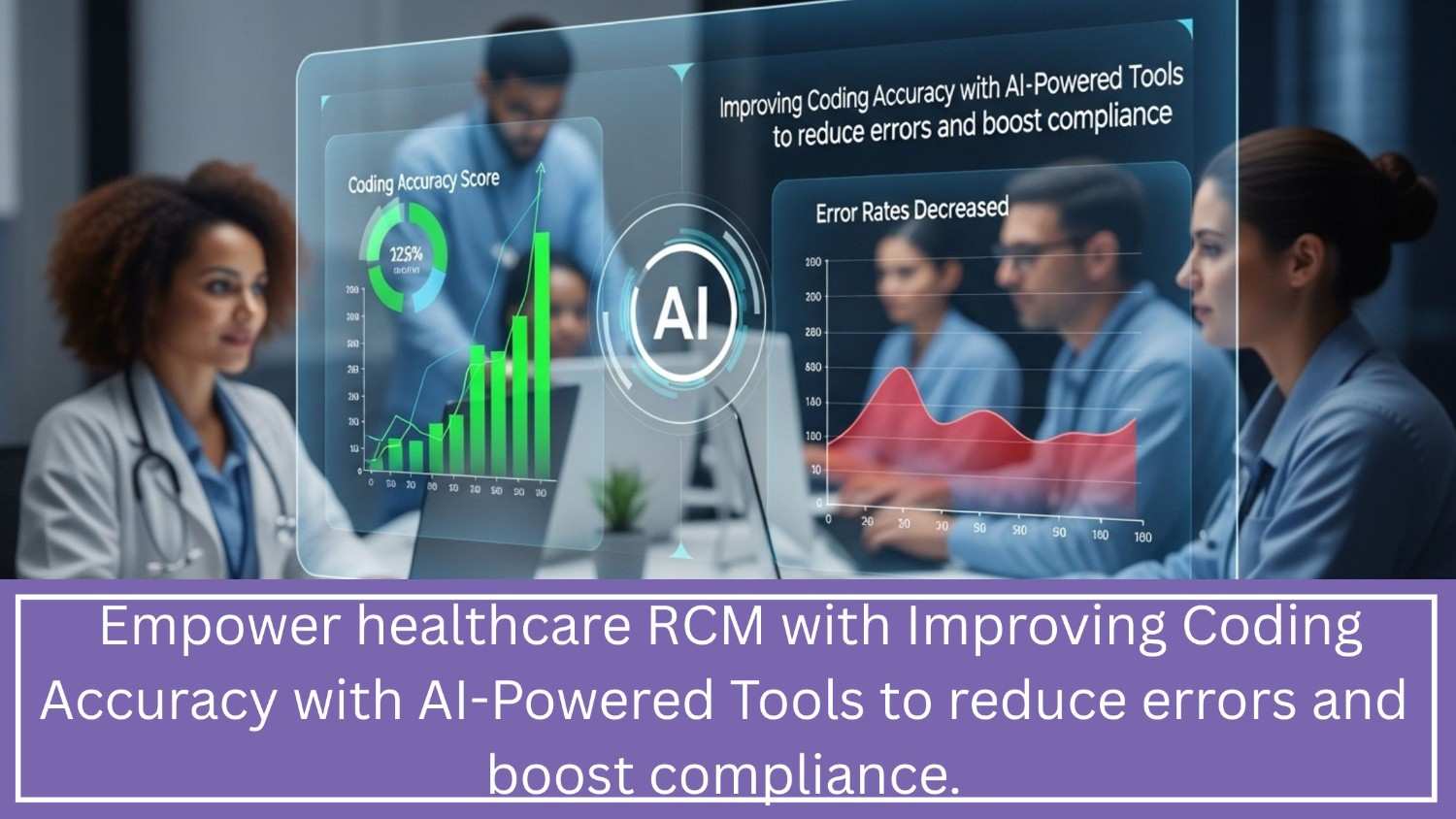
Improving Coding Accuracy with AI-Powered Tools focuses on how AI-driven technologies enhance revenue cycle management by minimizing coding errors, improving documentation accuracy, ensuring regulatory compliance, and supporting healthcare organizations in achieving faster reimbursements and cleaner claims while maintaining high standards of patient care.
Table of Contents
Maximize Revenue Cycle Outcomes by Improving Coding Accuracy with AI-Powered Tools in Healthcare.
In a dynamic healthcare environment, Improving Coding Accuracy with AI-Powered Tools has become pivotal for effective Revenue Cycle Management (RCM). Studies show nearly 42% of denied claims result from coding issues , while documentation deficiencies contribute to about 65% of coding errors . By leveraging advanced AI powered medical coding tools and medical coding AI solutions, organizations can reduce errors, streamline claims submissions, and optimize cash flow. For example, modern NLP systems can interpret complex clinical notes and translate them into structured coding data , enabling more efficient workflows and billing. These technologies represent key AI solutions for revenue cycle optimization.
Briefly Introduce About Improving Coding Accuracy with AI-Powered Tools
In today’s complex healthcare environment, accurate coding is more important than ever. Even small coding errors can trigger denials and lost revenue . Artificial intelligence in medical coding offers a way to automate and improve coding tasks. By processing clinician notes at scale, AI systems enable medical coding automation for RCM, freeing coders to focus on complex cases. For example, NLP-driven AI can convert unstructured text into standardized codes, significantly improving medical coding accuracy. Advanced audit algorithms then continuously scan for anomalies (e.g. upcoding or missing charges), reducing medical coding errors with AI and ensuring compliance. As a final check, AI tools for medical coding accuracy can act as a second pair of eyes on each claim, catching any overlooked issues before submission.
Critical Need for Coding Accuracy in RCM
Accurate coding is the lifeblood of healthcare revenue. Key issues include:
- Denials from coding errors: Nearly 42% of claim denials are due to coding issues. Even a single miscoded claim can trigger expensive appeals.
- Revenue at stake: RCM inefficiencies cause U.S. hospitals to lose roughly 3–5% of net revenue each year.
- Error cost: Documentation gaps underlie about 65% of coding errors, leading to an estimated $4.6 billion in lost revenue annually.
- Compliance risk: Mismatches between clinical notes and assigned codes drive about 82% of denials, exposing providers to audits and penalties.
How AI Understands Clinical Documentation
AI analyzes text much like a human coder would. For example:
- AI-assisted clinical coding (NLP): AI systems parse free-text notes to highlight key diagnoses and procedures.
- Proactive flagging: Models trained on CPT and ICD-10 guidelines can identify potential coding discrepancies or missing codes before claims are submitted.
- Adaptive learning: AI-driven coding solutions learn from historical coding patterns and feedback, continuously improving their suggestions over time.
These methods allow automated medical coding software to understand context and semantics in documentation. In effect, AI helps bridge the gap between narrative clinical notes and the structured code sets required for billing.
Quantifiable Improvements in Coding Accuracy
Real-world results are compelling:
- Higher accuracy: AI-powered coders often exceed human accuracy. One systematic review found automated coding reaching ~95% accuracy versus ~75–80% for manual coding.
- Enhanced documentation: When clinical documentation is augmented with AI, coding precision rises – organizations report 12–18% higher coding accuracy with AI-assisted documentation tools.
- Compliance gains: In practice, NLP-driven coding systems have delivered up to a 22% boost in coding accuracy while cutting documentation-related denials (as one HFMA analysis noted).
These improvements translate into thousands of dollars saved per month for health systems, simply by reducing missed codes and denials.
AI-Enhanced RCM Beyond Coding Accuracy
AI’s impact extends across the revenue cycle:
- Pre-claim checks: AI tools can scrub claims before submission. For example, ML-based claim-scrubbing algorithms have been shown to cut denial rates by as much as ~35% and helped one system boost first-pass claim acceptance by ~12%.
- Denial prevention: Predictive analytics flag high-risk claims early. Hospitals using AI-driven denial platforms reported denial reductions around 17–19% within months.
- Workflow automation: RPA and AI automate routine tasks (eligibility checks, coding entry, billing follow-up), achieving 50–70% efficiency gains. Such free staff for complex work, accelerate payments, and reduce revenue leakage.
By handling administrative overhead and early warning, these systems amplify the return on improving coding accuracy – turning a coding improvement project into overall financial improvement.
Real-Time Decision Support and Predictive Analytics
Modern AI tools work in real time. For instance, AI tools for healthcare documentation (like computer-assisted physician documentation) integrate with EHRs to guide clinicians on the spot. CAPD systems have reduced coding-related physician queries by ~43% by suggesting more specific terms during documentation. Meanwhile, predictive analytics scan claims data continuously: models learn from past patterns and alert staff to likely denials or payment delays before they happen. In practice, embedding these predictions into workflows lets teams prioritize interventions for high-risk claims. Together, real-time AI feedback and forecasting turn coding and medical billing from a reactive to a proactive process.
Conclusion
In summary, AI-powered medical coding tools are transforming healthcare RCM. By combining machine learning and NLP, AI not only speeds up coding but vastly improves accuracy – reaching ~95% accuracy on average versus ~80% manually. When paired with better documentation, AI yields double-digit accuracy gains and significantly fewer denials. Beyond coding, AI-driven analytics provide real-time decision support, catching issues before they become problems. As one expert notes, AI can materially improve revenue capture and reduce denials, making AI in healthcare revenue cycle management a strategic priority. Health systems that embrace these tools see fewer errors, faster claims, and stronger financial performance overall.
FAQs
How can I decrease the occurrence of wrong identification which occurs when artificial intelligence produces incorrect results? The process requires testing all AI-generated recommendations against established testing benchmarks and current business standards. The system requires two upgrades through model threshold modifications and training data improvements to achieve enhanced performance results. The system needs to implement rule-based checks and human evaluation processes which will analyze AI proposals before these proposals enter their operational stage. The system improves its performance through constant monitoring and reinforcement learning feedback which enables it to learn from errors and decrease false alarm occurrences.
How do I create an AI system which understands the structural elements of my existing codebase?
Create and write down precise coding rules which should include architectural design requirements. The AI needs your code style examples which include your specific indentation and naming conventions and design patterns for accurate practice alignment. Use static code analysis tools or linters as part of your workflow to flag deviations. The code review process needs to remain strong because all changes which AI generates need to undergo peer evaluation for system design compliance.
How do I manage security weaknesses which AI systems produce through their code generation process?
Consider AI-generated code as a newly developed codebase. The code needs to undergo your standard security testing process which includes SAST and dependency checks along with penetration testing. The AI training process should include secure coding standards which must be incorporated into training materials and program prompts while developers need to use libraries and frameworks that manage traditional security issues. Developers must review and examine all AI-generated content because artificial intelligence may produce hidden defects which require manual testing or dedicated inspection tools for identification. The testing process should use automated methods to test all components including unit testing and integration testing and fuzz testing which will help identify security flaws at an early stage.
Can I use AI to explain complex legacy code?
Yes – AI tools can analyze legacy code and provide summaries, comments, or higher-level descriptions. They can point out patterns or repeated logic. However, always verify AI explanations: it can hallucinate or miss context. Pair AI output with human knowledge (e.g., developers writing tests or using debuggers). Use AI explanations as a starting point for understanding, but rely on thorough testing and documentation. The AI can accelerate comprehension, but the final understanding should still come from careful validation.
Who is liable if AI-generated code causes a system failure?
Generally, the responsibility lies with the entity that deploys and approves the code. Current norms treat AI as a tool – the human developers, architects, and managers using AI are ultimately accountable. That’s why oversight is critical: test AI outputs thoroughly and document human review steps. In contracts or policies, clarify that AI suggestions must be vetted. Legal frameworks for AI are evolving, but for now you should assume liability will fall on your organization or team if an AI-sourced change causes a failure. It’s best to proceed with caution and keep a clear audit trail of decisions involving AI code.
ALSO READ – Decoding CPT: Your Guide to Codes and Regulations 2024
Talk to Medical Billing Expert Today — Get a Free Demo Now!