
ICD-10 and CPT Coding for IVF and Reproductive Services
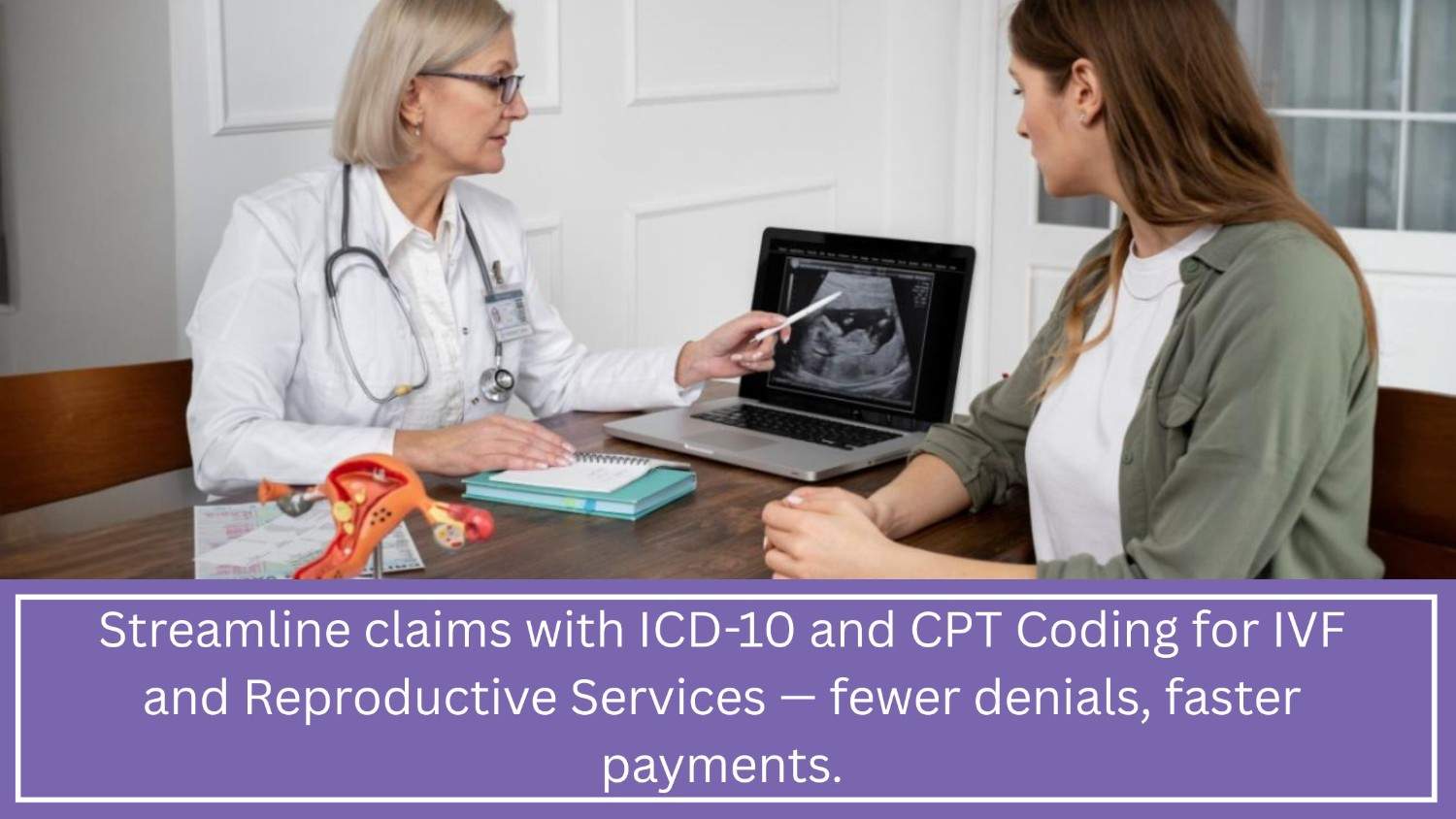
Navigating reproductive billing can feel like decoding a secret language. This friendly guide on ICD-10 and CPT Coding for IVF and Reproductive Services walks you through the essentials in plain English — choosing specific diagnosis codes, matching procedures correctly, and documenting with enough detail that payers stop asking for the same documents. You’ll get real-world examples, quick checklists, and concrete fixes for the denials that waste time. We’ll also touch on simple automation that helps and where human checks still matter. If you want a billing workflow your whole team can actually follow, you’re in the right place.
Table of Contents
Briefly Introduce ICD-10 & CPT Coding for IVF and Reproductive Services
Let’s be blunt: IVF billing is messy because it sits at the intersection of clinical complexity and picky payer rules. When you get your ICD-10 & CPT Coding for IVF and Reproductive Services right, claims flow. When you don’t, you get denials, appeals, and angry admin staff. This section is a fast, practical walkthrough — not theory — so you and your team can stop guessing and start submitting clean claims.
You’ll see common diagnosis codes, the CPTs you’ll run into for monitoring, retrieval and transfer, and the documentation that actually prevents denials. I’ll also flag the usual traps and quick fixes — think of this as the “what-to-do-right-now” portion. If you need a printed reference, pair this guide with a one-page IVF CPT codes billing guide to keep at the nurse station.
Understanding ICD-10 Diagnosis Coding for Reproductive Services
Start with the chart. If your clinical note says “infertility” but doesn’t say whether it’s male- or female-factor, ovulatory, tubal, or unexplained, the payer treats it as vague. Specificity matters. Use the Infertility diagnosis ICD 10 codes list and the ICD 10 codes for infertility treatment to pick precise codes (for example, N97.x for female infertility variants).
Payers hate “unspecified” codes. They’ll request records or deny services that look elective. So document the tests ordered, results (semen analysis, hormonal panel), and the clinical reasoning for proceeding with an IVF cycle. That single extra sentence in the note often prevents a denial. Follow your clinic’s Reproductive medicine coding guidelines so everyone is consistent.
PT Coding Framework for IVF and ART Services
Think of coding as the patient journey: consult → stimulation/monitoring → retrieval → lab procedures (ICSI, embryo culture, PGT) → transfer → follow up. Map each visit and procedure to a CPT and to dated documentation.
Create a flowchart for the team so everyone knows which items are bundled and which are separate charges. This avoids unbundled IVF billing CPT mistakes and keeps you compliant with IVF coding and billing compliance expectations. If your team is short-staffed, consider external IVF medical coding services to handle complex cycles and appeals.
CPT Codes for IVF Cycle Procedures
Here’s the practical list you’ll use often:
- Monitoring ultrasounds and blood work — fertility ultrasound CPT coding and relevant lab CPTs. Document stimulation start dates and medication doses.
- Retrieval and transfer — the main procedural CPTs for oocyte retrieval and embryo transfer. Include anesthesia documentation when relevant and link to the IVF anesthesia CPT code.
- PGT and lab testing — use the lab’s exact PGT testing CPT codes and include consent and genetic counseling notes.
- When labs or procedures bundle together, refer to IVF bundled CPT codes; where they don’t, you may bill separately — but only with documentation.
If you don’t already have a one-page cheat-sheet of Assisted reproductive technology CPT codes, make one today and pin it where staff can see it.
ICD-10 & CPT Pairing Errors That Drive Denials
Most denials follow predictable patterns:
- Vague diagnosis (e.g., “infertility, unspecified”) paired with a high-complexity lab — payer flags it.
- Monitoring ultrasounds billed without stimulation dates or medication logs — payer suspects routine imaging and denies.
- Medical billing both a bundled service and the supposed “separate” service for the same encounter — classic double-bill.
Fix this by pairing date-and-time matched notes to each CPT. If the clinical story supports the procedure, the claim should clearly show that story. Keep a denial log for IVF billing and coding errors, and you’ll spot patterns fast.
Technology & Automation in IVF Coding
Technology helps — but only when set up right. Templates that require stimulation start date, medication names/doses, and signed consent cut down simple misses. AdvancedMD EHR coding suggestions that flag questionable CPT/ICD pairs before claims go out are worth the investment.
Automation doesn’t replace human review. It reduces repetitive mistakes and highlights where a clinician needs to add a sentence. Combine automated checks with a weekly human audit and you’ll drop denials quickly. Use automation tools aligned with Reproductive medicine coding guidelines to keep rules consistent.
Practical Tips for Immediate Wins
- Use the IVF CPT codes billing guide at the point of care. Make it a living doc.
- Avoid “unspecified” ICD entries — pick the best fit from the ICD 10 codes for infertility treatment list.
- Make sure lab bills match the clinic’s dates and the PGT testing CPT codes used by your partner lab.
- Track payer-specific rules for Fertility clinic coding and billing — what one payer allows, another rejects.
- Consider outsourcing high-volume cycles to experienced IVF medical coding services if internal capacity is small.
- Keep a short glossary of Assisted reproductive technology CPT codes and IVF bundled CPT codes vs unbundled IVF billing CPT rules.
What Compliance Looks Like
Compliance is simple: accurate codes, consistent documentation, and a payer-by-payer rulebook. Train staff on Reproductive medicine coding guidelines and keep an appeals library for common denials. That way when a claim is pushed back, your appeal is faster and cleaner. Also track outcomes so you can iterate your IVF reimbursement coding strategies and improve the clinic’s cash flow.
Conclusion
IVF billing doesn’t have to be a recurring chaos. Focus on specificity: the right ICD 10 codes for infertility treatment, the correct Assisted reproductive technology CPT codes, and documentation that tells a clear clinical story. Use automation to catch predictable mistakes, keep a short denial log to spot trends, and create a one-page IVF CPT codes billing guide for clinic staff. Do that consistently and you’ll see fewer IVF billing and coding errors, faster reimbursements, and less time fighting paperwork — and more time on what actually matters: patient care.
FAQs
Q: What is the primary ICD-10 code for initial infertility consultations?
A: Use the most specific code that fits the visit. For testing or counseling, consider encounter codes like Z31.41 (fertility testing) or Z31.83 (fertility counseling). If diagnosis is confirmed, refer to the Infertility diagnosis ICD 10 codes list and the ICD 10 codes for infertility treatment (N97.x family for many female infertility codes).
Q: Which CPT code should I use for the initial IVF consultation?
A: Initial consults are billed as evaluation and management visits (e.g., 99202–99205 or the current E/M equivalents). Choose level by time or complexity and document counseling, plans, and tests ordered. Pair the E/M with your IVF CPT codes billing guide so coders see expected follow-ups.
Q: Is an ultrasound on the day of retrieval or transfer separately billable?
A: Sometimes. If the ultrasound is medically necessary and distinct from a bundled service, bill under fertility ultrasound CPT coding. If the payer considers it part of a bundled cycle (see IVF bundled CPT codes), it may not be covered separately — always check payer policy and document the reason.
Q: How do we code for Embryo Biopsy (PGT)?
A: Use the specific PGT testing CPT codes provided by the testing lab. Bill biopsy procedure and analytic tests as appropriate, and include consent and genetic counseling notes to support medical necessity. Coordinate lab and clinic billing to avoid IVF billing and coding errors.
Q: How do I code for the frequent “Monitoring” ultrasounds?
A: Bill each medically necessary scan with the correct ultrasound CPT and tie it to stimulation dates and medication records. If frequency looks unusual to a payer, document the changing clinical picture (poor response, dose adjustment, complications) and consider prior authorization. Follow Reproductive medicine coding guidelines for documentation standards.

ALSO READ – Decoding CPT: Your Guide to Codes and Regulations 2024
Talk to Medical Billing Expert Today — Get a Free Demo Now!