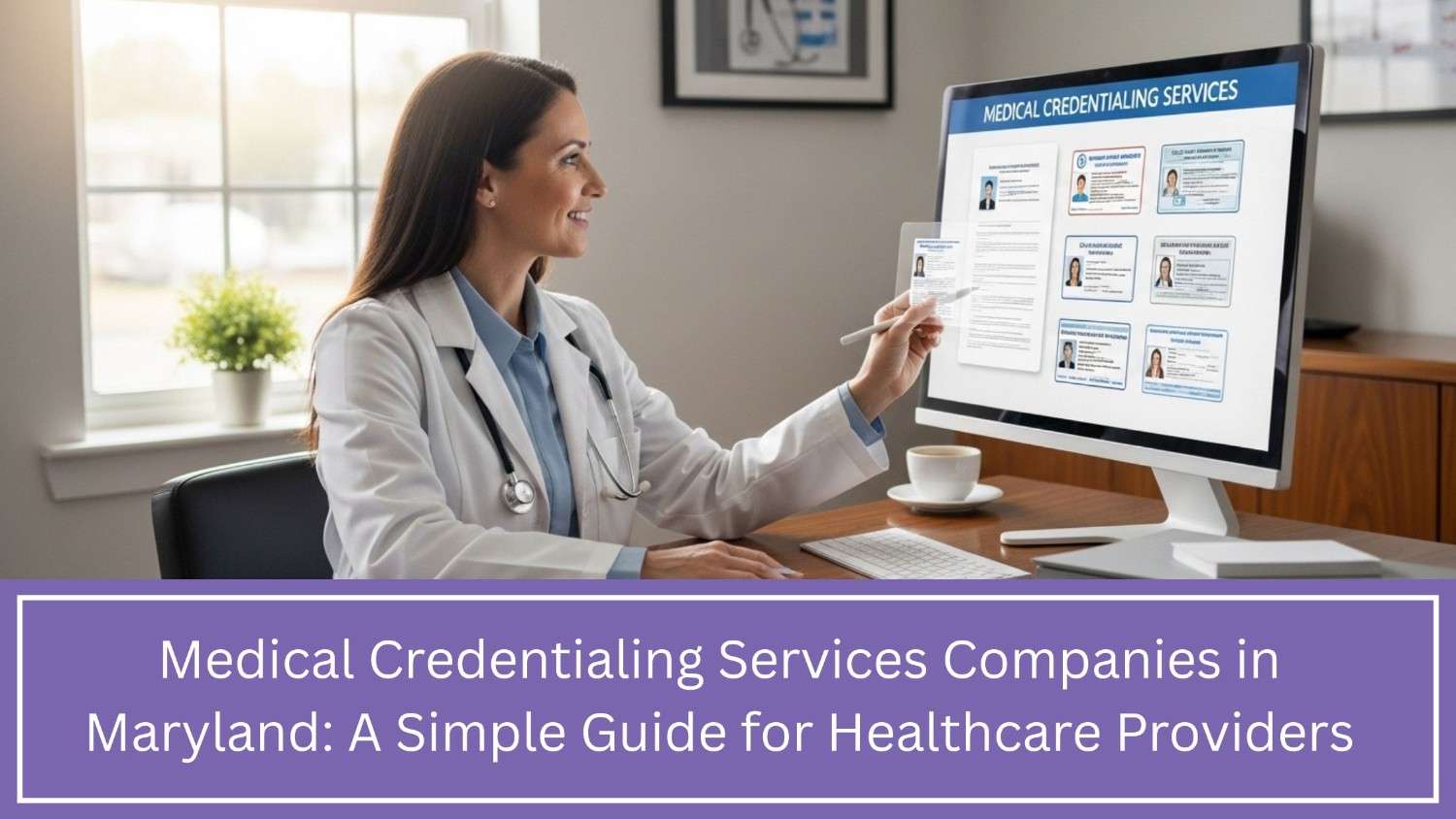


Cut Credentialing Time by 50% and Boost Practice Growth
Credentialing of healthcare providers can become a significant constraint due to disconnected processes involving applications, CAQH, PSV, and payer enrollment. Understanding How to Cut Credentialing process Time can help organizations identify bottlenecks, reduce unnecessary delays, and improve overall efficiency. While it is impossible to say that every company can reduce credentialing timelines by 50%, following a structured and streamlined procedure can significantly speed up the process.
The best way is to combine workflow standardization, proactive documentation, and regular payer communication.
A streamlined process should include:
A complete provider onboarding checklist
- Accurate CAQH profile information and timely attestation
- Organized primary source verification (PSV)
- Centralized payer application tracking
- Clear ownership for every enrollment task
- Automated credential expiration reminders
- Billing enrollment synchronization
- Regular application status reviews
Decreasing administrative transfers can allow practices to minimize credentialing backlog, avoid out-of-network billing, and safeguard income while transitioning providers into participating providers.
Table of Contents
Key Takeaways: Speeding Up Provider Onboarding in 2026
Faster credentialing isn’t about rushing forms; it’s about fixing the gaps in your process. Offices speed up provider enrollment turnaround time by gathering all the right data before applying and tracking every open task in real time.
Key strategies include:
- Start credentialing before the provider’s planned start date
- Complete CAQH profiles before payer applications
- Speed up CAQH attestation by resolving missing information early
- Use a standardized provider onboarding checklist
- Track every payer application centrally
- Begin primary source verification (PSV) promptly
- Monitor licenses and certifications proactively
- Synchronize credentialing and billing enrollment
- Escalate stalled applications quickly
- Review credentialing KPIs regularly
A centralized system helps you spot exactly where applications get stuck. For bigger teams, credentialing workflow automation cuts out boring manual tasks and lets you track provider status in real time.
CTA Button: Speed Up Your Provider Onboarding
The True Cost of Credentialing Delays on Practice Cash Flow
Credentialing delays hurt your bottom line long before you see a drop in monthly pay. When a provider isn’t in-network, payers may deny claims or process them at lower rates. This creates extra work and slows down payments. Ultimately, these credentialing revenue losses in paperwork kill your productivity and choke your practice’s cash flow.
Potential financial consequences include:
- Lost revenue from delayed provider activation
- Out-of-network claim prevention challenges
- Increased claim rework
- Delayed payer enrollment
- Higher administrative workload
- Patient billing complications
- Delayed provider onboarding
- Additional accounts receivable follow-up
Practices can guess lost income by looking at visit numbers, average pay, insurance types, and days spent waiting for enrollment.
A revenue loss tool helps leaders see the actual cost and rank applications by how much revenue is at stake.
CTA Button: Calculate Your Credentialing Revenue Risk
Step-by-Step Blueprint to Streamline Provider Credentialing
A standardized workflow helps your team get providers from application to enrollment faster. First, gather and check all provider info before you send it. This stops the constant back-and-forth that usually slows down the entire process.
A practical workflow includes:
- Complete the provider onboarding checklist.
- Collect licenses, certifications, education, and work history.
- Build or update the provider’s CAQH profile.
- Complete CAQH attestation.
- Initiate primary source verification (PSV).
- Prepare payer-specific applications.
- Submit required Medicare forms, such as Medicare enrollment 855I, when applicable.
- Track payer application status.
- Resolve requests and discrepancies promptly.
- Confirm effective dates and synchronize enrollment with billing.
Automation can boost tracking by sending alerts, delegating tasks, and marking files that need a quick response.
CTA Button: Streamline Your Credentialing Workflow
Credentialing Timelines by Payer Type: What to Expect
The timing of the credentialing process differs greatly depending on various factors such as payor, type of provider, state, application completeness, and payor workload. The time frame may vary for each enrollment process. For example, Medicare enrollment, commercial payor credentialing, Medicaid enrollment, and re-credentialing might differ.
Factors that can affect provider enrollment turnaround time include:
- Application completeness
- CAQH profile accuracy
- Primary source verification requirements
- License or certification discrepancies
- Payer-specific application procedures
- Provider specialty
- Network availability
- Payer processing workload
- Additional documentation requests
Rather than using a basic timeline, teams should track each payer application with submission dates, missing items, follow-up dates, and clear next steps.
This helps staff spot stuck applications fast and focus on the most profitable enrollments. It stops the problem of finding delays only after a provider has already started seeing patients.
CTA Button: Track Your Payer Applications
In-House vs. Outsourced Credentialing: Which Is Right for You?
Managing credentialing in-house lets your team control provider data and payer communication. But as you grow, your staff can get overwhelmed. It is hard to keep up when this is just one of many daily administrative tasks.
In-house credentialing may work well when:
- Provider volume is relatively manageable
- Dedicated credentialing staff are available
- Payer workflows are well established
- Internal tracking systems are reliable
Outsourcing may be valuable when:
- The practice has a growing credentialing backlog
- Multiple payers or states are involved
- Staff lack dedicated credentialing capacity
- Provider onboarding is frequently delayed
- Applications require extensive follow-up
- Leadership needs better enrollment visibility
Another option would be the hybrid model. The providers could have strategic control of their applications, while delegating other tasks such as PSV, payer interaction, or CAQH management to an external party.
The model that works best will depend on the number of providers, the complexities of the payers, staff availability, and the cost of delayed enrollments.
CTA Button: Compare Your Credentialing Options
Frequently Asked Questions About Medical Credentialing
1. How long does the standard medical credentialing process take?
Universal timelines for credentialing do not exist and depend on the payer, provider specialty, completeness of the application, CAQH membership status, primary source verification, and the workload of the payer. Procedures will vary based on whether the payer is Medicare, Medicaid, or a commercial payer. Providers can expedite their credentialing process by completing their applications and paying close attention to their requests.
2. Why does medical credentialing take so long?
The credentialing process consists of several separate verification and enrollment processes. Delays can happen if there is incomplete information in the application, the CAQH record is not up to date, there are delays from primary sources, there are questions regarding licenses, and more documentation is requested from payers. Uncoordinated processes internally may cause additional delays. A well-coordinated credentialing process with ownership and reminders may help identify problems.
3. How can I speed up my CAQH provider profile approval?
One needs to begin by making sure that the profile for the provider on CAQH is accurate, complete, and consistent.Before attestation, it is essential to review all the license information, education details, employment experience, practice information, malpractice insurance details, and other documents. CAQH attestation must also include prompt responses to CAQH queries and maintenance of up-to-date information.
4. What documents are required to begin provider enrollment?
While requirements depend on payer and provider types, there are usually medical licenses, certification documents, education/training data, malpractice insurance, work experience data, tax documents, NPI information, practice information, and CAQH information involved. There could be additional documents required for some enrolments. It is helpful to prepare a provider onboarding checklist before submitting the application.
5. What is the financial impact of a credentialing delay on a practice?
The impact depends on your provider count, patient volume, payer mix, pay rates, and how long setup takes. Slow enrollment can lead to lost payments or more work to fix claims. Your office can guess the cost using a loss calculator based on daily visits, average pay, payer split, and the days delayed.
6. Can a provider see patients while credentialing is pending?
A provider can see patients while waiting for enrollment, but you cannot always bill the payer. This depends on the specific contract, rules, and start dates. Check all requirements before booking visits based on a guess. Billing too early creates a risk for your payments and legal standing.
7. What is Primary Source Verification (PSV) and how does it affect timelines?
The Primary Source Verification (PSV) process entails verifying the credentials of the provider with the issuing/crediting agency. This process may involve verifying licenses, certifications, education, or any other credentials. The PSV process is an essential component of the credentialing process, but verification may be time-consuming, especially when the source is difficult to access. Early initiation of PSV helps to prevent it from becoming a bottleneck.
8. How often do healthcare providers need to re-credential?
Re-credentialing frequency varies by payer, group, provider type, and local rules. Most firms use a set cycle, but licenses often need closer checks. Your office should track dates and set alerts long before a deadline hits. A clear process keeps your team current and stops gaps in insurance network pay.
9. What is the difference between provider credentialing and provider enrollment?
Credentialing involves the verification of the provider’s credentials, including his/her license, education, training, and board certifications. Payer provider enrollment, on the other hand, involves the registration of the provider with the payer to enable the latter to enroll in the payer’s panel of providers for remuneration purposes. The two processes are related but different. Proper coordination of billing enrollment ensures both processes reach the billing department on time.
10. Should our practice manage credentialing in-house or outsource it?
This is contingent upon the volume of the providers, their staff, the number of payers, and the cost associated with delays in enrollment. Internal management could serve well for smaller entities that have staff members who are available and who are also able to manage payer expectations. An external management system would help in situations where there is a buildup in credentialing, multiple payers, or limited administrative resources.
Talk to Medical Billing Expert Today — Get a Free Demo Now!