
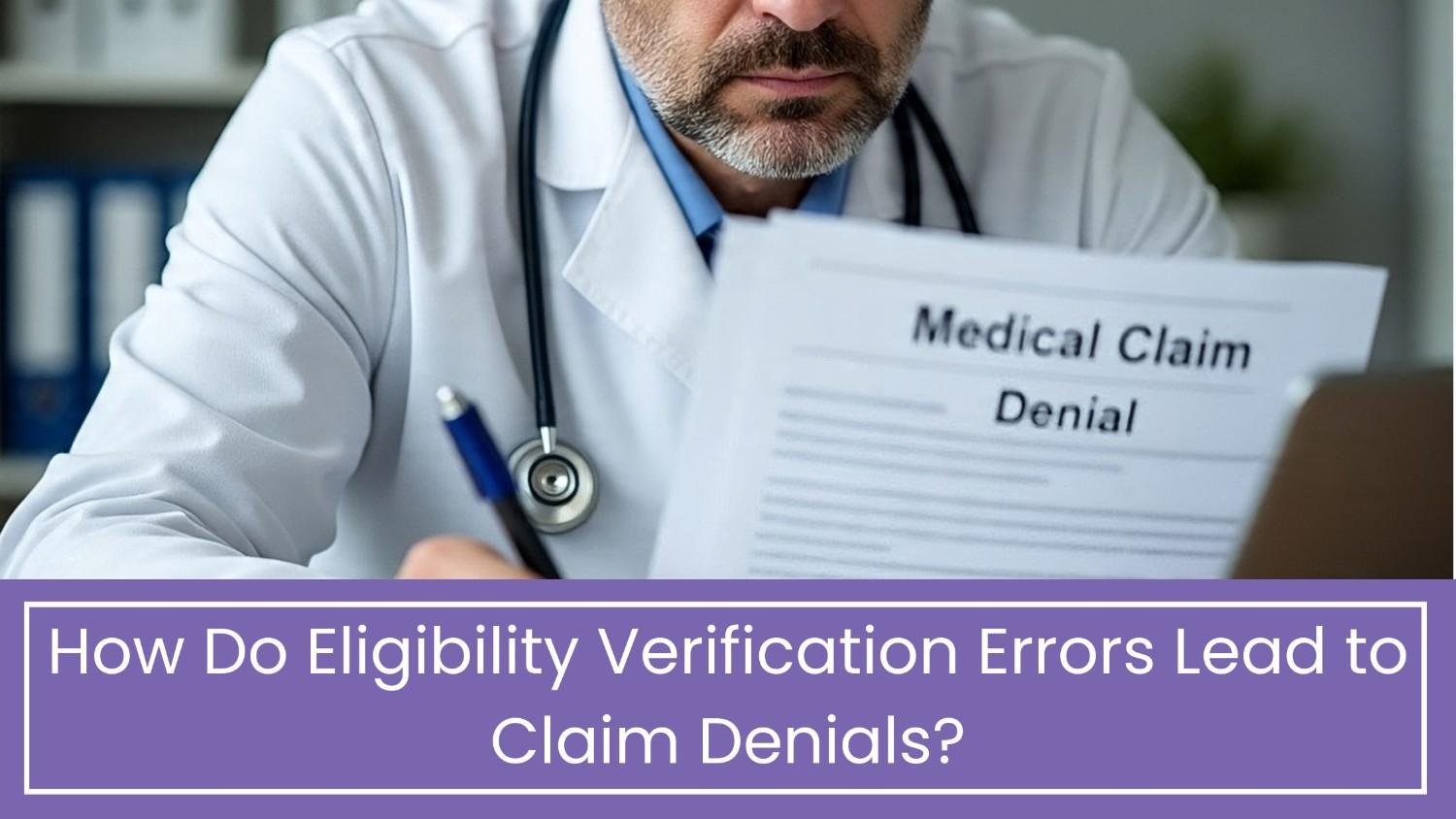
How Eligibility Errors Cause Claim Denials
Insurance eligibility verification is one of the most important steps in revenue cycle management. Understanding How Eligibility Errors Cause Claim Denials helps healthcare providers identify issues before claims are submitted. Insurance does not always mean the claim is payable. Preventable medical billing denials can be caused by mismatched insurance IDs, inactive coverage, out-of-date demographics, coordination-of-benefits issues, and misunderstood payer coverage rules.
Strong eligibility workflows help practices:
- Confirm active coverage before the encounter
- Verify insurance ID and patient demographics
- Identify copays, deductibles, and coinsurance
- Detect coordination-of-benefits issues
- Confirm applicable benefits and coverage limitations
- Identify services requiring prior authorization
- Improve first-pass claim acceptance
- Reduce avoidable claim rejections and denials
In 2027, real-time eligibility verification and healthcare revenue cycle management automation can make this process significantly simpler and more efficient. Nevertheless, this procedure requires appropriate workflows and human expertise.
CTA Button: Get Your Free Eligibility Audit
Table of Contents
What Is Eligibility Verification and Why It’s Your First Line of Defense
Patient eligibility checks confirm if insurance is active and if the plan covers the specific service. This step provides the clinic with key financial and administrative details before the patient is seen.
A comprehensive insurance eligibility verification process may confirm:
- Active or inactive coverage
- Insurance ID and group information
- Effective and termination dates
- Copay and deductible amounts
- Coinsurance and out-of-pocket responsibility
- Benefit limitations
- Coordination of benefits
- Primary and secondary insurance
- Referral requirements
- Prior authorization requirements
Electronic EDI 270/271 eligibility transactions can enable the practices and their trading partners to receive eligibility data electronically from payers.
In this case, the purpose is not only to identify that an individual has insurance, but also to establish whether it is possible to bill a particular encounter and what percentage of the patient’s financial responsibility should be.
CTA Button: Verify Your Front-End Revenue Cycle
How Eligibility Verification Errors Happen
Eligibility errors start at check-in but show up later as denied claims. Even with a good process, insurance details change over time. Often, the payer’s data simply does not match what the patient provides.
Common causes include:
- Entering an incorrect insurance ID
- Using outdated patient demographics
- Failing to identify a terminated policy
- Billing secondary insurance as primary
- Missing coordination-of-benefits information
- Assuming previous eligibility automatically remains valid
- Misunderstanding payer coverage rules
- Failing to identify authorization requirements
- Incorrectly entering subscriber information
- Relying on outdated verification results
For recurring patients, do not assume insurance stays the same. Employment, plans, payer relations, and coverage dates often change.
Automated real-time eligibility checks help cut down on mistakes, but your team still needs a clear way to handle gaps or data that won’t sync.
CTA Button: Identify Eligibility Gaps
The Real Cost of Eligibility Errors
An eligibility mistake costs your office more than just one unpaid claim. Your team wastes hours checking coverage, calling insurers, fixing files, and communicating with patients to chase down the missing revenue.
The financial impact can include:
- Higher medical billing denials
- Increased AR days
- Additional claim rework
- Delayed reimbursement
- Higher administrative labor costs
- Patient billing confusion
- Increased collection difficulty
- Reduced cash flow in healthcare
- Lower first-pass claim acceptance
- Lost revenue when timely filing or appeal deadlines are missed
There is a hidden cost here. When billing teams spend hours fixing simple mistakes, they can’t focus on harder tasks like chasing underpayments or managing complex denials.
Stopping errors before you send the claim is always faster than fixing them after they are rejected.
CTA Button: Calculate Your Eligibility Revenue Leakage
Common Denial Codes Linked to Eligibility Errors
Eligibility-related denials often use different codes and documentation. Don’t assume a code tells you the entire diagnosis. Always check the payer’s actual documentation and claim details to find the real fix.
Common eligibility-related issues include:
- Inactive coverage: the payer states that the coverage was inactive on the day of service;
- Invalid member information: the member’s insurance ID number or subscriber information does not match the ones in the database;
- Wrong payer: the claim is sent to the wrong insurer;
- Coordination of benefits: there is another payer that should be considered primary;
- Non-covered service: the service rendered may not be covered by the patient’s plan;
- Authorization issues: the service requires prior authorization;
- Different demographics: the patient’s demographics do not match the ones in the database.
Understanding the gap between claim rejection vs. denial is key. Rejections stop a claim before it starts, while denials happen after the payer reviews it.
CTA Button: Analyze Your Denial Patterns
How to Prevent Eligibility Verification Errors in 2026
Although this article looks at 2027 issues, firms must fix their eligibility checks today. The best way is to mix clear rules, smart technology, and staff accountability.
Start by:
- Verifying coverage before scheduled services
- Rechecking eligibility when appropriate for recurring visits
- Confirming insurance ID and subscriber information
- Reviewing patient demographics for accuracy
- Checking copays, deductibles, and coinsurance
- Identifying primary and secondary insurance
- Reviewing coordination-of-benefits information
- Confirming prior authorization requirements
- Documenting verification results
- Escalating unclear payer responses
Benefits verification software and EHR workflows cut down on busy work and make data easier to find.
But software cannot think for you. Insurance answers are often vague and need a human eye, especially for medical needs, network rules, or specific plan limits.
CTA Button: Modernize Eligibility Verification
Eligibility Verification Checklist: What to Confirm Before Every Visit
A standardized checklist stops front-desk staff from guessing. Verification needs change based on the specialty, payer, service, and patient.
Before an applicable visit, confirm:
- Patient name and date of birth
- Insurance ID
- Group number
- Subscriber information
- Active coverage on the date of service
- Primary and secondary insurance
- Coordination of benefits
- Copay
- Deductible
- Coinsurance
- Out-of-pocket status
- Provider network status
- Service or benefit limitations
- Referral requirements
- Prior authorization requirements
- Applicable medical necessity requirements
Practices should log verification dates and save the records based on their own rules.
This links patient access, billing, and denial prevention more effectively.
CTA Button: Download Your Eligibility Checklist
How Practolytics Eliminates Eligibility Errors
Practolytics can help practices streamline their front-end revenue cycle processes, including verifying insurance eligibility and linking eligibility information to downstream billing operations.
A structured workflow can help practices:
- Verify patient coverage before applicable services
- Confirm insurance and subscriber information
- Identify potential coverage issues earlier
- Review copay and deductible information
- Flag authorization requirements
- Reduce front-desk billing errors
- Improve clean claims
- Support first-pass claim acceptance
- Reduce eligibility-related rework
- Connect front-end verification with denial management
Automation can help practices with the repetitive nature of eligibility checks, while leaving exceptions and follow-up on specific payer responses to more experienced billing staff.
The objective is not to suggest that all denials will be prevented, since eligibility is just one element of the revenue cycle and claims can be denied for other reasons, such as coding, documentation, medical necessity, authorization, and payer policies.
Practolytics can help you transform eligibility verification from a reactive “damage control” function into a proactive revenue integrity function.
CTA Button: Talk to a Practolytics RCM Expert
Conclusion: Turn Eligibility Verification Into Your Revenue Safety Net
Eligibility verification must be regarded as a revenue-generating process, not an administrative function performed by front-desk personnel. The insurance details provided by the patient or the front-desk clerk can result in claim rejections, denial of medical bills, delayed reimbursements, additional A/R follow-ups, and patient frustration.
A stronger approach combines:
- Real-time eligibility checks
- Accurate patient demographics
- Insurance ID verification
- Benefits and financial responsibility review
- Coordination-of-benefits checks
- Prior authorization identification
- EHR-integrated workflows
- Automated exception alerts
- Consistent documentation
- Ongoing denial analysis
When eligibility is managed proactively, practices can realize cleaner claims, higher first-pass acceptance, reduced rework, and better cash flow.
Practolytics can help you create a fully connected front- and back-end revenue cycle that leverages insurance eligibility verification as a tool to both drive revenue capture and serve as a safety net for your cash flow.
CTA Button: Get Your Free Eligibility & RCM Audit
Frequently Asked Questions
1. How do eligibility errors cause claim denials?
Eligibility error claims are denied due to eligibility errors if the information about coverage or benefits presented by the provider does not match the information about patients’ insurance coverage. For instance, claims for encounters with terminated coverage, invalid member numbers, wrong payers, coordination-of-benefits problems, and services that are not considered under the patient’s benefits are denied. The coverage should be verified to ensure that the claims are not submitted with any eligibility problems.
2. Does a patient’s insurance coverage stay the same after it’s first verified?
Not necessarily. Insurance changes often. Jobs change, plans renew, or policies simply end. Even old patients might have new coverage by their next visit. Don’t assume a previous check is still right. Instead, set clear rules for verifying coverage based on your specific patient mix and the payers you deal with most.
3. Do only new patients cause eligibility errors?
No. Existing patients can also have coverage issues. Plans, IDs, employers, and benefit details often change between visits. Sometimes, patients just forget to give us the new info. Verifying eligibility before the visit catches these changes early. This stops bad claims and keeps your patient data accurate.
4. What does eligibility verification check besides active coverage?
A comprehensive patient eligibility check can provide information about effective dates, subscriber information, copays, deductibles, coinsurance, out-of-pocket maximums, benefit limits, network status, coordination of benefits, and sometimes authorization/referral requirements. The exact information available will vary by payer and eligibility transaction. Practices should make a distinction between verified payer information (typically related to coverage) and assumptions about the likelihood that a service will be reimbursed.
5. How much does it cost to rework a denied claim?
The price is determined by the claim’s complexity, staffing policy, payer, and the number of hours spent on the task. One error can quickly add up in terms of hundreds of denied claims requiring adjustment, which can make it very expensive. The practices should consider the number of eligibility-related claims denied and the hours needed for their removal to identify the true cost.
6. What’s the difference between an eligibility denial and a prior authorization denial?
An eligibility-related denial happens when insurance info is wrong or expired. A prior authorization denial occurs when the payer wants approval before a service is done. These are two different issues that need different fixes. Verifying eligibility checks if the plan is active, while prior authorization ensures the payer will actually pay for the care.
7. How often should practices verify patient eligibility?
There is no one-size-fits-all rule for checking insurance. Most teams verify coverage before every visit and do extra checks when the payer or patient situation changes. Do not assume a regular patient is always covered. Build a clear process that fits your specific specialty, your payers, and your risk level.
8. Can automation fully eliminate eligibility verification errors?
No technology can ensure that all eligibility errors are eliminated. Automation can help reduce manual data entry, enable the verification process to be more consistent, carry out checks in real time, and identify discrepancies and errors quickly. In addition, payer databases may sometimes be incomplete or require interpretation, and certain coverage questions can only be resolved through human intervention. Thus, the most effective method is to combine healthcare RCM automation with the right level of human expertise and well-defined exception-handling protocols.
9. How does Practolytics help reduce eligibility-related claim denials?
Practolytics can help your team check insurance and find coverage gaps before you bill. By catching these mistakes early, your staff can fix them before claims are sent. We also help you track why claims get denied. Instead of fixing the same errors over and over, you can use that data to fix the actual process for good.
CTA Button: Reduce Eligibility-Related Denials

ALSO READ – Understanding Eligibility and Benefits Verification: A Guide for Medical Practices
Talk to Medical Billing Expert Today — Get a Free Demo Now!