
Healthcare RCM Services Companies in South Dakota
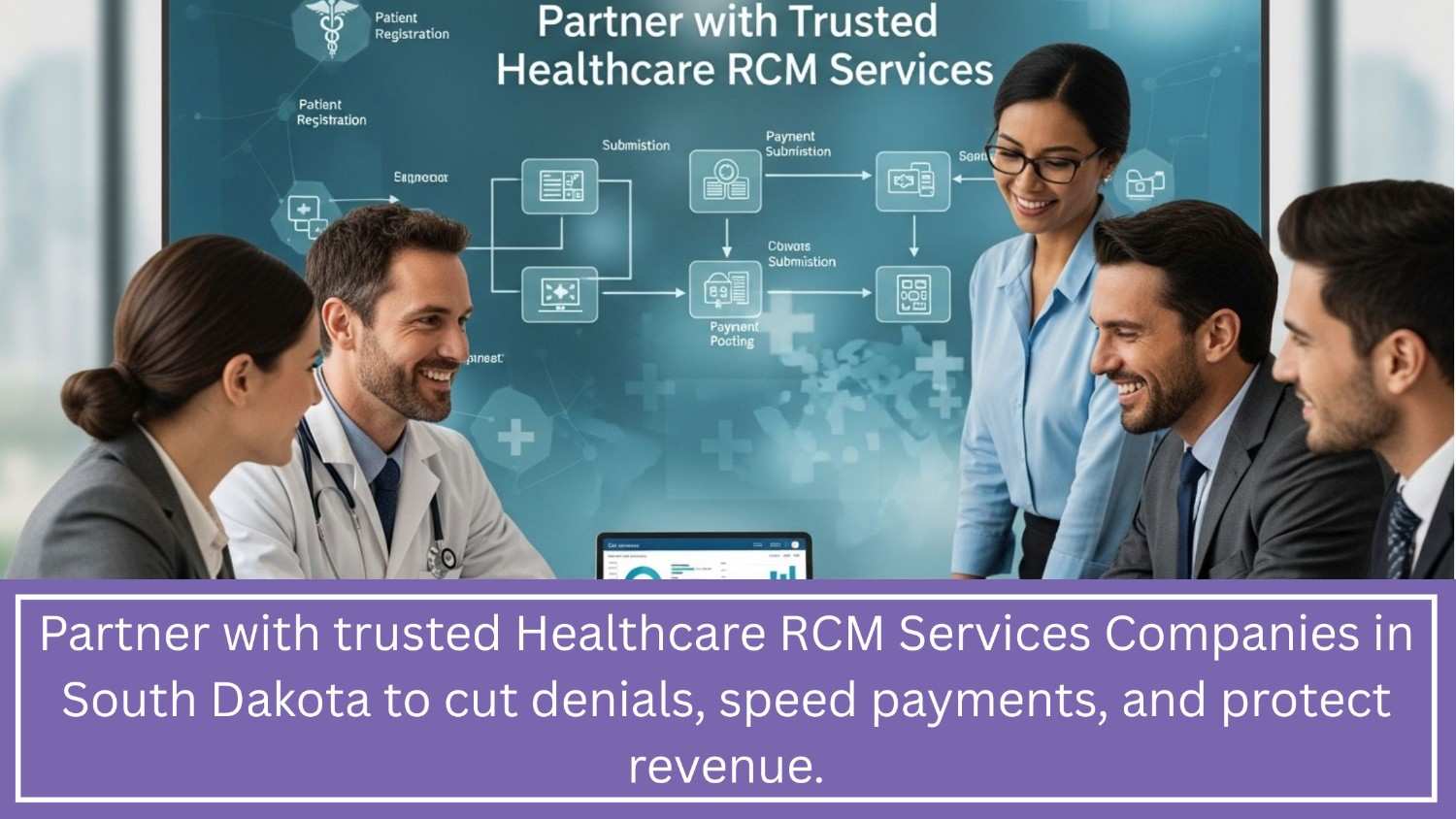
Partnering with local Healthcare RCM services companies in South Dakota helps your practice cut denials, accelerate reimbursements, and maintain steady cash flow. With region-specific payer knowledge and hands-on support, these experts streamline billing, improve claim accuracy, and ensure faster revenue recovery while letting your team focus on patient care.
Table of Contents
South Dakota — Why Local RCM Actually Changes Your Bottom Line
You can’t paper over poor billing with charm. If your clinic still treats revenue cycle management like a glorified filing job, you’re leaking money every month. This long-form guide explains, plainly and usefully, how End-to-End Revenue Cycle Management Services in South Dakota (yes — the full stack from eligibility checks to final collections) deliver measurable cash, fewer denials, and a sane accounting rhythm. I’ll also show how to evaluate Healthcare RCM Companies in South Dakota, what questions separate the talkers from the doers, and how to get results without throwing away your budget.
The Problem (short, real, and unglamorous)
Rural markets, small patient panels, and complex payer mixes don’t forgive sloppy revenue cycle work. You’ve seen it: high denial rates, AR buckets that never shrink, clinicians who hate documentation because it never helps collections, and leaders who guess at cash flow. Those aren’t “process issues” you can ignore — they’re structural. Fix them, and you free payroll for care. Ignore them, and you compromise hiring, investment, and patient services.
That’s where Revenue Cycle Management Companies in South Dakota come in. Not every vendor is created equal — some sell dashboards and excuses, others deliver recovered dollars and steady Days in AR. Your job when choosing a partner is to pick the latter.
What Good End-to-End Revenue Cycle Management Services in South Dakota actually do
“End-to-End” is a promise, not a box to check. Real end-to-end service means:
- Front-end controls: eligibility and benefits verification that reduce patient surprise bills.
- Accurate charge capture and coder review so claims are correct before submission.
- Payer-aware claim scrubbing — rules tailored to local and state payers, not generic “one-size” scrubs.
- Timely denial management with templates and payer playbooks for South Dakota payers.
- Persistent AR follow-up and patient-friendly collections that recover revenue without burning patient relationships.
When delivered well, these services aren’t just outsourced tasks — they’re a revenue engine. That’s the difference between hiring “Healthcare RCM Services Companies in South Dakota” for reports and hiring one that produces predictable cash.
How to Evaluate Healthcare RCM Companies in South Dakota — skip the Sales Pitch, Ask for Proof
Stop listening to glossy brochures. Ask these blunt, practical questions:
- Show me payer-level FPRR and denial recovery reports for clients similar to my size.
- What is your onboarding timeline and what does your EHR integration look like (sandbox, test claims, mapping)?
- How do you price your services — fixed fee, percent of collections, hybrid? Show the math.
- Who handles appeals for high-value denials and what are their credentials?
- Provide three South Dakota references I can call.
Vendors that dodge these questions are selling optimism, not results. If a vendor can’t show documented wins for South Dakota clinics, move on. Regional knowledge matters — not because of local patriotism but because payer quirks and state Medicaid rules materially change outcomes.
The KPI Truth: What you Must Track (and which numbers actually matter)
Metrics are useful only if they influence action. Demand dashboards that show:
- Clean Claim Rate (first-pass acceptance).
- Days in AR (collect speed; this is your heartbeat).
- First Pass Resolution Rate (FPRR) by payer.
- Denial Rate and Denial Recovery Rate (dollars recovered vs. dollars denied).
- Net Collection Rate (final % of charges collected).
- AR >120 days as a percent of total AR.
If your vendor only sends a monthly PDF, you’re outsourcing blind. Good partners deliver weekly buckets, payer drilldowns, and a remediation plan for underperforming lines.
South Dakota Healthcare Revenue Optimization Services — what that Looks like in Practice
Optimization is not a single fix — it’s a set of pragmatic, repeatable moves:
- Build payer-specific scrubbing rules that reduce denials from the biggest local payers.
- Use targeted clinician documentation coaching for high-denial CPTs.
- Prioritize appeals with highest expected net recovery (predictive appeals).
- Automate routine follow-ups and escalate the rest to humans who understand the state’s claim adjudication patterns.
That’s what South Dakota Healthcare Revenue Optimization Services do: they blend automation with local payer knowledge to make your revenue predictable.
Outsourcing RCM Companies in South Dakota — When it’s the Right Move (and when it isn’t)
Outsourcing is the right move when:
- Your in-house team can’t scale for seasonality or a growth wave.
- Talent shortage means you’re paying a premium for a single coder or denial specialist.
- You need a predictable operating expense to stabilize cash flow.
It’s not the right move if:
- You treat outsourcing as “set it and forget it.” You must manage the vendor.
- You don’t have basic contract safeguards (SLA, KPIs, penalties).
- You hire the cheapest offer without checking recovery proof.
Affordable RCM Services in South Dakota can mean different things. Cheap is cheap. Affordable should mean aligned incentives and transparent reporting. If a vendor offers a “too-good-to-be-true” percent-of-collections with no baseline metrics — run.
Mistakes Clinics Make When Shopping for Top RCM Companies in South Dakota
- Choosing price over proven outcomes.
- Ignoring EHR integration complexity.
- Not verifying payer-level performance in comparable organizations.
- Accepting vague SLAs.
- Believing “Best RCM Services in South Dakota” is a title a vendor gives itself.
When you see a vendor claim they’re one of the “BestRCM Companies in South Dakota,” ask for the data behind that claim. Don’t take awards at face value.
What to Expect in a Well-Structured Contract with Outsourced RCM Companies in South Dakota
- Clear SLAs with measurable KPIs (FPRR, Days in AR, denial reduction targets).
- A phased onboarding plan with specific deliverables and test claims.
- Transparent fee structure and an exit clause that doesn’t wreck your operations.
- Data-access rights and regular review cadence (weekly initially, then biweekly/monthly).
- Security and HIPAA compliance proof.
No contract? No deal. Vague timelines? No deal.
RCM Companies Near me — how to use Local Presence (and when to ignore it)
Local vendors matter for rapid onsite audits, closer client management, and faster credentialing help. However, don’t confuse “local” with “better.” If you search “RCM Companies Near me” and find options, evaluate them on their South Dakota track record, not geographic proximity alone. A national firm with a documented SD playbook can outperform a local vendor that only knows one county.
The Future and How to Stay Ahead
Expect three practical trends to dominate:
- Automation + human review: bots handle scale, humans handle complexity.
- Telehealth optimization: vendors will offer telehealth-specific packages and codes built for rural workflows.
- Predictive appeals: analytics will prioritize the appeals that actually move the needle.
If your RCM partner still treats telehealth like another claim type, they’re behind. Demand telehealth expertise as standard.
Quick Checklist Before you Sign
- Can the vendor show payer-level FPRR and denial recoveries for similar SD clients?
- Do you have a live demo of the advancedMD EHR integration (sandbox)?
- Are SLA penalties and exit terms fair?
- Do you receive weekly AR buckets and an actionable remediation plan?
- Is their pricing transparent and performance-linked?
If you answer “no” to any of the above, don’t sign yet.
Final, Blunt Advice
RCM isn’t a vendor selection exercise — it’s a business transformation. Hire a partner to offload operational work, but manage them like a critical supplier. Demand evidence, reject vague promises, and keep your leadership informed with the right KPIs. The right Revenue Cycle Management Companies in South Dakota will give you cleaner claims, less administrative churn, and the breathing room to invest in care. The wrong one will give you glossy dashboards and the same collections problems.
Frequently asked questions (short, useful)
Q: How do you handle telehealth reimbursement?
A: We map each service to payer policy, use the right modifiers/place-of-service codes, and ensure documentation shows modality and medical necessity.
Q: What about balance billing and state rules?
A: We verify network status, produce clear patient statements, and follow state consumer-protection rules while offering patient-friendly payment plans.
Q: Will your RCM integrate with our EHR?
A: Most modern RCM platforms support HL7, FHIR, or API connectors. Ask for a sandbox test and a data-mapping plan during procurement.
Q: What FPRR should I expect?
A: Top outpatient vendors target FPRR >90%; ask for payer-specific benchmarks and historical performance during evaluation.
ALSO READ – Essential Tips for Error-Free Orthopedic Billing and Coding: Boost Your Practice’s Financial Health
Talk to Medical Billing Expert Today — Get a Free Demo Now!