
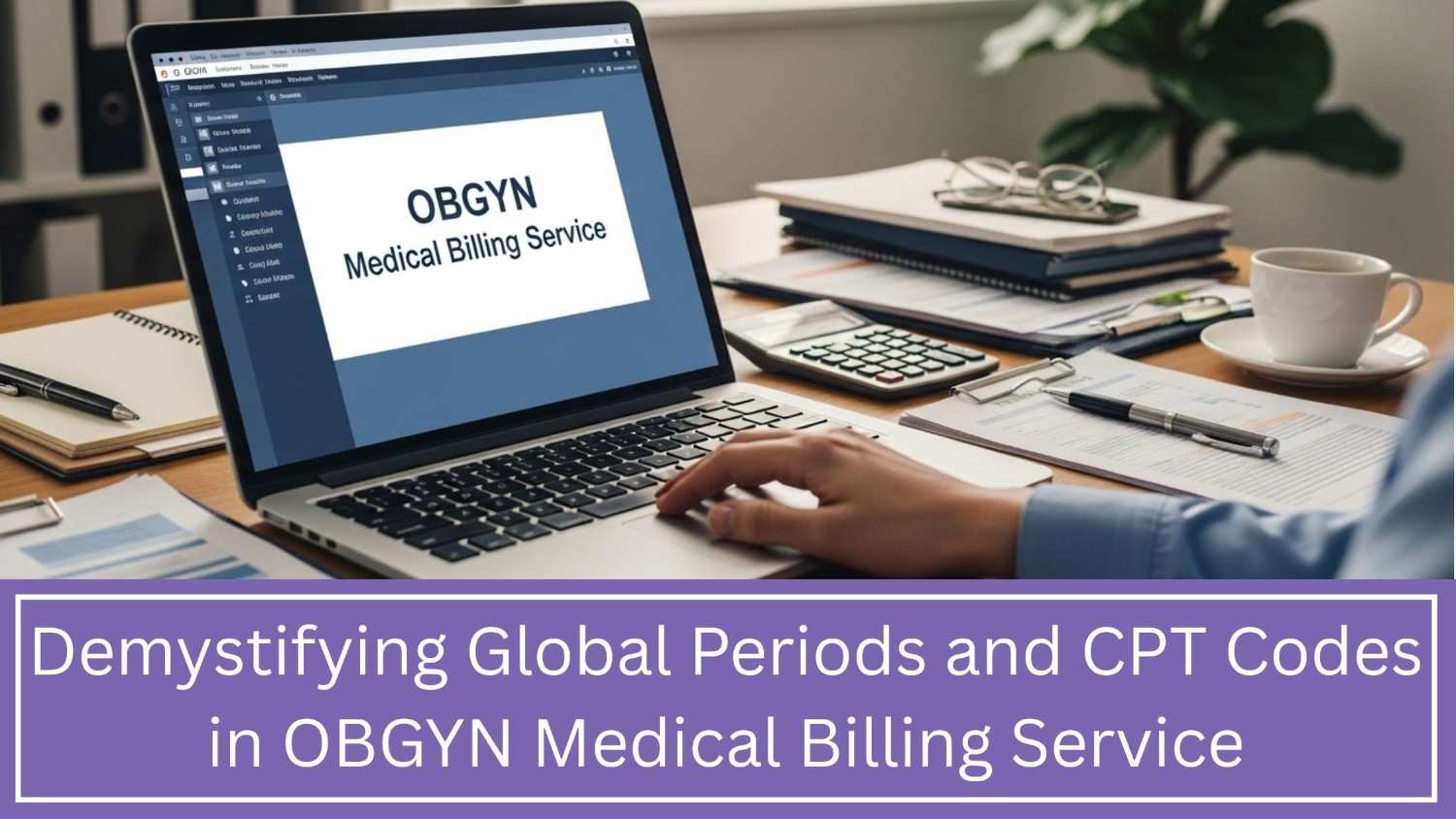
Demystifying Global Periods and CPT Codes in OBGYN
OBGYN billing errors quietly reduce your revenue. Global periods and CPT codes determine reimbursement for prenatal care, deliveries, procedures, and follow-ups — and even a small mistake leads to denials, delays, and extra work. Demystifying Global Periods and CPT Codes in OBGYN explains what they mean, why they matter, and where practices go wrong. You’ll learn common billing mistakes, payer expectations, and practical ways to submit clean claims that get paid faster — no confusion, just results.
Table of Contents
Demystifying Global Periods and CPT Codes in OBGYN Medical Billing Service
OBGYN billing should be simple—but mistakes drain profits. Payments hinge on global periods and CPT codes for prenatal care, births, and follow-ups. Slip up, and denials pile up, leaving you scrambling to fix errors while money walks out the door.
We’ll break down how these rules work, why they matter to your cash flow, and how to dodge costly slip-ups. Cleaner billing, fewer fires to put out, more money staying where it belongs.
Why Understanding Global Periods Matters
In medical billing, a global period bundles all services tied to one procedure or treatment phase. For OBGYN practices, this matters most for:
- Childbirth (vaginal or C-section)
- Pregnancy care (before and after delivery)
- Surgeries
Clear billing keeps revenue flowing. During the global period, bundled services apply—don’t bill for individual visits or related care separately.
Wrong billing? Claims get rejected. Miss the global service? That’s lost revenue.
Keep it clean, bill it right.
What Are CPT Codes? A Simple Explanation
CPT stands for Current Procedural Terminology. These codes track medical billing services, so insurers know what was done and what to pay.
Examples:
- 59400 – Full pregnancy care, from checkups to delivery
- 59510 – Pregnancy care ending in C-section
- 99213 – Standard office visit for existing patients
Use CPT codes right—match them to diagnoses, notes, and timing rules—or claims get rejected.
What Is a Global Period in OBGYN?
A global period bundles payment for all care tied to one major procedure. For OBGYN, this means:
1. Full Pregnancy Package
Prenatal checks, delivery, and follow-ups get billed as a single package—no nickel-and-diming per visit. One code covers the whole journey, keeping billing clean and predictable.
2. Delivery-Only Billing
Some insurers split maternity costs—covering just the delivery, not prenatal or postnatal care. Those services get billed separately.
3. Surgeries with Bundled Fees
Some ops, like tubal ligations or post-birth D&Cs, include follow-up care in one flat fee. No extra charges for standard post-op visits.
Global Period Lengths You Must Know
Global periods break down like this:
- 10 days: Covers follow-ups for minor procedures
- 90 days: Handles major treatments, like most births
- 0 days: No bundled care—separate visits stay separate
Clear timelines, cleaner billing.
In OBGYN, childbirth bundles services under a flat fee. Here’s how it works:
90-day package: Prenatal checks, delivery, and postpartum visits—all covered in one price. No extra billing for standard care during this window. Simple, predictable, and patient-friendly.
How CPT Codes and Global Periods Work Together
The key rule:
When a CPT code has a global period, you can’t bill extra for related services.
Example:
Code 59400 (pregnancy care) includes all visits from start to postpartum. Charging separately for check-ups during this time? Not allowed.
However, there are cases where a patient needs care for a different issue—something not tied to maternity services.
Insurers may ask for proof that the visit was separate. Without proper docs, they could reject the claim.
Common CPT Codes in OBGYN Billing
Here’s a breakdown of key CPT codes for OB/GYN billing, showing what’s included in global care packages:
Obstetric Services
- 59400 – Full pregnancy care (before, during, and after birth)
- 59510 – Pregnancy care with C-section delivery
- 59610 – Vaginal birth after prior C-section
- 59618 – Repeat C-section delivery
These codes bundle all related care—no separate billing for prenatal visits, delivery, or follow-ups.
Gynecologic Procedures
- 58150 – Full removal of uterus (abdominal approach)
- 57454 – Cervical exam with tissue sampling
- 58120 – Uterine lining biopsy
Note: Some procedures include follow-up care; others bill separately.
Evaluation and Management (E/M) Codes
- 99212–99215 – Follow-up patient visits
- 99202–99205 – First-time patient visits
Bill separately only if the visit is unrelated to the main treatment. Otherwise, it’s included in the global fee.
How Payers Review Global Period Claims
Payers use straightforward checks to verify global period compliance. They examine:
- Service dates—are they within the global period?
- Notes—Does documentation show the visit was part of the episode?
- Diagnosis codes—do they match routine post-op care?
- Procedure codes—are only approved services billed?
Clear, efficient, no guesswork.
If any part of your claim doesn’t add up, insurers might:
- Reject it outright
- Pay less than asked
- Ask for more proof
- Send it back to fix
Common Mistakes Practices Make
Even experienced billing teams make costly mistakes. Here’s what kills your reimbursement speed:
1. Charging for Post-Op Checkups
Insurers already pay for routine visits during recovery. Billing them again? Instant denial.
2. Weak Paperwork
No clear note proving the visit was unrelated to surgery? The claim gets tossed.
3. Not Tracking Timelines
Missing global period start/end dates means incorrect claims—and lost revenue.
4. Wrong CPT Codes Cost You
Using a delivery-only code instead of the full obstetric global code? That’s money left on the table.
5. Payer Rules Aren’t Universal
Each payer has its own global period edits. Assume nothing—verify everything.
How to Avoid Errors in Global Period Billing
Here are clear steps to boost medical billing accuracy:
Step 1: Track Global Period Dates
When coding deliveries, always note:
- Start date of the global period
- How many days does it cover?
- Which services are bundled
This keeps claims clean and prevents costly mistakes.
Step 2: Get Your Team Documentation-Ready
Solid records keep claims from getting denied. Train staff to track:
- Why the patient came in
- If it falls under the global period
- Separate issues and treatments
Step 3: Work Smarter with Checklists
Quick-reference lists for:
- Delivery billing
- Postpartum checkups
- Linked services
Cuts mistakes and speeds up claims.
Step 4: Know Your Payer Rules
Medicare, Medicaid, and private insurers don’t play by the same rules. Keep your practice manual current—outdated info costs you.
Step 5: Track Denials Like Cash
Every denied claim tells a story:
- Was timing off with the global period?
- Did codes and diagnoses match?
- Was your paperwork solid?
Spot the trends. Stop the leaks.
Trends and Updates in OBGYN Billing (2025–2026)
Billing rules keep changing. Stay ahead with these key shifts:
AI-Powered Coding
New tools auto-recommend the right CPT/ICD codes from your notes—cutting mistakes before they happen.
Instant Error Checks
Modern systems flag global period violations before claims go out, saving time and denials.
Data-Driven Denial Fixes
Clinics now track which codes trigger denials during global periods, fixing issues before claims go out.
Payer Rules Made Easy
Some insurers share global period guidelines upfront, helping clinics submit cleaner claims the first time.
Why Proper Global Period and CPT Coding Speeds Reimbursements
Put simply, clean billing means more money in your pocket faster. When ICD-10 and CPT codes match patient records perfectly, insurers pay quickly because:
- No back-and-forth requests
- Fewer hands touching your claim
- Fewer denials
- Fewer appeals
- Steadier cash flow
When global periods align with CPT codes, claims sail through the system. The result? Predictable revenue for your clinic—exactly how you need it.
Conclusion — Get Billing Right and Get Paid Faster
Global periods and CPT codes aren’t just paperwork—they’re profit drivers. Nail them, and you’ll slash denials, get paid faster, and free up your team to focus on patients, not billing headaches.
Stuck on global periods or payer rules? Outsourcing or bringing in experts can turn chaos into cash flow.
How Practolytics Can Help You Master OBGYN Billing
Practolytics helps OB/GYN clinics nail their billing—no guesswork. We catch errors before claims go out, track payer rules, and keep your revenue flowing. Here’s how:
- Always use the correct CPT codes
- Make visit notes payer-ready
- Stop denials before they hit
- Train your team to bill right
- Get paid faster, keep cash moving
Less hassle. More money. Every time.
Practolytics combines expert know-how with smart systems to keep your claims clean, correct, and paid fast.
Stop missing money on avoidable billing mistakes. We handle your global period and CPT coding—you handle your patients.

ALSO READ – Decoding CPT: Your Guide to Codes and Regulations 2024
Talk to Medical Billing Expert Today — Get a Free Demo Now!