
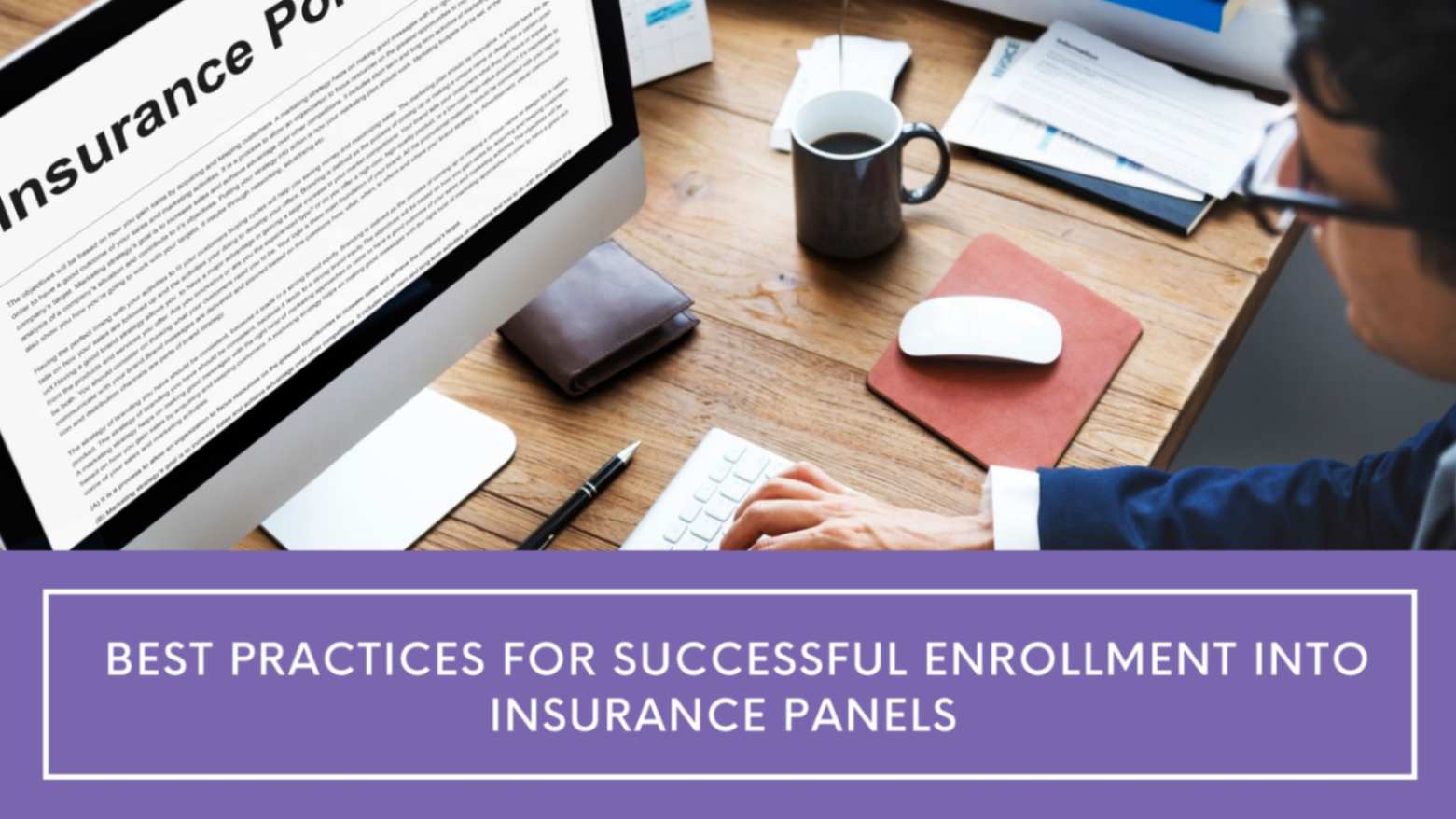
Best Practices For Successful Enrollment Into Insurance Panels
Getting a provider approved on insurance panels takes more than filling out a form. It takes the right steps, done the right way. That’s why credentialing best practices for successful enrollment insurance panels matter so much. Skip a step, and approval gets delayed for weeks. In this guide, we cover what credentialing really means, mistakes that slow things down, and how we, at Practolytics, help practices get providers approved faster, with a lot less back and forth.
Getting paneled with insurance companies sounds easy at first. Fill out forms. Wait for approval. Start seeing patients. But it rarely goes that smoothly.
A lot of practices run into delays. Missing documents. Confusing back and forth with payers. Even experienced practices get caught off guard, especially when adding a new provider or expanding into a state they haven’t worked in before. The good news? Most of this is avoidable. Once you know the right steps, credentialing gets a lot easier. Let’s break it down.
Table of Contents
What Is Provider Credentialing and Why Does It Matter?
Provider credentialing checks a provider’s qualifications. Licenses, training, work history. All of it gets checked and confirmed. Think of it as the background check that happens before a provider is trusted to bill insurance for the care they give.
Here’s why this matters:
- Without it, a provider can’t legally bill most insurance companies.
- It protects patients. It confirms a provider is truly qualified.
- It keeps your practice in line with payer and state rules.
- It’s the first step toward getting on any healthcare provider panel.
Skip credentialing, or rush it, and approval gets delayed. Sometimes for months.
A lot of practices ask, how do I get on insurance panels without losing all this time? The answer starts here. Take credentialing seriously from day one. Don’t treat it as an afterthought once a new provider joins your team.
Credentialing vs Provider Enrollment: Understanding the Difference
People mix these two up a lot. They’re related. But they’re not the same thing.
Credentialing checks a provider’s qualifications. It confirms licenses, education, and work history are correct and current.
Provider enrollment comes next. This is the enrollment process in healthcare where a provider gets registered with specific insurance payers. So they can actually bill for services.
Simple way to remember it:
- Credentialing asks, “is this provider qualified?”
- Enrollment asks, “can this provider bill this specific payer?”
Both steps need to happen. Before a provider can start seeing patients under a certain plan. Skipping straight to enrollment, before credentialing is done, is a common mistake practices make when trying to move fast.
7 Best Practices for Successful Insurance Panel Enrollment
Here are seven things that really help with getting on insurance panels smoothly. Practices that stick to these steps every time usually run into far fewer surprises along the way.
- Start early. Credentialing takes time. Begin well before a provider’s start date.
- Keep documents organized. Licenses, certifications, work history. All easy to find, all up to date.
- Fill out applications completely. Missing fields are one of the biggest reasons approval gets delayed.
- Check payer-specific requirements. Every insurance company has slightly different rules.
- Track application status often. Don’t wait for the payer to reach out first.
- Follow up fast on requests. If a payer asks for more info, respond right away.
- Keep CAQH profiles updated. An old profile can slow down insurance panel participation across many payers at once.
Follow these seven steps. Most delays become avoidable.
Common Credentialing Mistakes That Delay Insurance Approval
Even good practices run into these problems. Here’s what we see most:
- Incomplete or outdated CAQH profiles.
- Missing malpractice insurance documents.
- Expired licenses or certifications sent in by mistake.
- Applications sent to the wrong payer department.
- Slow replies when a payer asks for more info.
- Not tracking application status, so delays go unnoticed for weeks.
- Assuming one payer’s approval means another will move just as fast.
Each mistake seems small alone. But they add up fast. And they push back when a provider can start billing. A single missing document can hold up an entire application for weeks, even when everything else on the form is correct.
How Long Does Insurance Credentialing Take?
One of the most common questions we hear. Honest answer, it depends.
- Some payers approve in a few weeks.
- Others take two to three months. Sometimes longer.
- Multi-state credentialing usually takes more time. Each state has its own rules.
- Clean, complete applications move much faster than ones missing info.
The biggest thing within your control is how complete the application is from the start. Clean paperwork moves faster, every time. Rushing to save a few days upfront often costs weeks later, once a payer sends it back asking for fixes. It’s almost always faster to slow down at the start than to speed through and deal with corrections after the fact.
How Practolytics Simplifies Provider Credentialing?
This is where we help. At Practolytics, credentialing is something we handle every day. For practices across many specialties.
Here’s what we bring:
- We track every application closely. Nothing sits stuck without follow up.
- We follow up with payers often. This cuts down on delays.
- We keep CAQH profiles updated and accurate at all times.
- We understand the member enrollment process in healthcare, across many payers.
- We work across 28 plus specialties. So we understand your needs.
Whether you’re paneling with insurance companies for the first time, or managing credentialing for a growing group, we shape our support around your practice. We also keep your team updated the whole way. So you’re never left wondering where an application stands. Clear updates matter just as much as speed, especially when you’re juggling multiple providers at once.
Why Healthcare Practices Choose Professional Credentialing Services?
A lot of practices eventually ask, how do I get paneled with insurance companies without losing weeks to paperwork? That’s usually when they turn to a dedicated credentialing partner. Here’s why:
- Credentialing takes special knowledge that changes often.
- In-house staff are often stretched too thin to manage it well.
- Mistakes cause real delays. Real delays mean real lost revenue.
- A dedicated team catches errors faster than staff juggling other tasks.
- Outsourcing usually means faster approval and less stress for your team.
If your practice is growing, or expanding into new states, this kind of support matters even more. What’s manageable for one or two providers can get overwhelming fast, once you’re credentialing several providers across multiple states and payers at the same time. Having a dedicated team in place before that growth happens saves a lot of stress down the road.
Conclusion
Credentialing doesn’t have to be this slow, confusing process. With the right steps, and the right partner, providers get approved faster and start seeing patients sooner. Practices that stay organized and start early usually avoid most common delays altogether. At Practolytics, we help practices simplify enrollment in medical billing and credentialing from start to finish. If your practice is tired of chasing paperwork, we’d love to talk about how we can help.
FAQs
What is provider credentialing?
Provider credentialing checks a healthcare provider’s qualifications. This includes:
- Verifying licenses.
- Checking education and training.
- Confirming work history.
It confirms a provider is qualified to treat patients. It’s usually the first step before they can bill any insurance company.
Why is insurance credentialing important for healthcare providers?
Without credentialing, a provider can’t legally bill most insurance plans. This means no payment for the care they give. No matter how good that care is. Credentialing also protects patients by confirming a provider’s qualifications are accurate. And it keeps practices in line with payer and state rules.
How long does insurance credentialing take?
Timelines vary a lot. A few things to know:
- Some payers approve in a few weeks.
- Others take two to three months.
- Multi-state credentialing usually takes longer.
- Clean, complete applications move faster than ones with missing info.
Starting early and staying organized helps a lot here.
What documents are needed for provider credentialing?
Common documents include:
- A valid medical license.
- Board certifications.
- Malpractice insurance details.
- Education records.
- Work history.
Payers may also ask for references or extra verification. Keeping these organized and current speeds up the whole process.
What is CAQH and why is it important for credentialing?
CAQH is a central database many insurance companies use to collect provider info. Keeping your CAQH profile complete and updated helps speed up credentialing across many payers at once. A lot of payers pull directly from that same profile, instead of asking for separate paperwork each time.
What causes credentialing delays?
A few common causes:
- Incomplete applications.
- Outdated CAQH profiles.
- Missing malpractice insurance details.
- Slow replies to payer requests.
- Not tracking application status regularly.
Most delays come down to small, avoidable details that get missed along the way.
Can credentialing services help providers join insurance panels faster?
Yes, often a lot faster. A dedicated credentialing team tracks applications closely. Follows up with payers regularly. Catches errors before they cause delays. This usually means providers get approved and start billing sooner than managing it alone.
Why choose Practolytics for credentialing services?
We handle credentialing every day, across many specialties. So we know what slows the process down, and how to avoid it. Here’s what that means for your practice:
- Careful tracking of every application.
- Regular follow up with payers.
- Updated, accurate CAQH profiles.
- Support across 28 plus specialties.
We treat credentialing as part of your revenue. Not just paperwork sitting off to the side. ALSO READ – Top Mistakes in Credentialing Process that Cause Revenue Loss for Medical Practices
Talk to Medical Billing Expert Today — Get a Free Demo Now!