
Cardiology Billing Requirements For Advanced Device Documentation
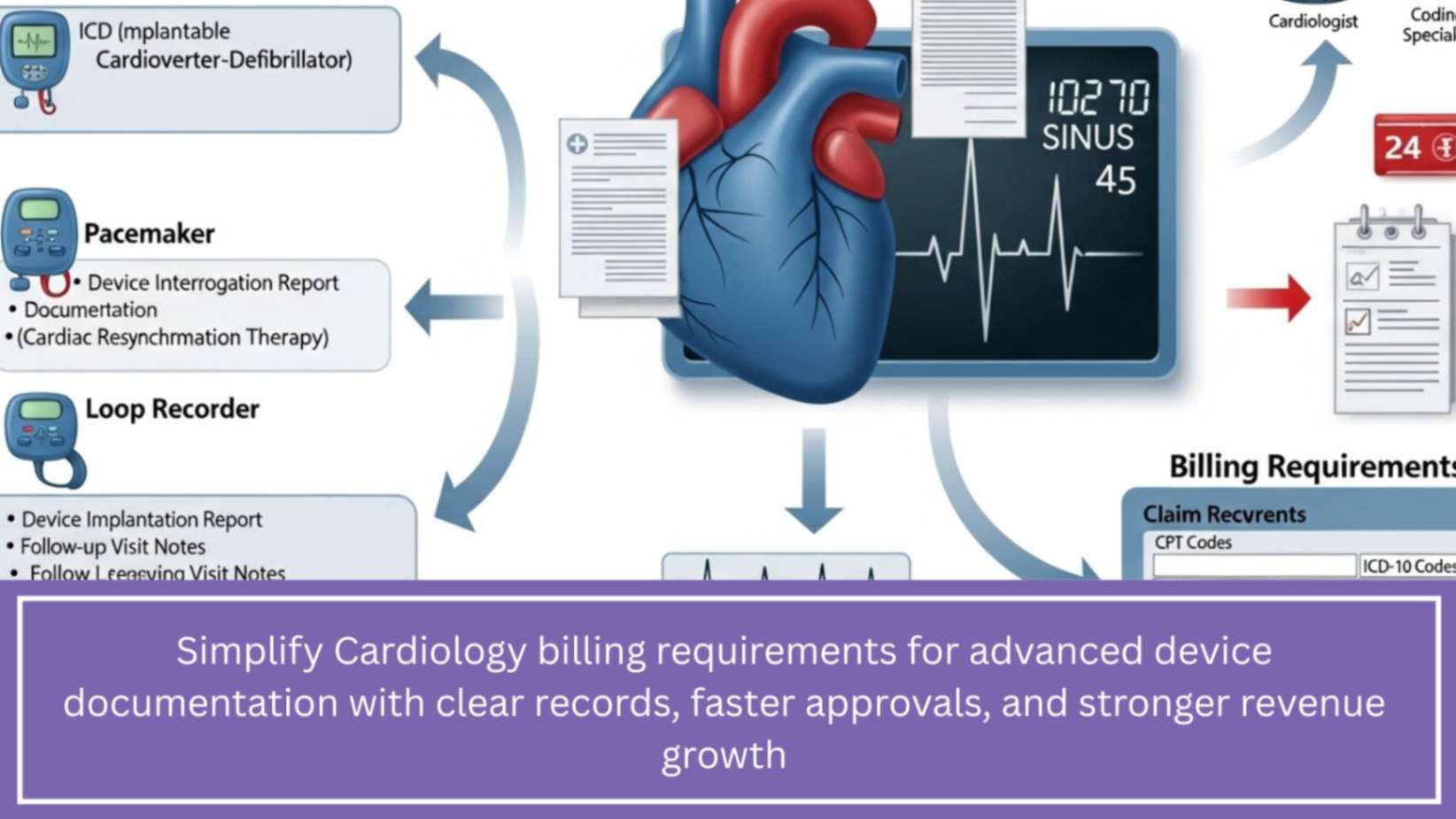
Billing for advanced cardiac devices is different from standard office billing. These procedures are complex, costly, and highly reviewed by payers. Because of that, strong records are required at every stage. This is why Cardiology billing requirements for advanced device documentation are so important for cardiology groups.
Advanced devices help patients with rhythm disorders, heart failure, and other serious conditions. These services improve care, but billing them correctly needs detailed support. Payers want to know:
- Why the device was needed
- What tests supported treatment
- What procedure was performed
- Which device was used
- Whether follow-up care was completed
- Whether coding matches documentation
At Practolytics, we help providers simplify these steps. Our goal is to reduce denials, improve collections, and protect compliance.
We also support practices with:
- Cardiology Billing Requirements
- Cardiac Device Billing Guidelines
- Medicare cardiology Device Billing Rules
- Cardiology Billing for Implantable Devices
- advanced device documentation for billing
When records are complete and clear, practices get paid faster and face fewer problems.
Table of Contents
Why Advanced Device Documentation Is a Revenue and Compliance Priority?
Advanced device claims often represent high-value revenue. A single denied claim can affect monthly collections. That is why documentation should never be treated as a small task.Good documentation helps tell the full patient story. It links the diagnosis, medical need, procedure, and billing code into one clear record.
Why revenue depends on documentation?
When documentation is strong:
- Claims are processed faster
- First-pass acceptance improves
- Denials decrease
- Appeals reduce
- Staff spends less time fixing errors
- Revenue becomes more predictable
When documentation is weak:
- Claims are rejected
- Payment is delayed
- Appeals increase
- Rework costs rise
- Patient statements may be wrong
Even one missing note can slow payment for weeks.
Why compliance matters?
Payers, auditors, and government programs expect accurate records. Claims must match what was medically necessary and what was actually performed.
This is especially important under Medicare cardiology Device Billing Rules. Medicare may review:
- Diagnosis support
- Coverage criteria
- Proper coding
- Signature completion
- Medical necessity language
- Device-related records
How Practolytics helps?
We help practices create reliable billing systems through:
- Documentation reviews
- Coding validation
- Workflow cleanup
- Denial trend analysis
- Staff education
- Compliance support
When revenue and compliance work together, practices stay stronger.
Understanding Advanced Cardiac Devices and Billing Complexity
Advanced cardiac devices save lives, but they also create billing complexity. Different devices have different coding paths, payer rules, and follow-up needs.
Common advanced devices
Cardiology groups may bill for:
- Pacemakers
- Implantable cardioverter defibrillators (ICD)
- Cardiac resynchronization therapy pacemakers (CRT-P)
- Cardiac resynchronization therapy defibrillators (CRT-D)
- Insertable loop recorders
- Remote cardiac monitoring devices
Each service may require different records.
Why billing becomes complex?
The same diagnosis does not always mean the same claim. Coverage may depend on:
- Severity of symptoms
- Ejection fraction results
- Prior medication therapy
- Failed treatment history
- Rhythm findings
- Hospital status
- Procedure setting
That is why Cardiology Billing for Implantable Devices requires specialized attention.
Coding areas that matter!
Many claims rely on:
- CPT codes for cardiology devices
- ICD-10 codes cardiac devices billing
- Cardiology device procedure codes
- Cardiology billing codes
If the diagnosis does not support the CPT code, payment may stop.
Example
A patient receiving an ICD may need chart support showing:
- Heart failure history
- Risk of sudden cardiac death
- Diagnostic imaging
- Medication history
- Provider decision-making
- Procedure details
Without this story, the claim may deny even when care was appropriate.
Our approach
At Practolytics, we help practices connect clinical notes with coding accuracy so billing becomes easier and safer.
Post-Procedure and Follow-Up Documentation
Billing does not end when the device is placed. Many advanced cardiac devices need ongoing management. That means post-procedure and follow-up notes are essential.
Why follow-up records matter?
Payers may review whether the patient had:
- Proper recovery care
- Device checks
- Programming adjustments
- Monitoring review
- Complication management
- Ongoing need for services
Without these notes, later claims may be questioned.
Important post-procedure details
Good records often include:
- Recovery status
- Vital findings
- Wound condition
- Device function confirmation
- Medication changes
- Discharge instructions
- Follow-up appointment date
Remote monitoring services
Remote monitoring continues to grow in cardiology. It improves patient care and supports early intervention. It also creates billing opportunities when documented correctly.
This falls under Remote Monitoring Documentation Billing rules.
Documentation should include:
- Patient consent when required
- Transmission dates
- Data reviewed
- Provider interpretation
- Patient outreach
- Clinical action taken
Common mistakes
Practices often miss:
- Review dates
- Provider interpretation notes
- Patient communication records
- Frequency limits
- Time requirements when needed
How we help?
Practolytics helps clients build templates and workflows so follow-up billing stays clean, accurate, and timely.
Payer Policy Variability and Prior Authorization
Every payer has its own rules. Medicare, Medicare Advantage, and commercial plans may all handle the same device differently.
That is why strong front-end processes matter.
Common payer differences
Plans may vary on:
- Prior authorization need
- Covered diagnosis list
- Clinical criteria
- Frequency limits
- Modifier use
- Site-of-service rules
- Appeal timeframes
Why prior authorization matters?
If authorization is required and missed, payment can be denied even when care was appropriate.
That creates:
- Lost revenue
- Rescheduled procedures
- Patient frustration
- Extra admin work
Best steps before scheduling
We recommend checking:
- Active insurance coverage
- Benefits
- Device coverage policy
- Authorization need
- Required clinical records
- Referral rules
- Patient responsibility estimate
Why this improves revenue?
Strong front-end checks reduce downstream problems. Claims move faster because the groundwork was completed early.
How Practolytics supports this area?
Our team helps practices with:
- Eligibility verification
- Prior authorization tracking
- Documentation collection
- Clean handoff to billing teams
- Status follow-up
- Appeals support when needed
Good preparation creates smoother payments later.
Audit Risk and Compliance Strategies
High-value procedures often receive more scrutiny. Advanced cardiac device billing can be reviewed by commercial payers or government programs.
The best defense is proactive compliance.
Common audit triggers
Auditors may focus on:
- Missing medical necessity
- Unsupported diagnosis codes
- Wrong modifiers
- Duplicate claims
- Unbundling concerns
- Missing signatures
- Poor operative detail
- High outlier billing patterns
Practical ways to reduce risk
1. Perform monthly internal audits
Review a sample of claims to catch errors early.
2. Compare notes to billed codes
Make sure documentation supports all services.
3. Update staff often
Payer rules change. Education should be ongoing.
4. Use standard templates
Templates reduce missed items.
5. Keep records organized
Quick access helps during audits or appeals.
Why compliance is also financial?
A strong compliance program can lower:
- Refund demands
- Penalties
- Recoupments
- Rebilling costs
- Staff stress
How Practolytics helps?
We act as an extension of your revenue cycle team. Our specialists review trends, find risks, and improve workflows before issues grow.
Leveraging Technology for Documentation Excellence
Technology can make complex billing easier. It helps reduce manual work and creates better consistency.
At Practolytics, we help practices use smarter tools for advanced device documentation for billing.
Helpful systems and tools
Modern practices benefit from:
- EHR templates
- Coding prompts
- Claim scrubbers
- Missing document alerts
- Authorization dashboards
- Denial analytics
- AR reporting tools
- Remote monitoring logs
Benefits of technology
When used well, technology can:
- Reduce data entry errors
- Improve coding accuracy
- Speed claim submission
- Increase visibility
- Lower denial volume
- Save staff time
Why people still matter?
Software alone is not enough. Expert review is still needed for:
- Complex payer edits
- Appeal strategy
- Coding questions
- Workflow design
- Revenue analysis
How Practolytics stands out?
We combine expert people with proven systems. Our organization supports providers across many specialties with strong revenue cycle processes.
Clients value our help with:
- Fast claim submission
- AR follow-up
- Denial recovery
- Reporting insights
- Billing accuracy
- Operational improvement
Technology works best when guided by experienced teams.
Conclusion:
Managing Cardiology billing requirements for device documentation can feel complex, but the right process makes it simple. Clear notes, correct coding, payer checks, and strong follow-up records all play a major role in clean claims and timely payment. At Practolytics, we help cardiology practices handle every step of the revenue cycle, from authorization to collections. Our team reduces denials, improves compliance, and strengthens cash flow. When billing runs smoothly, your providers can focus on what matters most—excellent patient care and better outcomes.
1. What documentation is required for billing advanced cardiac devices like ICDs and CRTs?
You usually need physician notes, medical necessity, test results, operative reports, device details, coding support, and follow-up records.
2. How do cardiologists ensure compliance with billing requirements for advanced device implantation?
They use complete records, correct codes, payer checks, internal audits, and regular staff training.
3. What are the most common documentation errors in cardiology device billing that lead to claim denials?
Missing medical necessity, wrong diagnosis codes, no authorization, incomplete operative notes, and unclear follow-up records.
4. How does medical necessity impact reimbursement for advanced cardiac device procedures?
It proves the device was clinically needed. Without it, payers may deny payment.
5. What clinical details must be included in operative reports for advanced cardiac device billing?
Procedure type, device used, findings, complications, testing results, and provider signature.
6. How do payer guidelines affect documentation requirements for cardiology device procedures?
Each payer has different rules. Checking those rules early helps prevent denials and delays.
ALSO READ – Decoding CPT: Your Guide to Codes and Regulations 2024
Talk to Medical Billing Expert Today — Get a Free Demo Now!