
Behavioral Health Paneling and Enrollment Guide
Behavioral health paneling and enrollment can either strengthen or disrupt your practice’s cash flow. If the process is delayed or incomplete, providers may wait months for insurer approvals while expenses continue to grow. This Behavioral Health Paneling and Enrollment Guide explains why proper provider enrollment is essential, the common reasons for delays, and how working with experienced specialists can accelerate approvals. It also explores key trends for 2026, including telehealth expansion, Medicaid enrollment challenges, digital credentialing tools, and the shift toward value-based care. Outsourcing enrollment and paneling can help reduce claim denials, speed up reimbursements, and keep provider credentials up to date. With the right strategy, behavioral health practices can secure faster approvals and maintain a steady revenue cycle.
Table of Contents
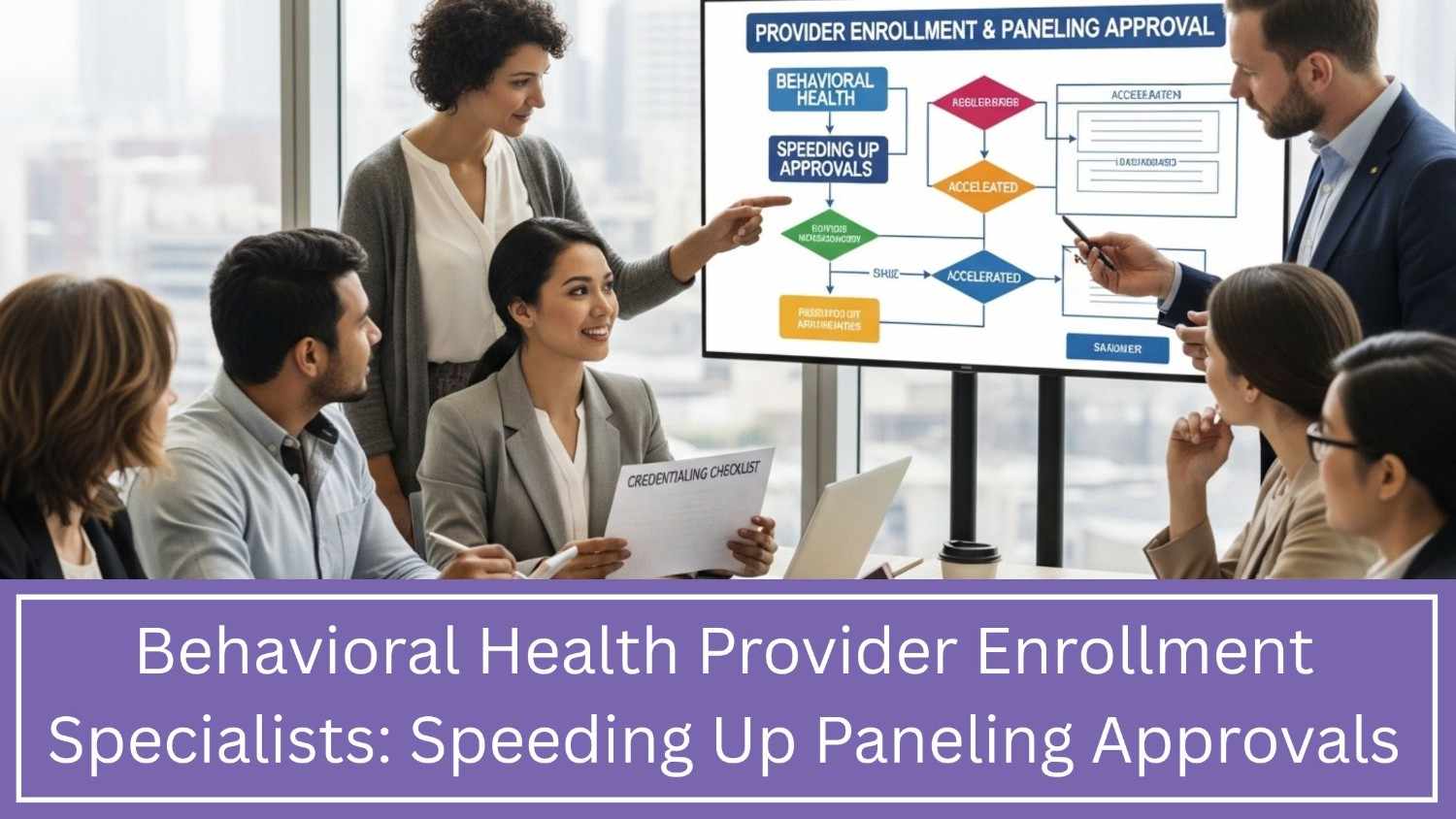
Behavioral Health Provider Enrollment Specialists: Speeding Up Paneling Approvals
As behavioral billing health services grow, demand for providers spikes. But here’s the bottleneck: insurance billing approval. Called “paneling” or “provider enrollment,” this step trips up clinics and counselors daily. Without it, they can’t bill insurers for therapy or psychiatry—even with clients waiting.
Enrollment is how providers join insurance networks to get paid. When it drags, money stalls. Cash flow suffers. Staff waste hours chasing paperwork. The cost? Lost revenue and frustrated teams who’d rather focus on patients than red tape.
In a world where mental health care is gaining attention, faster panel approvals are now essential. This blog breaks down why enrollment counts, common delays, expert solutions, upcoming trends for 2026, and how outsourcing can boost your practice’s efficiency.
Why Paneling & Enrollment Matter for Behavioral Health
Paneling is how you get paid by insurers. Skip it, and:
- Claims bounce back unpaid
- Patients foot the bill
- Your practice gets locked out of networks
- Revenue drags
- Expansion stops
For mental health providers—therapists, psychologists, social workers, psychiatrists—joining insurer panels (Medicare, Medicaid, private plans) isn’t optional. It’s how you keep the lights on.
According to reports, credentialing and enrollment take 60–120 days. That means doctors work for months without getting paid.
Slow paperwork hurts profits. But clinics that handle it right get paid faster, keep cash flowing, and grow stronger.
What Enrollment Specialists Actually Do
Enrollment specialists get doctors paid. Their job? Make sure providers stay approved with insurers—no hiccups, no delays. Here’s how they do it:
1. Paperwork, Done Right
They collect everything insurers need:
- Licenses & degrees
- DEA/NPI numbers
- Malpractice proof
- Work history & references
One missing detail? Approval stalls. They don’t let that happen.
2. CAQH – The Insurer’s First Stop
Insurers check CAQH (Council for Affordable Quality Healthcare) first. Specialists keep these profiles airtight—updated, accurate, no gaps.
3. Portal Pros
Every insurer has its own online system. Specialists know the quirks, submit flawlessly, and avoid rejections.
4. Follow-Up & Tracking
Once submitted, our team tracks applications, answers payer questions, and manages requests—keeping the process moving.
5. Renewals & Credentials
Credentials don’t last forever. We track expiration dates and renew them proactively, so you never lose coverage.
6. Compliance Guardrails
We double-check data accuracy and HIPAA rules, cutting audit risks before they become problems.
Without this focus, paneling slips through the cracks of busy practice life.
Why Behavioral Health Paneling Is Unique
Behavioral health providers face unique enrollment hurdles compared to other medical fields:
1. Credential Complexity
Therapists often juggle state licenses, national certs, and supervision rules that change depending on the insurance verification company.
2. Shifting Reimbursement Rules
Coverage for services like telehealth or group sessions gets updated frequently—what’s billable today might not be tomorrow.
3. Telehealth Billing
Insurers all handle telehealth claims differently—especially post-COVID waivers. Our enrollment team stays sharp on these shifting rules so you don’t have to.
4. Credential Checks
Certain insurers demand board-certified providers for specific services. We verify credentials upfront, so payers can’t push back later.
Common Barriers to Fast Paneling Approval
Let’s look at why paneling drags out:
Incomplete or Inaccurate Applications
Missing pages, old files, or incorrect codes delay approvals fast.
CAQH Updates
Think one-time data entry works? Think again. CAQH requires regular updates and fresh confirmations to stay active.
State-Specific Medicaid
Medicaid rules shift by state. Pros navigate these differences to dodge costly errors.
Slow Payers Cost You
Insurers drag their feet—weeks of delays mean your cash stays stuck. Our team chases hard to keep approvals moving.
Spreadsheet Chaos
No real tracking? Applications vanish in emails and messy sheets. Lost deals mean lost money.
Every delay steals time and profit. Your money should work for you, not gather dust.
How Enrollment Specialists Speed Up Paneling
Here’s how enrollment pros get results:
1. Paperwork Done Right
They list every needed document, then double-check each one to avoid mistakes.
2. Templates That Work
Reuse smartly designed forms—cuts errors and speeds up approvals.
3. Stay Ahead, Not Behind
They track delays before they happen, pushing insurers for quick replies.
4. Status Dashboards
Teams track progress fast—see approvals, pending items, missing files, or urgent actions at a glance.
5. Renewal Alerts
Emails flag deadlines before they hit, so credentials never expire unexpectedly.
Specialists cut approval times by focusing solely on enrollments.
The Financial Impact of Faster Paneling
Faster paneling means faster money. Here’s how:
- Cash moves sooner – Bill and collect without waiting.
- Fewer claims bounced – Right payer info from day one means less rejection.
- Happier patients – No shock bills or coverage gaps because you’re already approved.
- Less busywork – Staff waste fewer hours fixing mistakes or chasing payers.
Data shows: Strong enrollment cuts revenue leaks by 20% and slashes credentialing time in half.
Paneling & Medicaid — Special Considerations
Medicaid plays a key role in covering behavioral health billing services for both kids and adults. However, working with Medicaid isn’t always straightforward due to state-by-state differences:
Separate Systems Per State
Every state runs its own Medicaid program, meaning unique applications, processing times, and paperwork rules.
Extra Credentialing Hurdles
Beyond standard CAQH profiles, some states demand additional steps—like board approvals or background screenings—adding layers to the process.
Revalidation Rules
Medicaid renewals happen faster than Medicare or private insurers. Skip a renewal, and your access ends.
Provider Limits
Certain Medicaid plans only take so many providers. Hit the cap, and new joiners get stuck waiting.
Our enrollment team handles these hurdles before they slow you down.
Industry Trends Shaping Enrollment in 2026
Behavioral health paneling is changing—here’s what matters in 2026:
1. Telehealth Growth
Payers now demand clear telehealth enrollment terms. Get ahead: make sure your providers meet virtual care requirements before applying.
2. Smarter Screening
New software spots missing info and mistakes in panel applications instantly. Faster approvals, less hassle.
3. Value-Based Care Shift
Insurers now pay for results, not just appointments. Enrollment teams guide providers into payment plans that reward better patient outcomes.
4. Tighter Security Demands
Strict privacy rules and credential checks require flawless records. Mistakes aren’t an option.
Handling enrollment in-house is now riskier—and outsourcing makes smarter business sense.
How to Choose the Right Enrollment Partner
Not all enrollment partners deliver the same results. Choose one that checks these boxes:
1. Knows the Rules
They should understand Medicaid, Medicare, and private insurance inside out—especially what each requires for therapy, psychiatry, and counseling.
2. Gets It Done Right
Demand proof. How quickly and accurately have they secured approvals for others? Fewer denials means fewer headaches for you.
3. Keeps You in the Loop
Dashboards and updates should show where things stand—approvals, delays, and bottlenecks—so you’re never left guessing.
4. Responsive Follow-Up
Top teams act fast—they chase payments, not just invoices. No waiting around.
5. CAQH & Renewal Support
Choose a partner who handles the paperwork: updates, renewals, deadlines. Less hassle, more cash flow—so you can focus on patients.
Conclusion — Faster Paneling Means Faster Growth
Paneling approvals bottleneck mental health clinics. Delays stall payments, disrupt cash flow, and burn team time. The solution? Enrollment specialists. These professionals navigate the system efficiently. They monitor submissions, leverage smart tech, and avoid costly errors. Outcome? Quicker approvals, reliable revenue, and smoother operations for your clinic.
Boost Your Revenue Cycle with Practolytics
If paneling or credentialing slows your cash, Practolytics clears the road:
- Watch enrollments and panel changes in real time
- Get alerts before credentials expire
- Catch denial patterns early and fix them fast
- Auto-verify patient coverage—no manual checks
- See revenue health at a glance with simple dashboards
Practolytics smoothes billing, claims, and credentialing—so you spend less time on paperwork and more on profit.
In 2026, run your behavioral health practice with less hassle and faster pay.

ALSO READ – Simplifying Revenue Management: How Medical Billing Services Empower Small Practices
Talk to Medical Billing Expert Today — Get a Free Demo Now!