
Proper ICD-10 and CPT Linkage for Faster Payments
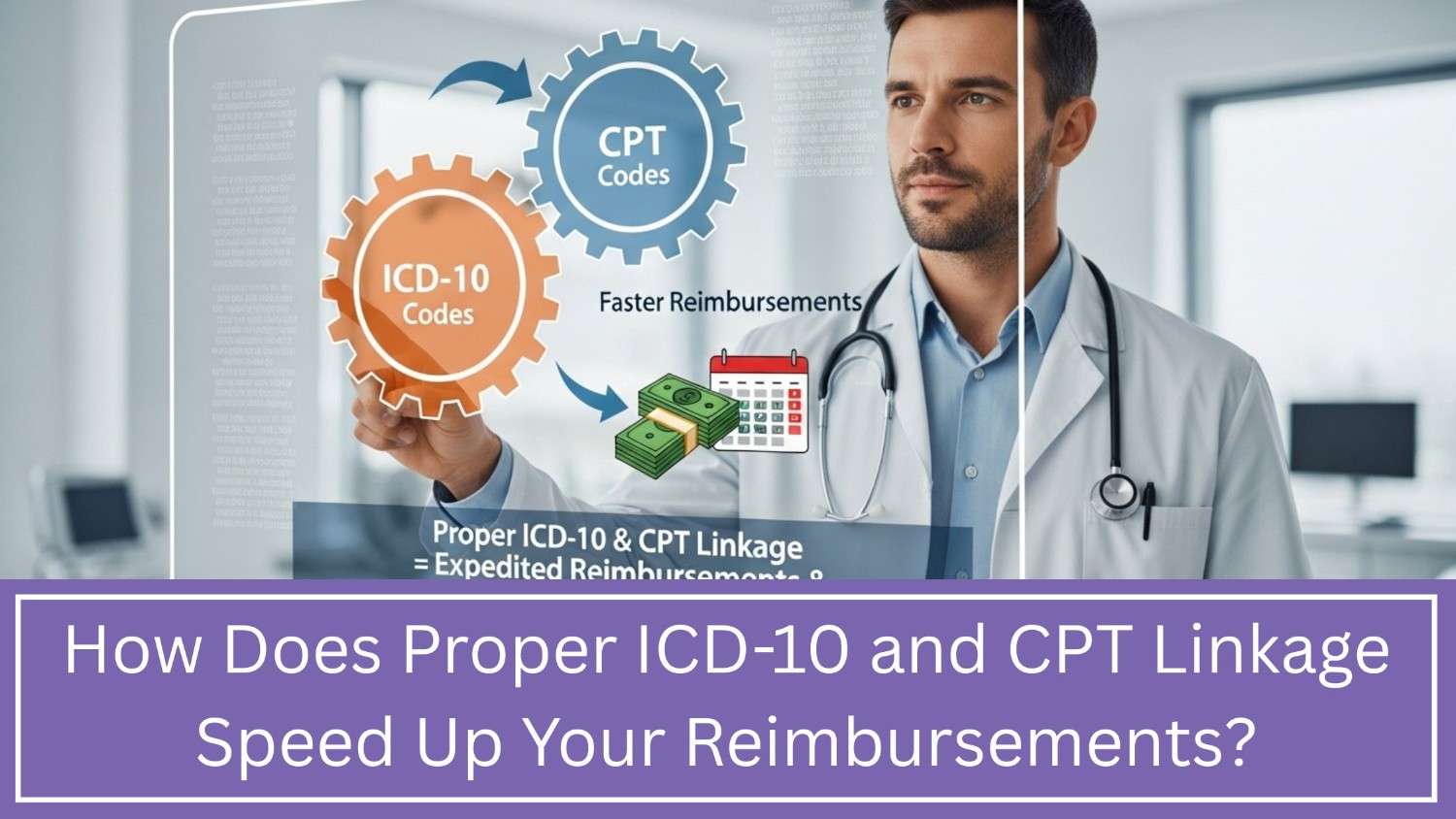
Proper ICD-10 and CPT Linkage for Faster Payments means making sure the diagnosis supports the service billed. CPT explains what was done, and ICD-10 explains why it was necessary. When they match correctly, claims move through quickly; when they don’t, denials increase and revenue slows down. This guide explains how to link codes correctly, how it improves payments, common mistakes to watch for, and quick fixes to keep cash flow steady.
Table of Contents
How Does Proper ICD-10 and CPT Linkage Speed Up Your Reimbursements?
Medical billing runs on precision—ICD-10 and CPT codes must sync perfectly. ICD-10 tells payers why treatment happened; CPT shows what was done. Get this right, and claims move fast. Get it wrong, and denials pile up while cash flow slows.
The key? Tight alignment. When diagnosis (ICD-10) justifies the service (CPT), payers approve without hesitation. A single mismatch? That’s lost time and money. Your practice’s revenue depends on this link—no guesswork, just clean data.
This blog breaks down ICD-10 and CPT coding links—how they work, why they get you paid faster, what goes wrong when done badly, key errors to skip, and where coding is headed next. Clear, practical, no-nonsense insights for your bottom line.
What Are ICD-10 and CPT Codes?
Before we dive into connections, let’s get clear on the basics:
ICD-10 Codes
These are the universal labels for why a patient needed care. Short for International Classification of Diseases (10th edition), they keep billing and records precise. For example:
- E11.9 – Type 2 diabetes (no complications)
- J06.9 – Common cold or flu-like illness
Think of them as the “why” behind every treatment—clean, consistent, and critical for healthcare operations.
CPT Codes
CPT (Current Procedural Terminology) codes are the backbone of medical billing. They tell insurers exactly what service was performed. Common examples:
- 99213 – Standard office visit for returning patients
- 93000 – Basic heart rhythm test
These codes translate clinical work into billing language.
Every claim requires accurate CPT codes, but the real skill lies in pairing them correctly with diagnoses. Get this right, and your practice gets paid faster.
What Does “Linkage” Mean?
Linkage means matching diagnosis codes (ICD-10) with service codes (CPT), so payers understand:
- The medical reason for treatment
- The specific care provided
For example:
A patient with fever and cough gets a detailed exam. The codes should show:
- ICD-10: J06.9 (Cold/Flu)
- CPT: 99214 (Full checkup)
This makes sense – payers approve fast. But if you bill:
- ICD-10: Back pain
- CPT: 99214 (Fever checkup)
Payers will reject it. The reason doesn’t match the service. Keep it clear to get paid.
Why Proper Linkage Speeds Up Reimbursements
Insurance verification companies pay faster when your medical claims tell a clear story. If your ICD-10 and CPT codes match that story, you get paid sooner. Here’s why proper coding matters:
1. Fewer Denials equal Less Hassle
Denials waste time and money. Often, payers deny claims simply because they don’t see why a service was needed. If ICD-10 and CPT codes don’t line up:
- Payers question the service
- Your team must fix and resubmit
- You wait longer for payment
Good coding means fewer denials—and faster cash in your account.
2. Get Paid Faster—No Extra Work
Payers use automated checks before a human reviews claims. Their systems look for:
- Does the diagnosis justify the procedure?
- Do the codes make sense together?
- Is all documentation there?
When codes match, claims get approved faster—no appeals, no delays, just payment.
Bottom line: Clear medical coding means faster money, less frustration.
3. Speeds Up Cash Flow
Fast approvals mean fast payments. When claims move smoothly:
- You get paid faster
- Less time waiting for money
- Steady cash flow
Good coding keeps money moving
4. Cuts Extra Work
Denied claims mean more work:
- Fixing notes
- Updating codes
- Sending claims again
- Chasing appeals
Good coding means less busywork. Your team can focus on what matters.
5. Improves Compliance and Audit Readiness
Payers watch how you code. If ICD-10 and CPT codes don’t match up often, they’ll flag you for review.
Get it right:
- Proves care was needed
- Follows the rules
- Lowers audit chances
- Makes payers trust you
This keeps your practice safe from expensive checks.
How Payers View Linked Codes
Payers use straightforward tools to verify coding accuracy:
Medically Necessary Edits
These confirm that the billed service aligns with the patient’s diagnosis. Clean coding passes this check effortlessly.
NCCI (National Correct Coding Initiative)
NCCI stops duplicate or incorrect billing, especially for incompatible procedures. Tight coding keeps you compliant.
LCD/NCD Rules (Local/National Coverage Determinations)
These decide if payers cover a service based on diagnosis. Precise ICD-10 and CPT pairing meets their requirements.
Clean coding equals fewer denials. Simple.
Common Coding Mistakes That Slow Down Payments
Let’s look at 3 simple but costly billing mistakes:
1. Missing Links
Doctors note the issue, but if coders don’t connect every service (CPT) to a diagnosis (ICD-10), payers flag it.
2. Unclear Reasons
Codes like “unknown pain” don’t prove why a treatment was needed—payers push back.
3. Mismatched Visit Level
Coding a quick check-up as complex (or vice versa) based on weak notes invites audits.
4. Outdated Codes
ICD-10 and CPT codes change every year. Old codes mean more denials—and lost revenue.
5. Missing Proof in Notes
If the documentation doesn’t justify the service, even perfect coding won’t get the claim paid.
Simple Steps to Improve ICD-10 and CPT Linkage
Here’s a straightforward workflow for your team to improve accuracy and efficiency:
Step 1: Train Your Team on Key Documentation
Make sure doctors and nurses record:
- Why the patient came in
- Symptoms and observations
- Tests run and why they matter
- The reasoning behind treatment calls
Strong notes mean fewer coding headaches later.
Step 2: Work Smarter with Templates
Pre-built forms ensure nothing gets missed. Standard sections should cover:
- The main issue
- Symptom breakdown
- Patient history
- Next steps
Templates keep things complete—and claims clean.
Step 3: Train Coders on the “Why”
Coders need to know:
- The real-world reasons behind procedures
- How diagnosis codes and billing codes work together
Regular training keeps claims clean.
Step 4: Let Tech Do the Heavy Lifting
Modern coding tools:
- Auto-suggest accurate diagnosis codes
- Spot when codes don’t match up
- Stay updated without manual work
Fewer mistakes, fewer headaches.
Step 5: Check Your Work Often
Monthly audits catch:
- Claims insurers rejected
- Appeals stuck in limbo
- The same coding mistakes are popping up
Fix it fast—before it hits your bottom line.
Trends in Coding and Linkage (2025–2026)
Coding is changing fast. Here’s what matters now:
AI-Assisted Coding
Think of it like a smart assistant that finds the right codes faster than people can. Fewer mistakes, more clean claims.
Real-Time Coding Help
Some systems now guide doctors as they work—like GPS for billing. It nudges them toward accurate terms that get paid faster.
Both cut denials and boost revenue. That’s the bottom line.
Data-Driven Denial Fixes
Smart teams now track:
- Where claims get rejected
- Which insurers say no most
- Trouble codes costing money
This turns rejections into easy wins.
Stay Ahead, Stay Paid
Rules change every year. Groups that train early make fewer mistakes and keep cash flowing.
Real Practice Impact: Simple Numbers That Matter
While every business is unique, most see clear wins:
- 10-20% more claims approved on first try
- Fewer denials from coding errors
- Faster payments thanks to cleaner paperwork
These aren’t lucky breaks—they happen when you fix the right links in your process.
Conclusion: Accurate Linkage Means Faster Payment
Properly linking ICD-10 and CPT codes isn’t just paperwork—it’s smart business. Get it right, and you’ll see:
- Claims are approved faster
- Fewer denied claims
- Cleaner talks with insurers
- Steadier cash flow
- Less backend hassle
When your coding tells a clear story, payers push back less. That means more time treating patients, less time fighting red tape.
How Practolytics Can Help You Get It Right
If your team keeps hitting snags with ICD-10 and CPT pairing, Practolytics fixes it fast. We help clinics stop billing headaches by:
- Checking codes before claims go out—no costly mistakes
- Spotting mismatches early so you don’t lose cash
- Teaching your team the right way to pair codes
- Keeping up with payer rule shifts so you stay compliant
- Fighting denials so your revenue stays solid
Less stress, more paid claims. That’s the Practolytics way.
Practolytics combines human experts with smart systems to clean up claims before submission. Fewer denials. Faster payments. More time for patients.
ALSO READ – Decoding CPT: Your Guide to Codes and Regulations 2024
Talk to Medical Billing Expert Today — Get a Free Demo Now!