
Cardiology Billing Made Simple with End-to-End Services
Cardiology billing is one of the harder specialties to manage. Lots of codes. Lots of rules. Lots of room for small mistakes. That’s why we focus on cardiology billing made simple with end-to-end services, built specifically for heart and vascular practices. In this guide, we cover why cardiology billing needs special skill, what our services include, and how we, at Practolytics, help cardiology practices reduce denials and get paid faster, every single month.
Cardiology is a complex specialty. Lots of procedures. Lots of codes. Lots of ways for a claim to go wrong. If your practice has ever dealt with a denied cardiology claim, you already know how frustrating that feels. One small slip, and payment gets held up for weeks. Sometimes it’s a missing modifier. Sometimes it’s a bundled procedure billed the wrong way. Either way, the result is the same, delayed revenue and extra work for your staff.
That’s why we built our cardiology billing services the way we did. Simple to understand. Easy to work with. Built to actually cut denials, not just push paperwork. Let’s break it down.
Table of Contents
Why Cardiology Billing Requires Specialized Expertise?
Cardiology billing isn’t like billing for a general practice. It comes with its own challenges. Here’s why:
- Cardiology uses a lot of procedure codes. Many look similar.
- Tests and procedures often get bundled together, which makes coding tricky.
- Time-based and device-based procedures need very specific notes.
- Payer rules for cardiology change often. Staying updated takes real work.
- One small coding mistake can affect payment for the whole visit.
- Multiple providers may be involved in one case, adding another layer to track.
Cardiology medical billing takes real, specialized knowledge. A general billing team without cardiology experience often misses small details. And those small misses add up fast in a busy practice, quietly eating into revenue month after month.
Complete Cardiology Billing Services We Provide
We offer full support across the entire billing process. Here’s what’s included:
- Claims submission and tracking for all cardiology procedures.
- Coding support built specifically around cardiology CPT and ICD-10 codes.
- Cardiology payment collection support, so revenue comes in faster.
- Denial management and appeals handled by our team.
- Insurance eligibility verification before every appointment.
- Cardiology ehr billing services, so billing stays connected to your current system.
- Detailed reporting, so you always know where your revenue stands.
- Ongoing support as payer rules and coding guidelines shift over time.
This is a true cardiology billing solution. Not a generic billing package with cardiology tacked on as an afterthought, but a process built specifically around what heart and vascular practices actually need.
How Our Cardiology Revenue Cycle Management Process Works?
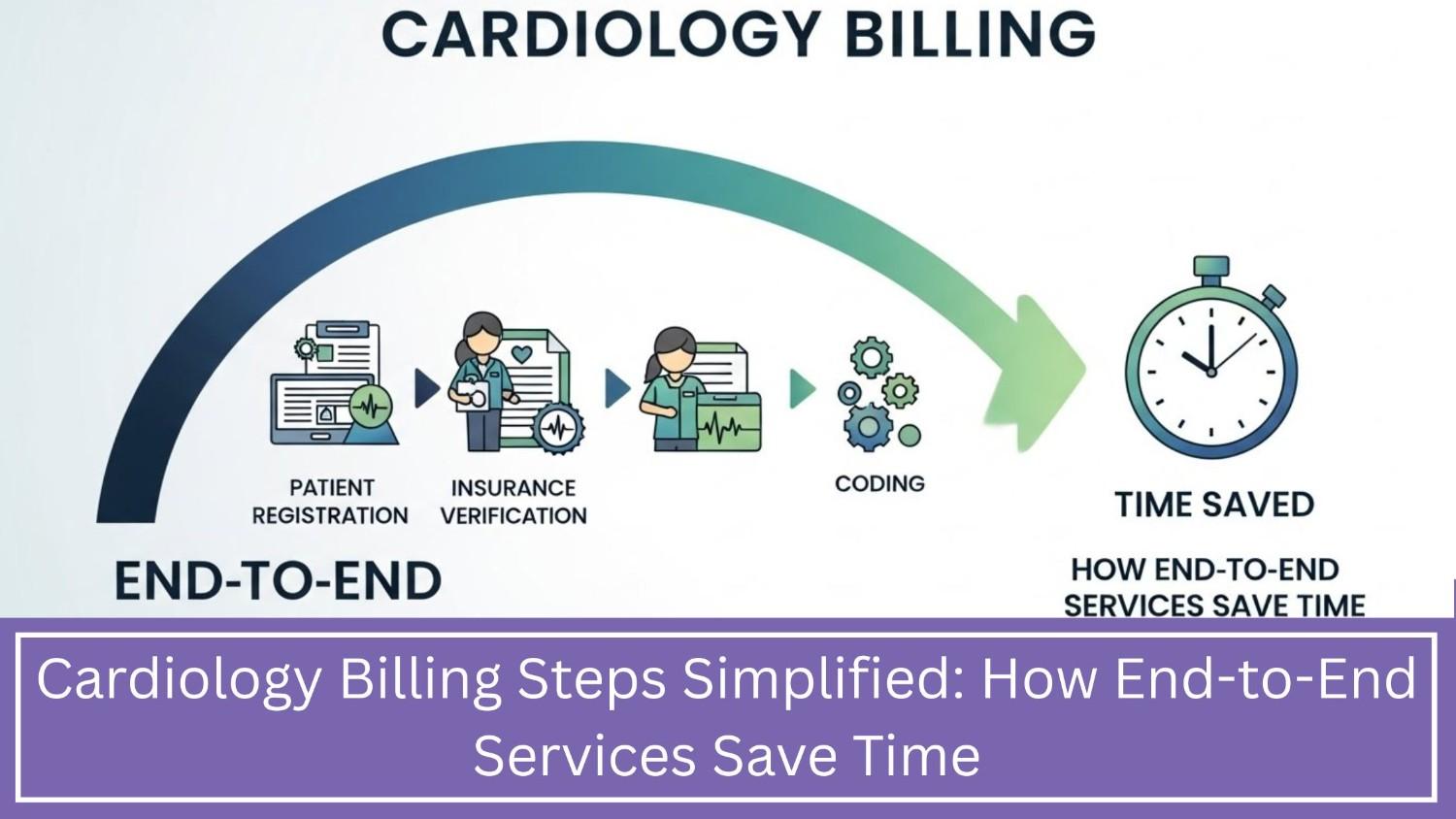
Here’s how our process works, step by step:
- We check insurance eligibility ahead of every appointment.
- Our coders review documentation closely and apply accurate cardiology codes.
- Claims go out within 24 hours, cutting down on early delays.
- We use automated cardiology claims processing tools to catch errors before submission.
- If a claim gets denied, our team reviews it and sends it again fast.
- We track every cardiology claims outcome, so patterns get caught and fixed quickly.
- We keep your team updated with clear, simple reporting the whole way through.
This keeps your cardiology payment solution running smoothly. From the first patient visit all the way through final payment, with no gaps or guesswork slowing things down along the way.
Benefits of Outsourcing Cardiology Billing Services
Outsourcing cardiology billing brings real, practical benefits. Here’s what practices usually see:
- Fewer denied claims, since experienced coders catch errors early.
- Faster payments, since claims move through clean the first time.
- Less staff time spent chasing paperwork and following up on claims.
- Better visibility into revenue, with clear and simple reporting.
- More time for your team to focus on patients instead of billing headaches.
- Lower overhead compared to hiring and training an in-house cardiology billing team.
Cardiology coding projects outsourcing also helps smaller practices get expert-level coding support without hiring a full in-house team. This works especially well for growing practices that aren’t ready for a full billing department yet, but still need coding done right the first time.
Why Choose Practolytics for Cardiology Billing?
This is where we come in. At Practolytics, cardiology billing is something our team handles every single day. Not as a side task squeezed in between other work.
Here’s what we bring to your practice:
- Coders trained specifically in cardiology procedures and coding rules.
- Fast claim submission, usually within 24 hours.
- Active denial management, so nothing sits stuck for weeks.
- Support for cardiology patient billing and invoicing software, keeping patient billing simple and clear.
- Accounts receivable kept under 30 days, for steady, predictable cash flow.
- Clear, honest communication, so you always know where things stand.
- A team that works like part of your practice, not a distant outside vendor.
We treat cardiology billing as its own specialty. Because that’s exactly what it is.
Conclusion
Cardiology billing doesn’t have to be complicated or stressful. With the right process and the right team, claims move faster, denials drop, and your revenue stays steady. Practices that switch to a dedicated cardiology billing partner often notice the difference within a few months, with fewer denials and much smoother cash flow. At Practolytics, we built our cardiology billing services around exactly this goal. If cardiology billing has been slowing your practice down, we’d love to talk about how we can help.
FAQs
What are cardiology billing services?
Cardiology billing services handle the full billing process for a cardiology practice. This includes:
- Coding for cardiology procedures.
- Claims submission and tracking.
- Denial management and appeals.
- Payment tracking and reporting.
Since cardiology involves complex procedures and codes, these services take specialized knowledge most general billing teams don’t have.
Why is cardiology billing more complex than regular medical billing?
Cardiology involves a large number of procedure codes, many of which look similar or get bundled together. A few reasons it’s harder:
- Time-based and device-based procedures need detailed documentation.
- Diagnostic tests often bundle with other procedures.
- Payer rules for cardiology change often.
- Multiple providers may be involved in a single case.
One small coding error can affect payment for an entire visit.
What services are included in cardiology billing?
Common services include:
- Claims submission and tracking.
- Cardiology-specific coding support.
- Denial management and appeals.
- Insurance eligibility verification.
- Detailed revenue reporting.
A strong provider offers all of these together. Not just one piece of the process.
Should cardiology practices outsource billing?
For most practices, yes. Cardiology billing takes specialized knowledge that’s hard to build and keep up in-house. Outsourcing to a team with real cardiology experience usually means:
- Fewer denials.
- Faster payments.
- Less staff time spent on paperwork.
- More consistent revenue month to month.
How can cardiology billing companies reduce denied claims?
They reduce denials by catching errors before claims go out. This includes:
- Reviewing documentation closely.
- Applying accurate cardiology codes.
- Verifying insurance ahead of time.
- Tracking denial patterns to catch repeat issues.
A good team fixes the root cause, not just the one denied claim in front of them.
What cardiology procedures require specialized billing?
Procedures like cardiac catheterizations, echocardiograms, stress tests, and device implants all need specific, detailed coding. These procedures often involve multiple codes and modifiers. That makes accurate documentation and coding especially important to avoid denials.
How much do cardiology billing services cost?
Cost depends on your practice size, claim volume, and which services you need. There’s no flat number that fits every practice. Pricing usually gets built around what each cardiology practice actually needs. So you’re not paying for services you don’t use.

ALSO READ – Simplifying Revenue Management: How Medical Billing Services Empower Small Practices
Talk to Medical Billing Expert Today — Get a Free Demo Now!