
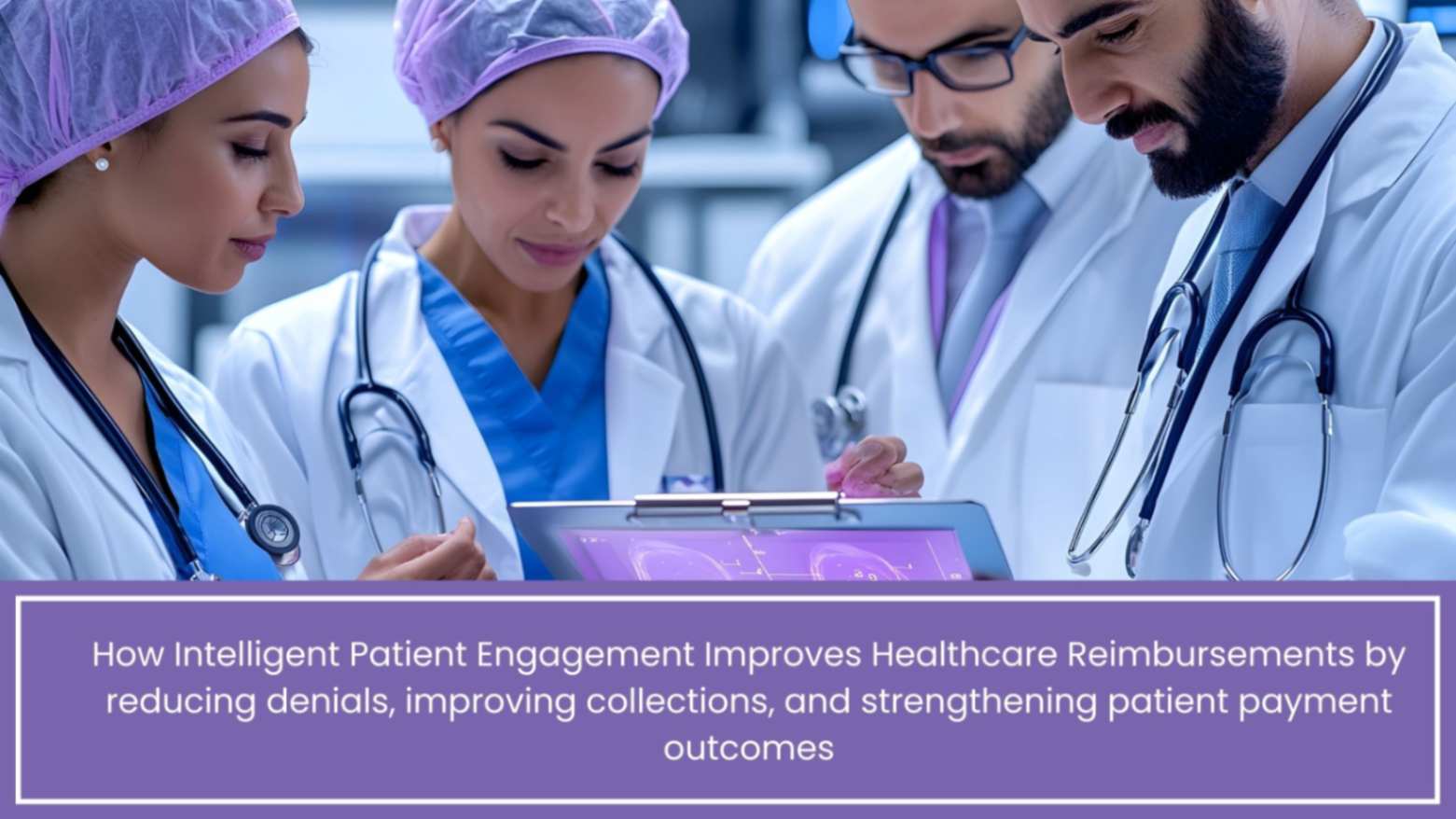
How Intelligent Patient Engagement Improves Healthcare Reimbursements
How Intelligent Patient Engagement Improves Healthcare Reimbursements is no longer theoretical—it’s a proven revenue driver. Today, reimbursement success is closely tied to intelligent patient engagement healthcare strategies that help patients clearly understand their insurance coverage, financial responsibility, and care journey. At Practolytics, we see how proactive communication and automation reduce eligibility errors, minimize prior authorization delays, and support stronger patient engagement and revenue cycle management. By using real-time data and targeted engagement, practices improve appointment adherence, strengthen patient engagement improving collections, and reduce avoidable denials. When patients are informed and involved at the right moments, reimbursements move faster, staff workload decreases, and payment outcomes improve—without compromising care quality.
In healthcare, reimbursement problems rarely appear out of nowhere. They build up slowly. A missed eligibility update. A patient who didn’t understand their insurance. An authorization that stalled because no one followed up in time. Individually, these moments seem small. Collectively, they drain revenue.
At Practolytics, we’ve worked alongside practices long enough to see this pattern repeat itself. When patient communication is weak or delayed, reimbursements suffer. When engagement is timely, clear, and purposeful, revenue flows more smoothly. That’s why conversations around Patient Engagement Improves Healthcare Reimbursements have shifted from theory to necessity.
Patient engagement today isn’t about sending more messages. It’s about sending the right message, at the right time, tied directly to revenue-impacting events. When that happens, fewer things slip through the cracks—and reimbursements stop feeling unpredictable.
Table of Contents
Direct Link Between Patient Engagement and Reimbursement Outcomes
Most practices feel reimbursement pressure at the back end—denials, aging AR, write-offs. But the real causes usually begin much earlier in the patient journey.
We regularly see reimbursement delays tied to:
- Incorrect or outdated insurance details
- Patients unaware of authorization requirements
- Appointments that were missed and never rescheduled
- Confusion around deductibles and copays
- Slow patient responses to information requests
This is where the patient engagement impact on healthcare reimbursement becomes very real. When patients understand what’s needed from them—and when—they respond faster. That directly affects how quickly claims move and how often they are paid correctly the first time.
Strong patient engagement and revenue cycle management alignment reduces back-and-forth work for staff and minimizes preventable delays. Instead of chasing patients after problems arise, engagement helps prevent those problems in the first place.
Understanding Intelligent Patient Engagement in a Healthcare Revenue
Traditional engagement methods are mostly reactive. A missed appointment triggers a call. A denied claim triggers follow-up. Intelligent engagement works differently.
Intelligent patient engagement healthcare connects patient communication to specific revenue cycle milestones. It anticipates where breakdowns usually happen and addresses them early.
At Practolytics, we treat engagement as part of the revenue workflow, not a separate tool. Our patient engagement tools healthcare revenue are designed to:
- Activate communication based on eligibility, authorization, or scheduling events
- Keep messages clear and relevant, not overwhelming
- Reduce dependency on manual outreach
- Encourage faster patient responses
This approach is why patient engagement platforms reimbursement strategies actually produce results. Engagement becomes purposeful instead of passive.
How Intelligent Patient Engagement Improves Eligibility and Insurance Accuracy?
Eligibility errors are one of the most common reasons claims are delayed or denied. Even well-trained front-desk teams can’t always catch last-minute insurance changes or coverage gaps.
Intelligent engagement brings patients into the process earlier. Using patient engagement strategies for better reimbursements, patients are prompted to:
- Review and confirm insurance details ahead of visits
- Upload updated insurance cards when changes occur
- Respond quickly to coverage clarification requests
When patients participate in maintaining accurate information, eligibility errors drop significantly. This directly supports patient engagement reducing claim denials and reduces rework for billing teams.
Accurate eligibility isn’t just an administrative win—it protects revenue before the claim is ever created.
Reducing Prior Authorization Delays Through Proactive Engagement
Prior authorizations are often seen as payer problems, but delays are frequently caused by missing documentation or delayed patient responses.
Through patient engagement solutions for hospitals and physician practices, we reduce authorization delays by keeping patients informed and involved:
- Patients receive early notice when authorizations are required
- Missing information is requested automatically
- Status updates reduce confusion and unnecessary calls
This proactive communication strengthens patient engagement and revenue cycle management by keeping schedules intact and preventing downstream billing disruptions. Faster authorizations mean fewer reschedules and quicker reimbursement.
Improving Appointment Adherence and Reducing No-Shows
No-shows affect more than just the daily schedule. They disrupt care delivery and create revenue gaps that are difficult to recover.
Intelligent engagement improves appointment adherence by setting expectations clearly. Automated reminders, confirmations, and pre-visit communication reduce forgetfulness and last-minute cancellations.
This directly improves patient engagement and payment outcomes. When patients show up as scheduled, providers stay productive, and revenue becomes more predictable.
Reducing no-shows isn’t just about efficiency—it’s about financial stability.
Strengthening Point-of-Service Collections Through Engagement
Point-of-service collections often fail because patients feel unprepared. When financial responsibility isn’t explained clearly, payment conversations become uncomfortable for both staff and patients.
Using patient engagement tools healthcare revenue, we help practices communicate financial expectations early:
- Estimated patient responsibility is shared before the visit
- Deductibles and copays are explained in plain language
- Automated reminders reduce awkward in-person discussions
This transparency builds trust and leads to patient engagement improving collections without adding pressure on front-desk teams. Patients are far more willing to pay when they understand what they owe and why.
How Intelligent Engagement Helps Prevent Claim Denials?
Denials are expensive to manage and time-consuming to resolve. Many are avoidable.
When engagement is proactive:
- Eligibility discrepancies are corrected early
- Authorization requirements are completed on time
- Patient-provided information is verified before claims are submitted
This approach shifts practices away from reactive denial management. As a result, patient engagement reducing claim denials becomes part of everyday operations instead of an ongoing struggle.
Why Practolytics Takes a Revenue-First Engagement Approach?
At Practolytics, patient engagement isn’t treated as a standalone feature. It’s embedded into how we manage the revenue cycle.
Our experience spans:
- 1400+ active providers
- 180+ practices across 31 states
- Over 5 million claims processed annually
- Fully HIPAA-compliant operations
Because we handle billing, coding, authorizations, AR, and analytics, we know exactly where engagement creates the greatest financial impact. That’s why our patient engagement platforms reimbursement approach focuses on measurable outcomes, not just activity.
Long-Term Financial Benefits of Intelligent Patient Engagement
Over time, consistent engagement changes how practices operate financially.
We see long-term improvements such as:
- Higher patient trust and cooperation
- Better payment compliance
- More accurate documentation
- Fewer avoidable readmissions
- Stable reimbursement patterns
These outcomes strengthen patient engagement and payment outcomes while supporting both financial performance and care quality.
Conclusion:
At the end of the day, How Intelligent Patient Engagement Improves Healthcare Reimbursements really comes down to doing the basics well—early, clearly, and consistently. Most reimbursement problems don’t start in billing. They start when patients aren’t sure about their insurance, don’t realize an authorization is needed, miss an appointment, or are surprised by a bill later on.
We see this every day at Practolytics. When patients are kept in the loop from the beginning, things move faster. Insurance details get confirmed before visits. Authorization requirements don’t turn into last-minute scrambles. Appointments are kept more often. Payments happen with fewer follow-ups. Small fixes early on prevent big problems later.
Intelligent engagement isn’t about sending more messages or adding another system for staff to manage. It’s about reaching patients at the right moments—before something goes wrong. When communication is tied directly to eligibility, scheduling, authorizations, and payments, the revenue cycle runs with far less friction.
And this kind of engagement doesn’t replace people. It supports them. It gives teams breathing room by cutting down on repetitive calls, rework, and avoidable denials. When patient communication and revenue workflows are aligned, reimbursement stops feeling like damage control. Cash flow becomes steadier, stress levels drop, and practices can focus more on patient care instead of chasing payments.
That’s when reimbursement becomes reliable—not reactive.
How does “intelligent” engagement actually increase my practice revenue?
It prevents avoidable eligibility errors, reduces denials, improves appointment adherence, and supports earlier collections.
Will this reduce the time my staff spends on prior authorizations?
Yes. Automated communication and faster patient responses significantly cut down manual follow-ups.
Can intelligent engagement help with Point-of-Service collections?
Yes. Clear financial communication before visits improves payment readiness and compliance.
How does remote monitoring through these platforms impact reimbursement?
It supports documentation accuracy and medical necessity, strengthening reimbursement justification.
Does better engagement reduce hospital readmissions?
Yes. Engaged patients follow care plans more consistently, improving outcomes and reducing avoidable readmissions.
Read More – From Chaos to Efficiency: A Small Practice’s Journey with a Virtual Assistant
Talk to Medical Billing Expert Today — Get a Free Demo Now!