Virtual Medical Assistant Companies in San Francisco
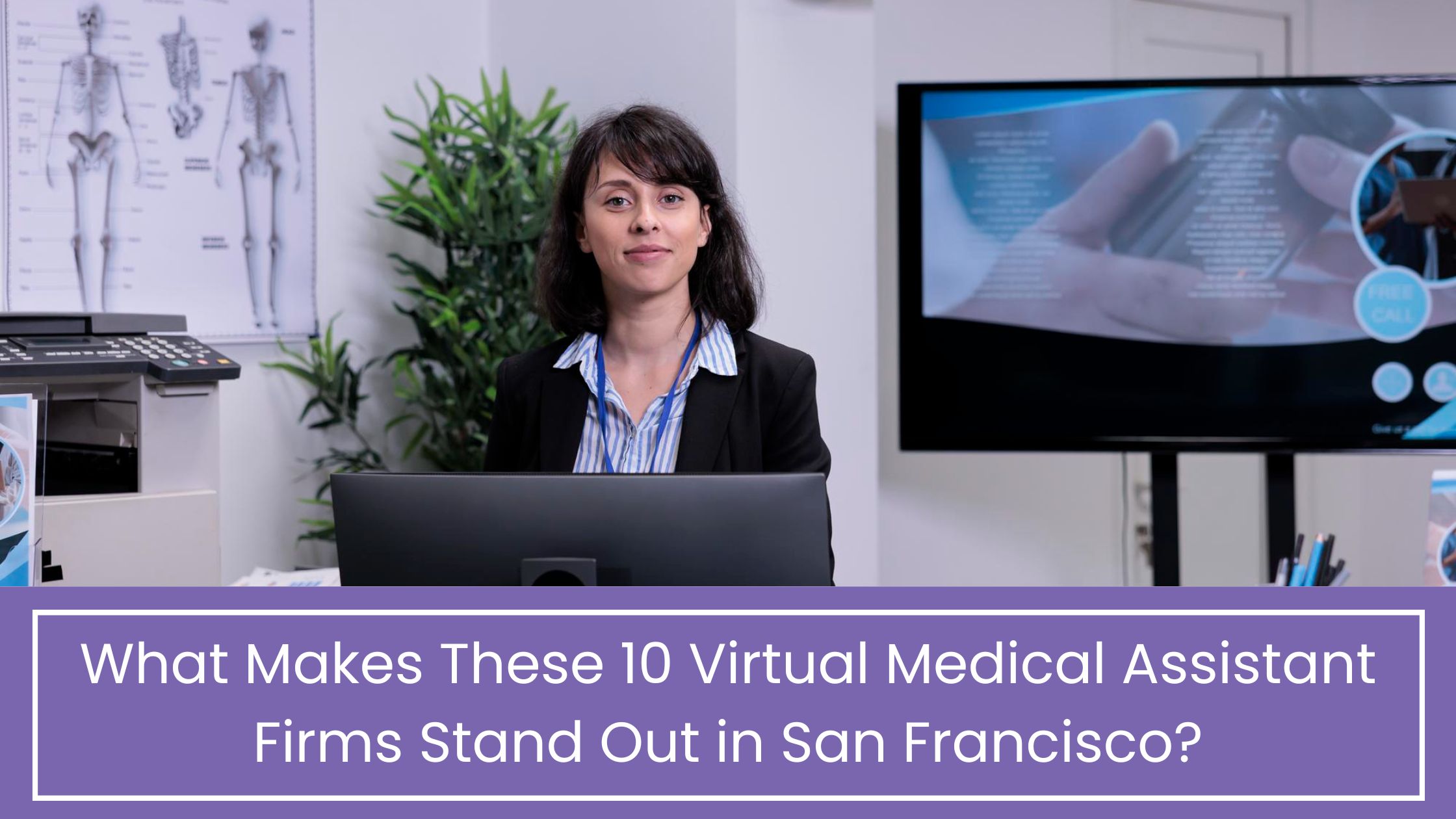
Healthcare practices in San Francisco are turning to virtual medical assistant services to reduce administrative work without adding extra overhead. Virtual Medical Assistant Companies in San Francisco can support workflows such as scheduling, insurance verification, patient communication, and revenue cycle tasks.
For busy Bay Area practices, the right virtual team can assist with:
- Patient scheduling and appointment reminders
- Insurance eligibility verification services
- Virtual assistant medical billing support
- Claims and AR follow-up services
- Prior authorization coordination
- EHR documentation support
- Telehealth administration
- Front-desk and patient communication
Practolytics offers administrative support along with healthcare revenue-cycle expertise, thus providing a different remote staffing model based on its ability to scale with the practice’s requirements. The company ensures that its team of virtual assistants is HIPAA-compliant and trained in specialty-specific workflows, which allows delegating day-to-day administrative tasks with confidence while retaining control over clinical operations.
CTA Button: Book a Free VMA Consultation
Table of Contents
What’s Driving San Francisco Practices to Use Virtual Medical Assistants?
Healthcare costs are at an all-time high. This forces providers to redefine administrative operations. The cost of a virtual medical assistant vs. in-house staff is key for practices that want to see more patients without adding more people to the physical office.
A virtual model can help practices manage:
- Patient scheduling and inbound communications
- Virtual front desk medical practice operations
- Insurance verification and benefits checks
- Prior authorization preparation
- Documentation and chart support
- Claims follow-up and denial workflows
- Telehealth coordination
For existing Bay Area medical billing outsourcing practices, a virtual assistant may represent an enhancement to an existing billing expertise base. In addition, a bilingual virtual medical assistant can assist in a practice’s ability to effectively communicate with a wide range of patients.
The key is finding a partner who knows how clinics operate, privacy requirements, and how EHRs function, instead of just giving you generic virtual staff.
CTA Button: Reduce Your Administrative Workload
What Sets a Reliable Virtual Medical Assistant Company Apart?
Picking the right San Francisco healthcare virtual assistant is beyond comparing prices. Practices must ensure the team knows patient privacy, medical terms, and daily office tasks. They should also fit right into your current software and ways of working.
Before selecting a partner, consider:
- HIPAA-compliant virtual assistant processes and safeguards
- Experience with healthcare administration
- EHR and practice-management-system compatibility
- Training in scheduling and patient communication
- Insurance eligibility verification services
- Prior authorization experience
- Claims and denial management services
- Availability during relevant business hours
- Specialty-specific workflow knowledge
- Clear onboarding and performance reporting
Practices should decide if they need a virtual medical receptionist, a remote medical scribe, billing help, or full revenue cycle support. Picking the right fit stops you from paying for tools you won’t use while making sure no critical work falls through the cracks.
CTA Button: Compare Your VMA Requirements
How San Francisco VMA Companies Compare
Not every virtual medical assistant firm offers the same value. Some only handle calls and bookings, while others manage your back office, billing, and patient files to keep your revenue flowing.
A useful comparison should examine:
|
Capability |
Basic VMA Provider |
Healthcare-Focused VMA |
Practolytics Model |
|
Scheduling |
Yes |
Yes |
Yes |
|
Patient communication |
Yes |
Yes |
Yes |
|
Insurance verification |
Limited |
Yes |
Yes |
|
Prior authorization |
Limited |
Yes |
Yes |
|
Medical billing support |
Limited |
Yes |
Yes |
|
Denial support |
Rare |
Sometimes |
Yes |
|
EHR support |
Varies |
Yes |
Yes |
|
RCM expertise |
Limited |
Varies |
Yes |
|
Telehealth support |
Varies |
Yes |
Yes |
For San Francisco practices, the best option will not always be the cheapest one. It is the provider that can best fit the staffing support to the practice’s needs, such as for revenue cycle management, San Francisco workflows, and California medical billing compliance.
CTA Button: Find the Right VMA Model
What Makes Practolytics a Trusted VMA Solution for San Francisco Practices
Practolytics approaches virtual staffing through a full healthcare lens. Rather than just filling the front desk, we link your admin support directly to your billing and revenue workflows.
Practolytics VMA support can include:
- Patient scheduling and appointment coordination
- Virtual medical receptionist services
- Insurance eligibility verification services
- Prior authorization assistance
- Virtual assistant medical billing
- Claims follow-up
- Denial management services
- Documentation and chart preparation
- Telehealth coordination
- EHR documentation support
This approach helps San Francisco offices that need better billing but struggle with too much administrative load.
By combining remote staff with medical skills, clinics can offload busy work while keeping a tight grip on their daily flow. The goal is to cut paperwork, respond to patients faster, and make the billing and intake side of things run smoothly.
CTA Button: Meet Your Dedicated VMA Team
Virtual Medical Assistant Services for San Francisco Practices
Practolytics offers virtual medical assistant services to help you run your daily clinic tasks. We match our support to your specialty, patient load, current staff, and the technology in use.
Common support areas include:
- Patient scheduling outsourcing and appointment reminders
- Virtual front desk medical practice support
- Insurance and benefits verification
- Prior authorization coordination through a prior authorization virtual assistant
- Virtual assistant medical billing support
- Claims follow-up and AR follow-up services
- Denial management assistance
- Remote medical scribe and documentation support
- EHR data and workflow assistance
- Telehealth coordination
- Patient intake and communication
Practices can pick single services or a full support plan. A bilingual virtual medical assistant works well for teams serving the diverse Bay Area community.
The aim is to put expert office help where they are needed most without getting in the way of patient care.
CTA Button: Explore VMA Services
Start With Practolytics: A Simple Guide for San Francisco Practices
To kick off, a VA company must analyze the practice’s existing processes. That will help identify time-consuming tasks and gaps. This is especially important because it is best to fit the VMA option by understanding what’s already there. Generic VMA tasks won’t cut it.
Practolytics can help determine what administrative tasks are the most time-consuming as well as where patient care or revenue generation gets unnecessarily delayed.
The onboarding process can include:
- Reviewing your current administrative workflow.
- Identifying tasks appropriate for delegation.
- Defining the virtual medical assistant’s scope of work.
- Confirming EHR and practice-management requirements.
- Establishing communication and escalation procedures.
- Training the assigned VMA on your workflows.
- Monitoring performance and adjusting responsibilities.
Practices may start with scheduling or paperwork and grow into virtual assistant medical billing, prior authorization, or denial management services as appropriate.
This step-by-step plan helps your team adjust and ensures the VMA fits into your daily routine instead of feeling like an outside resource.
CTA Button: Start Your VMA Assessment
FAQs
1. What is a virtual medical assistant, and how much does one cost compared to hiring in-house in San Francisco?
A virtual medical assistant is a person who provides remote administrative or healthcare-support services to a company without being present at the workplace. The difference between a virtual assistant and an in-house employee depends on the range of duties, hours of work, experience, and staffing model. It is vital to consider the employees’ compensation, office space, equipment, and management when comparing these two options.
2. What’s the difference between a virtual medical assistant and a full RCM/billing partner?
A VMA typically covers limited administrative functions such as scheduling, verification, documentation, or billing support. A total RCM partner takes care of a wider set of financial processes (like coding, claims, denial management services, A/R, and reimbursement) for a healthcare practice.
3. How do I compare virtual medical assistant companies in San Francisco before choosing one?
Compare healthcare background, HIPAA compliance, EHR software fit, expert skills, staff backup, training, communication workflows, costs, and the specific tasks involved.
4. Are virtual medical assistants HIPAA compliant for California practices?
A healthcare staffing firm needs the right HIPAA rules, staff guides, access controls, confidentiality needs, and applicable business associate agreements in place. They must have clear privacy agreements and legal contracts. California firms should also check their full security duties.
5. Can a virtual medical assistant handle both scheduling and medical billing?
Yes, depending on training and scope. We can combine scheduling, verification, patient calls, and some virtual assistant medical billing tasks when it makes sense.
6. How quickly can I onboard a virtual medical assistant for my San Francisco practice?
Onboarding time depends on the work, access, and training needed. A clear plan and set goals make the start much easier for everyone.
7. Do virtual medical assistants integrate with my existing EHR or practice management system?
Many healthcare-focused remote teams fit into your current tools if you give them the right access. Check if your systems work together before you start.
8. Can virtual medical assistants reduce claim denials and speed up reimbursement?
They can support processes that influence denials, e.g., eligibility verification, documentation, coordination of authorization, follow-up of claims, and administrative corrections. More complex coding and denial decision-making require specialized billing professionals.
9. Do virtual medical assistant companies in San Francisco offer bilingual or Spanish-speaking support?
Some providers offer staff who speak multiple languages. Practices must ensure the availability of bilingual virtual medical assistant support as needed for the patient population.
10. Which medical specialties benefit most from virtual medical assistant services in the Bay Area?
Most areas of practice that involve a heavy administrative workload can potentially benefit. This includes primary care, behavioral health, specialty clinics, surgical practices, and high-volume ambulatory organizations that require scheduling support, verification, documentation, prior authorizations, and billing assistance.
CTA Button: Get Started With Practolytics
Read More – Why Doctors in Atlanta are Turning to Virtual Medical Assistants
Talk to Medical Billing Expert Today — Get a Free Demo Now!