Virtual Medical Assistant Companies in California
Virtual medical assistant companies in California are kind of circling the same operational reality : steady remote support that keeps a practice running without dumping extra work onto the front desk or the billers.
In California that pressure feels sharper too, because practices have to juggle high patient expectations, payer friction, and the legal duty to safeguard health information under both federal HIPAA standards and California privacy law.
Table of Contents
Why California Healthcare Practices Need Virtual Medical Assistants in 2026
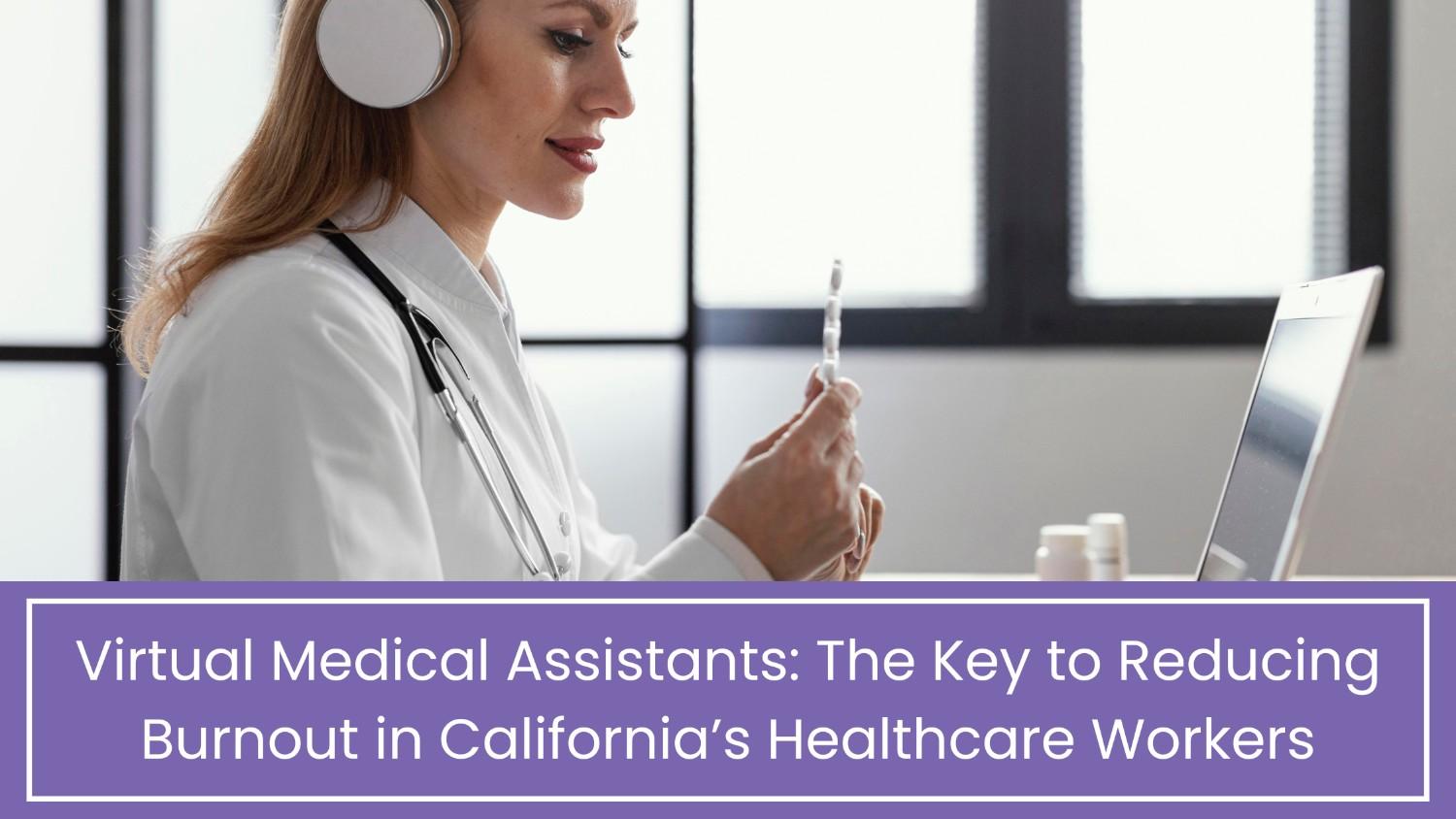
California clinics are still dealing with that stubborn truth: all this admin burden is quietly chewing up time that should be on patients. AMA reporting for 2026 suggests systemic drivers, like administrative overhead and staffing shortages, are still shaping how physicians experience their work day, even if burnout has gotten a bit better compared to those earlier high points. AMA’s earlier look at prior-authorization paperwork also points to how bad it remains, with doctors managing dozens of requests each week, while support teams spend hours on PA tasks. Honestly it’s the exact kind of squeeze that a healthcare virtual assistant, or a virtual assistant for healthcare, is meant to take off your plate.
Statistics table
|
Pressure point |
Current data |
|
Physicians with burnout symptoms in 2023 |
45.2% |
|
Average prior authorization requests per physician per week |
39–45 |
|
Staff time spent on PA tasks |
About 13 hours weekly |
|
Physicians saying prior authorization contributes to burnout |
89%–95% in AMA-reported survey coverage |
The numbers are ugly because the workflow is ugly. That is why virtual assistants in healthcare are now part of operational planning, not just cost cutting.
Simple graph
Prior auth requests/week 45 ████████████████████
Staff hours on PA/week 13 ██████
Burnout contribution 95% ███████████████████████████████████████
This is why 2026 is not the year to keep pretending the front desk can “just handle it.” It cannot. That assumption is what breaks patient access and staff morale.
How a Virtual Medical Assistant Solves the Administrative Overload?
A good medical virtual assistant is not a vague admin helper. It is a structured, remote extension of the practice that handles scheduling, patient communication, insurance checks, prior authorizations, chart prep, claims follow-up, telehealth setup, and documentation support. Practolytics publicly lists services such as appointment booking, insurance coverage checks, referrals, bills and claims follow-up, reminders, patient calls and messages, prescription refill support, chart updates, lab coordination, telehealth onboarding, and data entry.
That is the real value of virtual medical assistant services and virtual assistant medical support. They take repetitive work off the team without forcing the clinic to hire another full-time employee, buy more office space, or absorb more turnover risk. Competitor pages from Virtual Nurse Rx and DoctorPapers say similar things about scheduling, insurance verification, prior authorizations, billing, intake, referral management, scribing, and live chat support, which confirms the market is crowded but also confirms the need is real.
What Makes Practolytics the Best Virtual Medical Assistant Company in California?
Practolytics has a stronger California story than most competitors because it connects virtual medical assistant companies to revenue cycle operations instead of treating them like isolated admin labor. Its service pages say the company provides HIPAA-compliant virtual medical assistants with billing, scheduling, prior auth, EMR updates, and scribing support and that the team is integrated into existing workflows. Practolytics also says it brings 20+ years of RCM experience, works with all specialties, and offers no long-term contracts. That combination matters because the best best medical virtual assistant is the one that fits the practice instead of forcing the practice to rebuild around the vendor.
In plain English: if a vendor only answers phones, it is not enough. A real healthcare virtual assistant should support patient flow, documentation, and reimbursement. That is where Practolytics has a practical edge over more generic healthcare virtual assistant companies.
Virtual Medical Assistant Services Offered by Practolytics in California
Practolytics’ California-aligned virtual medical assistant services are built around front-office and revenue-cycle tasks. The company says its VMAs can manage calls and messages, book appointments, register patients, verify insurance, follow up on claims, handle referrals and approvals, support prescription refill workflows, update patient records, arrange lab tests, and prepare charts. In many practices, those are the exact tasks that keep staff trapped in reactive mode.
That is also where medical billing virtual assistant support becomes useful. When the assistant can coordinate billing follow-up and documentation support, the practice gets fewer dropped tasks and fewer preventable delays. The result is cleaner virtual medical practice management and a front desk that is not constantly on fire.
HIPAA-Compliant Workflows Designed for California Clinics
A virtual assistant for medical practice only works in California if the compliance foundation is real. HHS says vendors that handle PHI as business associates are directly subject to HIPAA requirements, and the business associate contract must define permitted uses, safeguards, and breach responsibilities. HHS also says the Security Rule requires administrative, physical, and technical safeguards for electronic PHI. California adds another layer: the state DOJ explains that state and federal medical privacy laws give patients rights over their records, so clinics cannot treat California as a “HIPAA only” state.
That means real healthcare virtual assistants need secure logins, role-based access, minimum-necessary data handling, audit trails, and training on what not to do with PHI. If a vendor cannot explain its BAA, access controls, or breach process in plain language, it is not ready for California clinics. It is just marketing.
Conclusion
The best virtual medical assistant companies in California are the ones that reduce burden, without creating new risk. In 2026, California practices need more than task help; they need a vendor who really understands scheduling, billing, patient communication, prior auth, and HIPAA-governed workflows. Practolytics stands out because it links medical virtual assistant services with revenue cycle know-how and integrated practice support, which honestly feels more useful than those generic staffing pitches. The bottom line is pretty clear: if your team is drowning in admin work, a capable VMA partner is not a luxury. It is more like operational damage control, for real.
1. How Much Does a Virtual Medical Assistant Cost in California?
Pricing varies by scope, specialty, and coverage hours. Current market pages show part-time nearshore VMA services often around $800–$1,500 per month, while dedicated remote support can run higher depending on workload and specialization.
2. Is hiring a virtual medical assistant in California HIPAA compliant?
It can be, but only if the vendor signs the proper BAA, and actually follows HIPAA Privacy and Security Rule safeguards for PHI, ok? California clinics should also double-check state privacy obligations, not just the federal ones. In a sense it’s kind of both, federal and state, so you can’t just assume.
3.How much does a virtual medical assistant cost compared to an in-office hire in California?
A virtual role is usually cheaper because the practice avoids office space, equipment, benefits, and turnover costs. Practolytics estimates VMAs cost far less annually than W-2 receptionists once those overhead items are added, though exact figures depend on scope.
4.Which EHR systems can Practolytics’ virtual medical assistants work with?
Practolytics says its VMAs are integrated with existing EHR/EMR workflows, but the exact system match should be confirmed during onboarding because compatibility depends on the clinic’s setup.
5. How quickly can I onboard a virtual medical assistant for my California practice?
There is no fixed universal timeline. Onboarding depends on workflow complexity, access setup, and how clean your current processes are. Practolytics says its VMAs work within existing workflows and offers no long-term contracts, which suggests flexibility rather than a rigid rollout.
Read More – Why Doctors in Philadelphia are Turning to Virtual Medical Assistants
Talk to Medical Billing Expert Today — Get a Free Demo Now!