
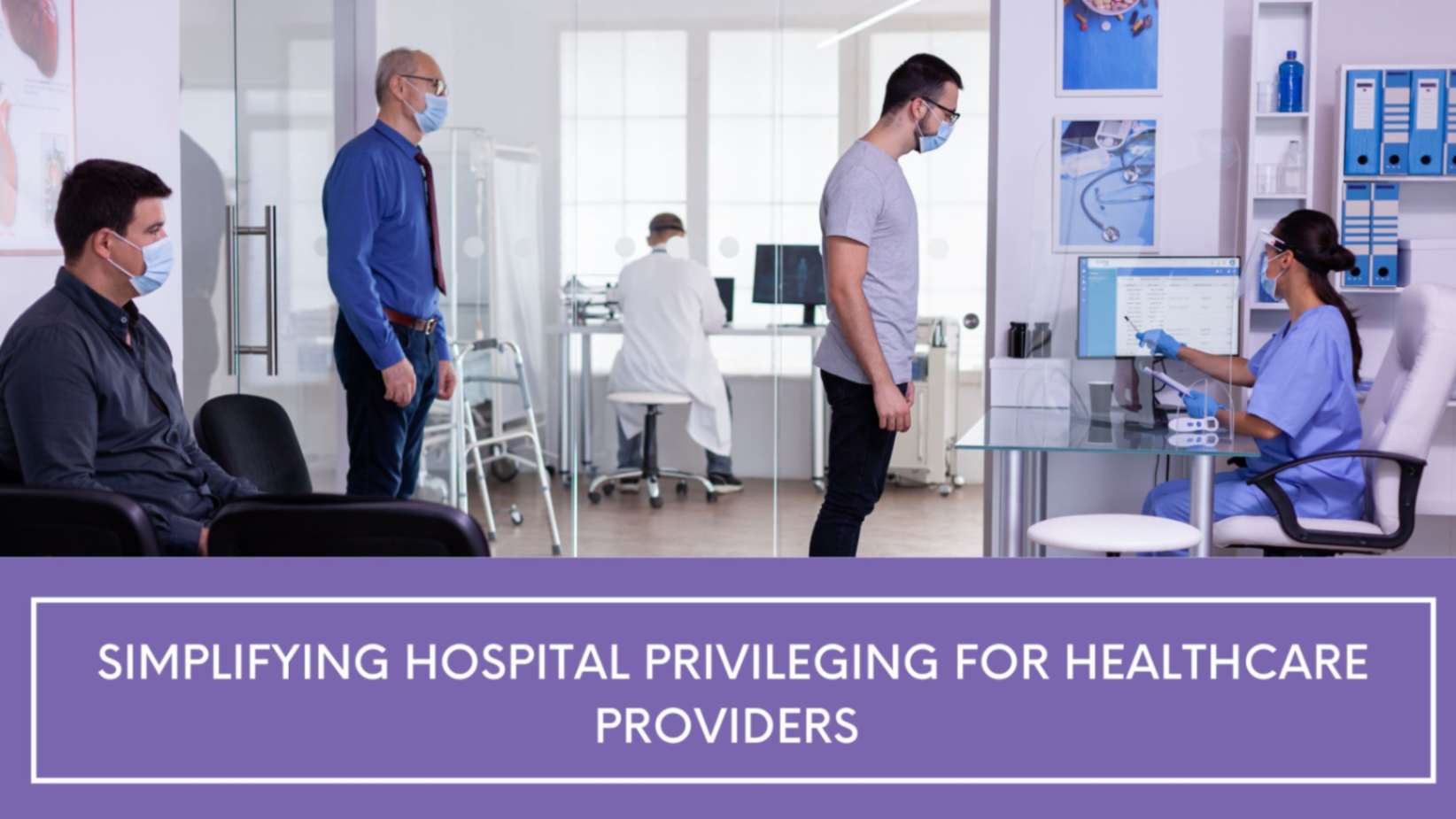
Simplifying Hospital Privileging for Healthcare Providers
If you work in healthcare, you’ve probably heard the word “privileging” thrown around a lot. But not everyone knows what it actually means, or why it takes so long. This guide is here to fix that. We’re simplifying hospital privileging for healthcare providers so it makes sense, even if you’ve never dealt with it before. You’ll learn what is privileging, why hospitals require it, and how the process works from start to finish. We’ll also talk about the common holdups, and how Practolytics helps hospitals and providers move through hospital privileging without the usual stress.
Let’s start simple. Hospital privileges are basically permission slips. Before a doctor can treat a patient, do surgery, or admit someone into a hospital, the hospital has to say “yes, you’re allowed to do this here.”
That’s it. That’s the whole idea behind hospital privileging.
So what is privileging, in plain terms? It’s the hospital checking a provider’s background, training, and skills, then giving them the green light to do specific things at that hospital. Not every doctor gets the same privileges. A surgeon gets different approval than a family physician, for example.
Sounds simple, right? In theory, yes. In real life, this process can drag on for weeks or months. That’s where things get frustrating for providers who just want to start seeing patients.
This blog breaks it all down. Why it matters, what slows it down, how it actually works step by step, and how Practolytics helps make it faster.
Table of Contents
Why Hospital Privileging Is Important for Healthcare Organizations?
Privileging isn’t just red tape. It protects people.
Here’s why it matters so much:
It keeps patients safe. Before someone performs surgery on you, don’t you want to know they’re actually trained to do it? That’s exactly what hospital privileging checks.
It protects hospitals too. If something goes wrong and the hospital let an unqualified provider handle it, that hospital could be in serious legal trouble. Privileging creates proof that the hospital did its homework.
It builds trust. Patients feel safer knowing their doctor didn’t just walk in off the street. Someone checked their background first.
It keeps hospitals in line with the law. Skipping steps in clinical privileging can lead to fines, or even losing accreditation.
And it keeps care quality high. Provider privileges are based on real skill and experience, not guesswork.
Basically, once you understand what are hospital privileges, the whole system starts to make a lot more sense. It’s there to protect everyone in the room.
Common Challenges in the Hospital Privileging Process
Here’s the honest truth: this process is messy for a lot of hospitals.
Paperwork is the biggest complaint. Applications ask for a ton of documents. One missing form can stall the whole thing.
Then there’s the wait. Weeks, sometimes months, pass before approval comes through. That’s lost time and lost income for providers. Every hospital has different rules. What one hospital needs for medical privileging might look nothing like what another hospital asks for. That gets confusing fast, especially for providers applying to more than one place.
A lot of hospitals still track this stuff manually, using spreadsheets or paper files. It’s easy for an application to get buried or forgotten. Communication is another problem. Providers often have no idea where their application stands. So they call, and call again, and get frustrated.
Verifying someone’s background takes time too. Contacting schools, licensing boards, and past employers isn’t instant. And renewals sneak up on people. Hospital privileges expire and need to be renewed every couple of years. Without a reminder, it’s easy to forget.
None of this is unusual. It’s just what happens when a document-heavy process doesn’t have good structure behind it.
Step-by-Step Hospital Privileging Process
Let’s walk through how this actually works, step by step.
First, the provider fills out an application. This covers their education, work history, licenses, and certifications.
Next comes document collection. Usually this means things like:
- Medical school diploma
- Residency certificates
- State medical license
- DEA registration
- Malpractice insurance proof
- Professional references
After that, the hospital does something called primary source verification. In plain English, they don’t just take your word for it. They call the medical school directly. They check with the license board. Every credential gets confirmed at the source.
Once everything checks out, a hospital committee reviews the whole file. They decide if the provider is a good fit for the privileges they’re asking for.
If approved, it goes to the hospital’s board for final sign-off.
Once that’s done, the provider is officially privileged and can start working. But it doesn’t stop there. Hospitals keep an eye on performance after approval too, through ongoing reviews. And since hospital privileges need renewal every year or two, this whole process repeats itself down the road, just a bit lighter the second time.
Seeing it laid out like this shows exactly why simplifying hospital privileging for healthcare providers matters so much. Every step takes time. One slow stage, and the whole thing backs up.
How Technology Simplifies Hospital Privileging?
Technology has made a real difference here.
Paper forms are turning into online ones. Providers can fill everything out from their phone or laptop instead of mailing documents back and forth. Software can flag a missing document right away, instead of someone noticing weeks later during review. That alone saves a lot of back and forth. Providers can also check the status of their application in real time, instead of guessing or calling the office every few days.
Storing everything digitally in one place helps too. No more digging through file cabinets.
Some systems even send automatic reminders before hospital privileges are about to expire, so nothing gets missed. To be clear, technology doesn’t replace the careful review process. It just clears out the slow, repetitive steps that used to cause delays.
Best Practices for Efficient Hospital Privileging
A few habits make this whole process a lot smoother.
Start early. Waiting until the last minute is how most delays happen.
Keep your documents in one place. Your license, insurance proof, and certifications should be ready to go whenever needed.
Double-check every form before you send it. One missing signature can send everything back to square one.
Check in with the hospital’s staff office now and then. It keeps things moving and shows you’re paying attention. Use a simple checklist. Knowing exactly what’s needed, and checking it off one item at a time, keeps you from missing anything. Set reminders for renewal dates. Hospital privileges don’t last forever. And honestly, working with people who already know the process helps a lot. Experts know what each hospital expects, which saves everyone time.
Do these things, and you can shave real time off the typical provider privileges wait.
How Practolytics Helps Healthcare Organizations Simplify Privileging?
Practolytics gets it. Hospital privileging is stressful, and it takes way too long when nobody’s managing it properly.
That’s why Practolytics starts with a real conversation first. The team learns what each provider actually needs before jumping into paperwork.
From there, Practolytics collects and organizes every document, checking it for accuracy before anything gets submitted. That means fewer mistakes and fewer things getting sent back. Applications get filled out and submitted right the first time. That one thing alone prevents a lot of the delays providers usually run into.
Practolytics also stays in contact with hospital staff throughout the whole process, so providers aren’t left wondering what’s going on. And once privileges are granted, Practolytics tracks renewal dates so nothing lapses without warning.
At the end of the day, Practolytics handles the heavy lifting so providers can spend their time doing what matters: caring for patients.
That’s what simplifying hospital privileging for healthcare providers really looks like in practice, not just a nice phrase, but something providers actually feel.
Conclusion
Simplifying hospital privileging for healthcare providers doesn’t have to be complicated. Once you understand how the process works, and avoid the common mistakes, things move a lot faster. Hospital privileges exist to protect patients and give providers the trust they need to do their job well. Practolytics makes the whole thing easier by handling paperwork, tracking deadlines, and staying in touch with hospitals every step of the way. With the right support, providers spend less time stuck in forms and more time doing what they trained for.
FAQs
1. What is hospital privileging?
Hospital privileging is when a hospital reviews a provider’s training and background, then approves them to perform specific services there. It depends on the provider’s specialty, their experience, and exactly what procedures they’re requesting.
2. What is the difference between credentialing and privileging?
People confuse these two all the time. Credentialing checks if a provider is qualified to practice medicine in general. Privileging is more specific. It looks at exactly which procedures a provider can do, and where. Credentialing says “you’re qualified.” Privileging says “here’s exactly what you can do at this hospital.”
3. Why is hospital privileging important?
It protects patients by making sure only properly trained providers handle certain procedures. It also protects the hospital legally and keeps care quality consistent across every department.
4. How long does hospital privileging take?
It varies, but usually a few weeks to a few months. Most delays come down to:
- Missing documents
- Slow responses during verification
- Committee and board meetings that only happen on a set schedule
5. What documents are required for hospital privileging?
Most hospitals ask for similar things:
- Medical school diploma
- Residency certificates
- Current state medical license
- DEA registration
- Malpractice insurance proof
- Work history and references
Having these ready ahead of time speeds everything up.
6. How can hospitals reduce privileging delays?
Most delays come from disorganization, not the process itself. Hospitals that move faster tend to:
- Use digital applications instead of paper
- Give providers a clear checklist upfront
- Keep communication open throughout the process
- Work with experienced partners, like Practolytics, to manage it all.
ALSO READ – Charting the Future: Navigating 2024’s Healthcare Credentialing with Practolytics
Talk to Medical Billing Expert Today — Get a Free Demo Now!