

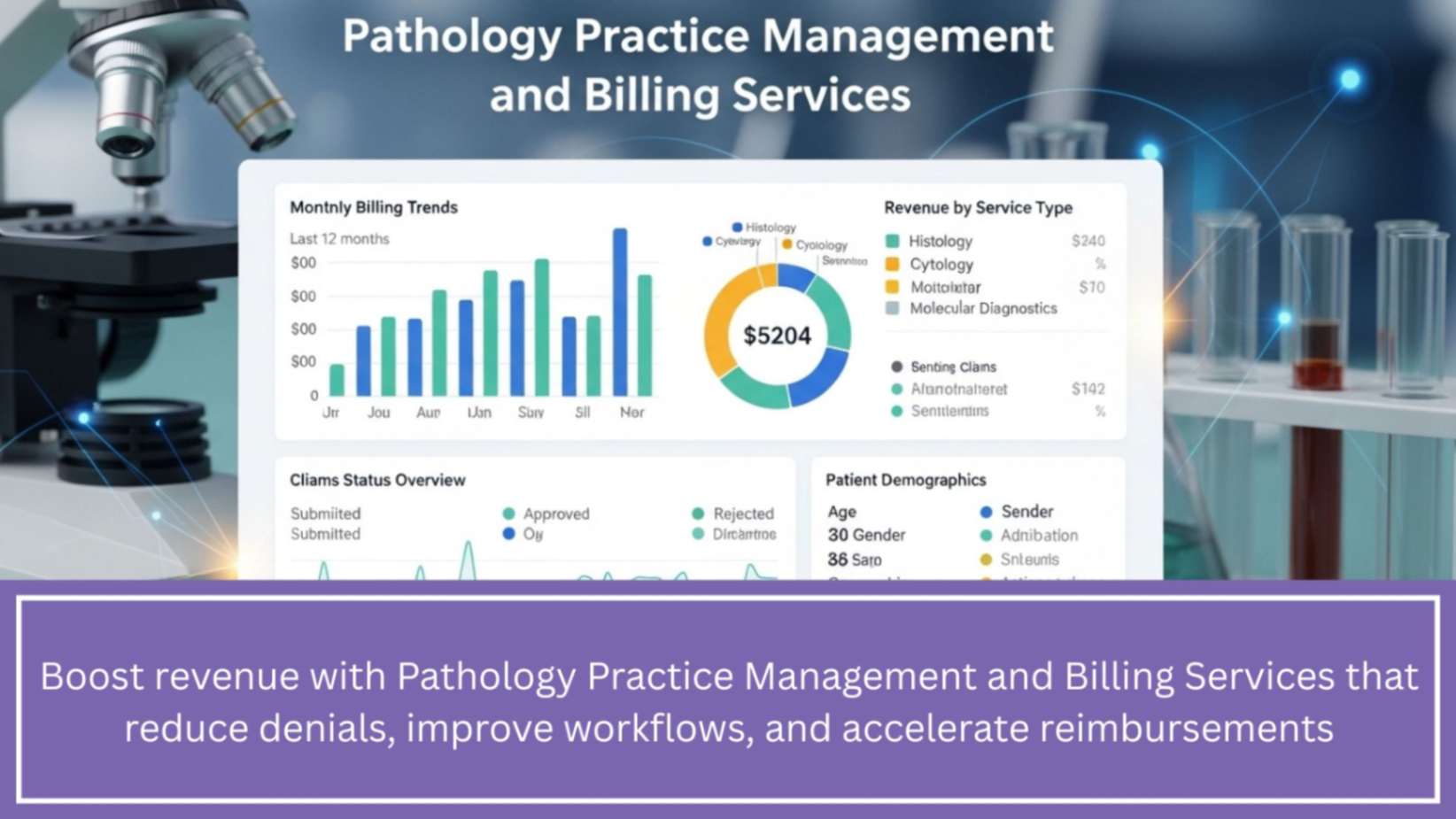
Pathology Practice Management and Billing Services
Running a pathology practice today is a lot more than reading slides and signing reports. This guide covers Pathology practice management and billing services. We’ll get into what these services actually include, why pathology billing needs specialized knowledge, and the common mistakes that quietly cost practices money. We’ll also cover technology, KPIs worth tracking, and how we, at Practolytics, help pathology practices with billing and revenue cycle management.
Pathology is different from most other specialties, and that shows up clearly in billing.
A pathologist rarely sees the patient face to face. The whole revenue process depends on samples, codes, referring physicians, and paperwork that has to line up perfectly. One missed code or one mismatched piece of documentation, and a claim gets denied.
That’s exactly why pathology practice management and billing services exist. They handle the operational and financial side of a pathology practice, so pathologists can stay focused on diagnostics instead of chasing claims.
This guide covers:
- What these services actually include
- Why pathology billing needs specialized expertise
- The core pieces of pathology practice management
- Common billing mistakes that hurt revenue
- How technology helps
- KPIs worth tracking
- Why outsourcing makes sense
- How we help at Practolytics
Let’s get into it.
Table of Contents
What Are Pathology Practice Management and Billing Services?
These services cover everything that keeps a pathology practice running financially and operationally, outside of the actual diagnostic work.
That includes:
- Coding every specimen, test, and procedure correctly
- Submitting claims to insurance companies
- Following up on unpaid or denied claims
- Managing accounts receivable
- Handling credentialing and payer enrollment
- Coordinating scheduling, staffing, and daily operations
- Keeping the practice compliant with billing regulations
Basically, it’s everything that happens behind the scenes so a pathologist gets paid correctly for the work they’ve already done.
Pathology practice management isn’t one single task. It’s a bunch of moving pieces that all have to work together smoothly.
Why Pathology Billing Requires Specialized Expertise?
Pathology billing isn’t like billing for a typical office visit. It has its own rules, and getting them wrong is easy if you don’t know what to look for.
Every test has its own code. Surgical pathology, cytology, molecular testing, and immunohistochemistry all use different, very specific codes. Mixing them up leads to denials.
TC and PC components matter a lot. Pathology billing often splits into a technical component and a professional component, and billing them incorrectly causes real revenue loss. High volume means high risk. Pathology practices process a large number of specimens, and even a small error rate adds up fast across that volume.
Payer rules shift often. Coding updates happen every year, and missing a change can mean claims get rejected across the board. Documentation has to be precise. Since pathologists rarely interact with patients directly, their documentation carries the entire weight of proving medical necessity.
This is why generic billing knowledge isn’t enough here. Pathologist revenue cycle management really needs someone who understands the specialty inside and out.
Core Components of Pathology Practice Management
Here’s what actually makes up solid pathology practice management.
Accurate coding. Every specimen and test needs the correct CPT and ICD-10 codes, matched precisely to what was actually performed. Claims management. Claims need to go out clean the first time, with the right codes and documentation attached.
Denial handling. When a claim gets denied, someone has to figure out why, fix it, and resubmit quickly. Accounts receivable tracking. Keeping an eye on what’s owed, and for how long, helps catch problems before they pile up. Credentialing and enrollment. Providers have to be properly credentialed with every payer they bill, and this needs regular upkeep. Compliance oversight. Staying current with CLIA requirements, coding updates, and payer regulations protects the practice from bigger problems down the line.
Staff and workflow coordination. Even the best billing process falls apart if the operational side isn’t organized too.
Common Pathology Billing Challenges That Hurt Revenue
A few problems show up again and again in pathology billing.
- Undercoding specimens. When documentation doesn’t clearly support the level of service, coders sometimes default to a lower code, which means lost revenue.
- Missed IHC stains. Immunohistochemistry stains sometimes don’t get captured properly on the charge sheet, even though they were actually performed.
- TC/PC billing errors. Splitting the technical and professional components incorrectly is one of the most common pathology-specific mistakes.
- Payer short-payments. Sometimes payers simply pay less than the contracted rate, and without someone watching closely, this goes unnoticed.
- Documentation gaps. High specimen volume makes it easy for documentation to fall behind or get incomplete.
- Coding updates missed. Annual CPT and ICD-10 changes can catch a practice off guard if nobody’s tracking them closely.
Each of these seems small individually. Across hundreds of specimens a month, they add up to real lost revenue.
How Technology Improves Pathology Billing and RCM?
Technology has made a real difference in how pathology billing gets managed.
- LIS and EHR integration. When billing systems connect directly with a lab’s LIS, information flows accurately without manual re-entry errors.
- Automated charge capture. Software can flag when a stain, panel, or procedure hasn’t been charged, catching missed revenue before it slips through.
- Claim scrubbing tools. These catch coding errors before a claim goes out, not after it comes back denied.
- Real-time reporting dashboards. Practices can see denial rates, AR aging, and collections trends without waiting for a monthly report.
- Automated eligibility checks. Confirming coverage upfront reduces denials tied to eligibility issues later.
Practice management software appointments billing pathology integration matters a lot here, since disconnected systems create the exact gaps where revenue quietly disappears.
Pathology Revenue Cycle Management KPIs to Track
You can’t fix what you’re not watching. Here’s what matters most in pathology billing.
Denial rate. How many claims are getting denied, and for what reasons.
Days in accounts receivable. How long it takes, on average, to collect payment after a claim goes out.
First-pass resolution rate. How many claims get paid without any rework needed.
Net collection rate. How much of the money owed actually gets collected.
Undercoding trends. Whether specimens are consistently getting coded lower than they should be.
Charge capture accuracy. Whether every test and procedure performed is actually showing up as a billed charge.
Watching these numbers regularly helps catch small revenue leaks before they turn into bigger losses.
Benefits of Outsourcing Pathology Billing Services
A lot of pathology practices try handling billing in-house first, then realize just how specialized it needs to be.
Here’s what changes with the right outsourcing partner.
- Fewer denials. Claims go out clean and accurate, since coders understand pathology-specific rules.
- Faster payments. Consistent follow-up means claims don’t sit around waiting to be noticed.
- Better charge capture. Missed stains and undercoded specimens get caught before they become lost revenue.
- More time for diagnostics. Pathologists and lab staff can focus on their actual work instead of chasing claims.
- Access to real expertise. A dedicated pathology billing solution understands TC/PC splits, specimen coding, and payer nuances that general billers often miss.
- Clear reporting. Practices get visibility into their revenue cycle without having to dig for it themselves.
Why Choose Practolytics for Pathology Billing and Practice Management?
At Practolytics, we understand that pathology billing isn’t like billing for any other specialty.
We code every specimen and test precisely, matching CPT and ICD-10 codes to exactly what was performed.
We manage TC and PC components carefully, so this common source of pathology denials doesn’t quietly drain revenue. We track charge capture closely, catching missed stains and undercoded specimens before they become lost income. We follow up on claims consistently, so nothing sits untouched waiting for a payer response. We integrate with LIS and EHR systems, keeping information accurate without manual re-entry errors.
We offer pathology practice management consulting alongside billing, so operations and revenue work together instead of separately.
Our goal is simple. Handle the billing and practice management side, so pathologists can stay focused on diagnostics.
Conclusion
Pathology billing comes with its own set of challenges, from specimen coding to TC/PC splits that general billers often get wrong. Small mistakes add up fast across high specimen volumes, quietly draining revenue a practice has already earned. At Practolytics, we handle coding, claims, and charge capture with real pathology-specific expertise, so practices catch revenue leaks before they turn into bigger losses. The result is fewer denials, faster payments, and more time for pathologists to focus on what they do best.
FAQs
1. What are pathology practice management and billing services?
These are services that handle the operational and financial side of a pathology practice, including coding, claims submission, denial management, credentialing, and day-to-day workflow coordination.
2. Why is pathology medical billing so complex?
Pathology billing involves highly specific codes for different tests, technical and professional component splits, high specimen volume, and documentation that has to stand entirely on its own since pathologists rarely see patients directly.
3. What is pathology revenue cycle management?
It’s the full process of getting a pathology practice paid, from specimen coding and claims submission to denial management and accounts receivable tracking, all specific to how pathology billing actually works.
4. What are common causes of pathology claim denials?
A few show up often:
- Undercoded specimens
- Missing IHC stain charges
- TC/PC billing errors
- Outdated CPT or ICD-10 codes
- Documentation gaps
5. What are TC and PC components in pathology billing?
TC stands for technical component, covering the equipment and lab work involved in processing a specimen. PC stands for professional component, covering the pathologist’s interpretation and diagnosis. Both need to be billed correctly and separately in many cases.
6. How can pathology practices reduce claim denials?
A few habits help:
- Code specimens accurately and consistently
- Track charge capture closely
- Stay current on annual coding updates
- Review TC/PC billing regularly
- Follow up on denials quickly
7. How does outsourcing pathology billing improve revenue?
Outsourcing brings in expertise specific to pathology, catching missed charges, coding errors, and TC/PC mistakes that general billing services often overlook. This usually means faster payments and fewer denials.
8. Can pathology billing services integrate with LIS and EHR systems?
Yes. Good pathology billing partners connect directly with a lab’s LIS and EHR systems, which keeps information accurate and reduces manual entry errors.
9. How can Practolytics help with pathology billing?
We handle specimen coding, TC/PC splits, charge capture, and claims follow-up with pathology-specific expertise, so practices catch revenue leaks early and get paid faster for the work they’ve already done.

ALSO READ – Essential Tips for Error-Free Orthopedic Billing and Coding: Boost Your Practice’s Financial Health
Talk to Medical Billing Expert Today — Get a Free Demo Now!