
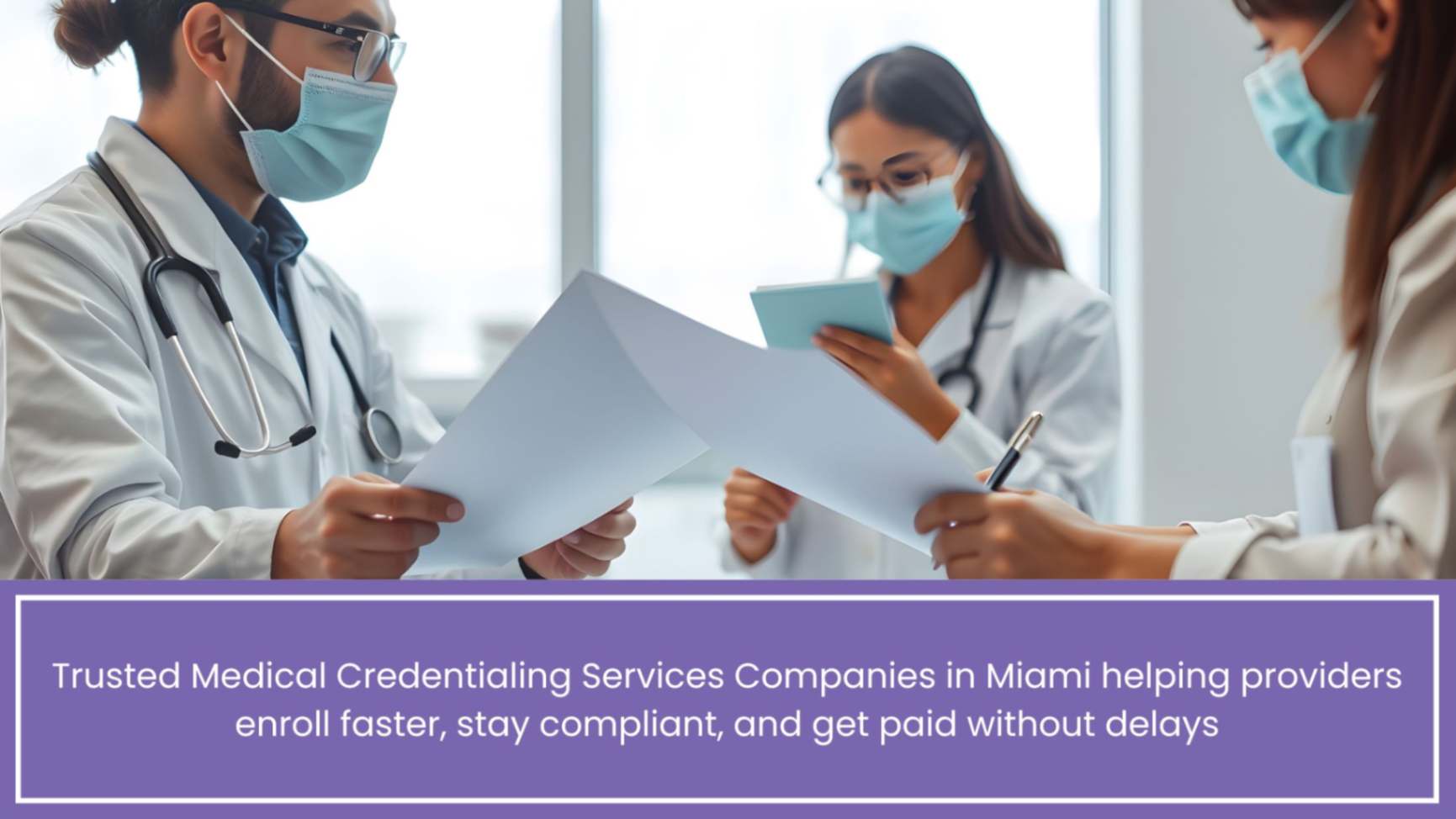
Medical Credentialing Services Companies in Miami
Running a practice in Miami means dealing with a huge, competitive healthcare market. This guide covers medical credentialing services companies in Miami. We’ll get into why Miami providers need this kind of help, what a good partner should actually offer, and the problems practices run into most. We’ll also talk about outsourcing, how to pick the right company, and why Miami providers work with us.
Table of Contents
Medical Credentialing Services Companies in Miami: Complete Guide for Healthcare Providers
Miami has one of the busiest healthcare markets in the whole state. Big hospital systems, teaching hospitals, small independent practices, all competing for patients in the same crowded space.
That kind of growth is great for the city. It’s a headache for credentialing though. Every payer wants something different. Medicare, Florida Medicaid, and a long list of commercial insurers all have their own forms, their own timelines, their own quirks. Miss one step, and a provider sits there ready to see patients but unable to bill for it.
That’s exactly why so many Miami practices bring in outside help instead of trying to manage it all themselves.
Here’s what we’re covering:
- Why Miami providers need credentialing support
- What services a credentialing company should actually offer
- Common problems Miami practices run into
- Why outsourcing tends to help
- How to pick the right company
- Why Miami providers work with Practolytics
Let’s get into it.
Why Miami Healthcare Providers Need Credentialing Services?
Miami’s healthcare scene doesn’t slow down. New practices open constantly, and existing ones keep adding providers to keep up with demand.
Here’s why that growth makes credentialing support so important.
- The payer mix is complicated. Medicare, Florida Medicaid, and a whole lineup of commercial insurers all want something a little different, and mixing them up causes real delays.
- Competition is fierce. Patients in Miami have plenty of options. A provider who isn’t credentialed yet can’t see patients under insurance, which means lost patients right out of the gate.
- Delays cost real money. Every day a provider waits on approval is a day they’re doing the work without getting paid for it.
- Staff are stretched thin already. Most practices don’t have someone whose entire job is credentialing, so it becomes one more thing squeezed into an already full day.
- Renewals sneak up fast. Credentials expire, and missing a renewal date can mean a provider suddenly can’t bill anymore.
Credentialing services Miami providers need to handle all of this smoothly, not just get an application in the mail and hope for the best.
Services Offered by Medical Credentialing Companies in Miami
Here’s what we usually handle for Miami practices.
- Verifying a provider’s license, education, and training
- Setting up and maintaining CAQH profiles
- Submitting applications to Medicare, Florida Medicaid, and commercial payers
- Following up regularly until approval comes through
- Tracking renewal and recredentialing deadlines
- Supporting new practices and providers joining existing groups
- Handling both credentialing and payer enrollment together
We don’t just fill out forms and wait. We manage the whole process, start to finish, so Miami providers always know what’s happening with their application.
Common Credentialing Challenges Miami Practices Face
A few problems come up again and again for practices in this city.
- Mixed payer requirements. What Medicare wants looks nothing like what a commercial insurer asks for, and Florida Medicaid has its own rules on top of that.
- Long wait times. Credentialing can drag on for months, especially when an application gets sent back for missing information.
- Outdated CAQH profiles. Since most payers pull directly from this database, an old or incomplete profile slows down approval with nearly everyone.
- Staffing gaps. A lot of Miami practices, especially smaller ones, don’t have anyone dedicated to credentialing full time.
- Missed renewals. Credentials expire, and a missed deadline can mean a provider suddenly loses their ability to bill.
- Poor follow-up. An application that nobody checks on regularly can sit untouched for weeks without anyone realizing it.
- None of this is unusual. It’s just what happens when a detailed, paperwork-heavy process doesn’t get the attention it actually needs.
Benefits of Outsourcing Medical Credentialing Services
A lot of practices try handling credentialing on their own first. Most quickly realize it takes a lot more time and attention than expected.
Here’s what changes once you bring in outside help.
Applications get done right the first time, which means fewer rejections and less back-and-forth. CAQH profiles stay current automatically, instead of getting forgotten until a payer flags an issue.
Renewal deadlines get tracked closely, so nothing lapses without warning. Staff get their time back to focus on patients instead of paperwork. Approvals tend to move faster overall, since someone is actively following up instead of just waiting.
Revenue stops sitting on hold, since providers get approved and start billing sooner.
How to Choose the Best Medical Credentialing Company in Miami?
If you’re comparing options, here’s what actually matters.
- Look for local payer knowledge. A partner familiar with Florida Medicaid and Miami’s commercial insurers will move faster than one that treats every market the same.
- Ask how they manage CAQH. This should be an ongoing part of their service, not a one-time setup.
- Ask about communication. You should get regular updates on your application, not have to call and ask what’s going on.
- Ask if they handle both credentialing and enrollment. Getting approved is one step. Actually being set up to bill correctly is a separate one, and a good partner should cover both.
- Ask about renewal tracking. Credentials expire, and a good partner keeps track of every date so nothing slips through.
- Ask about experience across specialties. The more variety a company has handled, the better they’ll understand where delays tend to happen.
Why Practolytics Is a Trusted Credentialing Partner in Miami?
We built our process around the exact problems Miami providers deal with most.
We learn each provider’s specialty, payer mix, and goals before touching any paperwork. Every Miami practice runs a little differently. We manage CAQH profiles continuously, keeping them accurate so payers always have the right information on hand. We submit clean, complete applications the first time, which cuts down on the back-and-forth that usually causes delays.
We follow up with payers regularly, so Miami providers aren’t left guessing where things stand. We track every renewal and recredentialing deadline closely, so providers never lose their ability to bill because a date got missed.
We handle Medicare, Florida Medicaid, and commercial payer enrollment all under one process, so nothing falls between the cracks.
Our goal is simple. Handle the paperwork, so Miami providers can focus on their patients.
Conclusion
Picking the right medical credentialing services partner can mean the difference between a provider sitting idle and one who’s actually seeing patients and getting paid for it. Miami’s healthcare market moves fast, and credentialing needs to keep pace with it. At Practolytics, we manage applications, CAQH profiles, and renewals closely, so nothing gets missed. Whether you’re growing an existing Miami practice or opening a new one, we make credentialing simple and stress-free.
FAQs
1. How long does medical credentialing take in Miami?
It typically takes 60 to 120 days, depending on the payer. Delays usually come from incomplete applications, outdated CAQH profiles, or slow payer response times.
2. Why should medical practices outsource credentialing?
Outsourcing saves time and reduces mistakes. A dedicated team can follow up consistently, catch errors before they cause delays, and free up staff to focus on patients instead of paperwork.
3. How much do medical credentialing services cost in Miami?
Cost depends on how many providers and payers are involved, and whether ongoing CAQH management or recredentialing tracking is included. Pricing usually gets built around the specific needs of each practice.
4. What insurance companies do credentialing companies work with?
Most, including us, handle Medicare, Florida Medicaid, and a wide range of commercial insurers active in the Miami market.
5. What is the difference between credentialing and enrollment?
Credentialing verifies a provider’s qualifications, license, education, and background. Enrollment is the actual process of getting set up to bill a specific payer once credentialing is approved. Both steps are needed before a provider can get paid.
6. Can credentialing services reduce claim denials?
Yes. A big share of denials tie back to credentialing issues, like a provider not being properly enrolled with a payer. Getting credentialing right the first time helps prevent these denials before they happen.
ALSO READ – Simplifying Revenue Management: How Medical Billing Services Empower Small Practices
Talk to Medical Billing Expert Today — Get a Free Demo Now!