
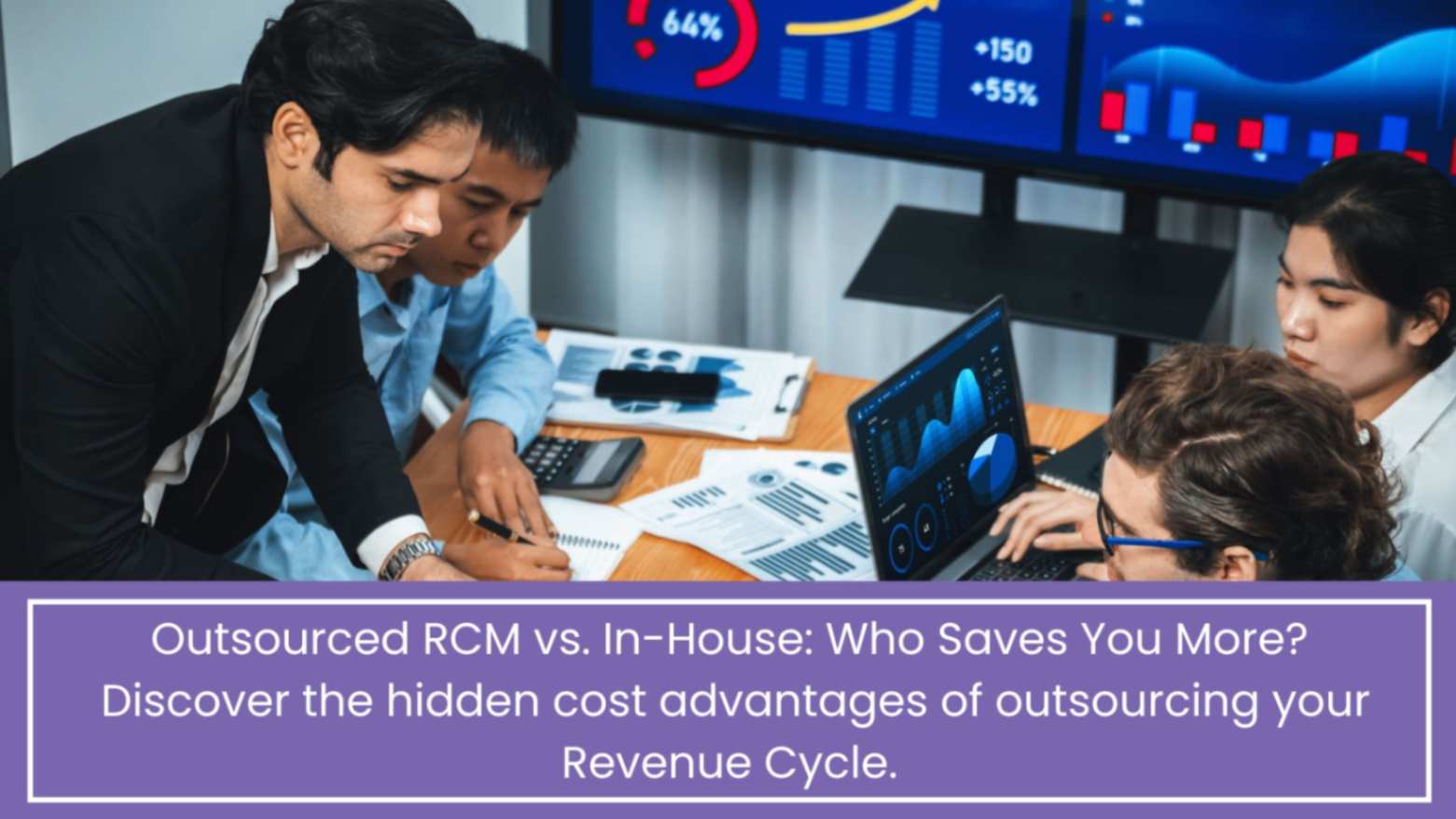
Is outsourcing RCM more cost-effective than in-house management?
A lot of practices ask the same question. Is outsourcing RCM more cost-effective than in-house management? It’s a fair question. In-house billing feels safer at first. But it comes with hidden costs most practices don’t see until later. In this guide, we break down the real cost of running RCM in-house. How outsourcing changes that picture. And how we, at Practolytics, help practices save money while getting paid faster, with a process built for their specialty.
Running a practice means someone has to handle billing. The question is, who does it best. Your own staff, or a team that does this every single day for a living. This isn’t a small decision either. Billing touches every part of your practice, from how fast you get paid to how much time your staff spends on paperwork instead of patients.
A lot of practices start with in-house billing. It feels more familiar. More in your control. But over time, the costs start showing up in places you didn’t expect. Staff turnover. Denied claims. Slow payments. All of it adds up quietly, until one day the numbers just don’t make sense anymore. Let’s walk through this.
Table of Contents
Understanding the Real Cost of Revenue Cycle Management
RCM costs more than most people think. It’s not just one line item. It’s a bunch of smaller costs stacked together, and a lot of them stay hidden until you actually sit down and add them up one by one.
Here’s what usually adds up:
- Staff salaries for billing and coding employees.
- Training costs, since coding and payer rules change often.
- Software and system costs to run everything.
- Time spent fixing errors and resubmitting denied claims.
- Turnover costs when billing staff leave and new ones need training.
The RCM cost on paper often looks smaller than it really is. Once you add up staff time, tools, and mistakes, the true number climbs a lot higher. Most practices only realize this once they sit down and actually calculate every piece involved, rather than just looking at the billing staff’s paycheck alone.
How Outsourced RCM Improves Revenue Performance?
Outsourcing changes the picture in a few clear ways. It’s not just about handing off work, it actually changes how fast and how reliably your revenue shows up each month.
- Claims go out faster, since a dedicated team handles them daily.
- Fewer errors happen, since experienced coders catch mistakes early.
- Denials get followed up on quickly, instead of sitting for weeks.
- Staff at your practice get more time back for patient care.
- Reporting gets clearer, so you always know where your revenue stands.
Costs can look different depending on your specialty too. A few examples:
- Ed RCM outsourcing cost often reflects high patient volume and fast-paced billing needs.
- Dermatology RCM outsourcing cost usually factors in a mix of procedure and office visit codes.
- Oncology RCM outsourcing cost tends to be higher, since treatments and billing codes are more complex.
- Cardiology RCM outsourcing cost often includes more detailed procedure coding.
- Internal medicine RCM outsourcing cost usually stays moderate, with a steady mix of visit types.
- Radiology RCM outsourcing cost depends heavily on imaging volume and coding complexity.
Every specialty is different, so a good RCM partner should shape pricing around what your practice actually does. A general dermatology clinic and a busy oncology center simply don’t have the same billing needs, and pricing built around one size fits all rarely works well for either of them.
When Should a Medical Practice Outsource RCM?
Not every practice needs to outsource right away. But there are clear signs worth watching for, and most practices that wait too long end up paying for it in lost revenue.
- Your billing staff is overwhelmed and falling behind on claims.
- Denials keep piling up without getting resolved.
- You’re growing faster than your billing team can keep up with.
- Turnover keeps disrupting your billing process.
- You’re spending more time managing billing than growing your practice.
If any of this sounds familiar, it’s worth looking into RCM outsourcing partner pricing and comparing it against what you’re spending now. A lot of practice owners are surprised once they actually run the numbers side by side, since in-house costs tend to hide in places like overtime pay and constant retraining.
How Much Can Practices Save With RCM Outsourcing?
Savings vary, but the pattern usually looks similar across practices.
- Lower staffing costs, since you’re not paying full salaries and benefits for an in-house team.
- Fewer denied claims, which means less lost revenue overall.
- Faster payments, since claims move through the system quicker.
- Less money spent on training and turnover.
People sometimes ask something specific too, like, how much does outsourced oncology care management typically cost per member? The honest answer depends on patient volume, treatment complexity, and how many payers are involved. A good partner should walk you through the numbers clearly, instead of giving a vague answer that leaves you guessing about what you’re actually paying for.
Overall, most practices find that outsourcing costs less than they expect, especially once they count everything in-house billing actually costs them. It’s not just about the invoice from a billing partner. It’s about comparing that number against the full, true cost of doing everything internally, including the parts that never show up on a simple spreadsheet.
Why Choose Practolytics for Revenue Cycle Management?
This is where we come in. At Practolytics, we build our RCM services around your specialty, not some generic one-size-fits-all package. We’ve seen how much of a difference a tailored process makes, especially for practices dealing with complex coding or high patient volume.
Here’s what we bring:
- We submit claims within 24 hours, keeping revenue moving fast.
- We check eligibility and authorizations 48 hours before appointments.
- Our team manages denials daily, so nothing sits untouched.
- We’ve worked across 28 plus specialties, so pricing and process fit your practice.
- We keep accounts receivable under 30 days, keeping cash flow steady.
Whether you’re comparing RCM outsourcing partner pricing across a few companies, or just starting to explore outsourcing, we shape our approach around what your practice actually needs. We’d rather build a process that fits your specialty than hand you a generic package built for someone else’s practice entirely.
Conclusion
Outsourcing RCM often costs less than most practices expect, once every hidden cost of in-house billing gets counted. Fewer denials, faster payments, and less staff burnout all add up to real savings over time. Many practices only see the full picture once they actually run the comparison side by side, and that’s usually when the decision becomes clear. At Practolytics, we build our process around your specialty, so pricing and results actually make sense for your practice. If you’re weighing outsourcing against in-house billing, we’d love to help you compare the real numbers.
FAQs
Is outsourcing RCM cheaper than managing billing internally?
For most practices, yes. In-house billing includes hidden costs like salaries, training, software, and time lost fixing errors. Outsourcing usually costs less once all of this gets added up. It also often leads to faster payments, which improves overall cash flow.
What are the biggest costs of in-house RCM?
A few stand out the most:
- Staff salaries and benefits for billing employees.
- Ongoing training as coding and payer rules change.
- Software and system costs to keep everything running.
- Lost time fixing errors and resubmitting denied claims.
- Turnover costs whenever staff leave and new hires need training.
These add up fast, even if they don’t show up as one clear line item.
How does outsourcing RCM improve revenue?
Outsourcing speeds up claims submission and follow up. A dedicated team catches errors early, so fewer claims get denied. Denials that do happen get worked quickly instead of sitting untouched. All of this means revenue comes in faster and more consistently.
Is outsourced medical billing secure and HIPAA compliant?
It should be, always. A trustworthy RCM partner follows strict HIPAA guidelines, uses secure systems, and limits data access to only what’s needed. It’s worth confirming this directly with any provider before handing over your billing.
What practices benefit most from RCM outsourcing?
A few types see the biggest impact:
- Practices with high claim volume and limited billing staff.
- Specialties with complex coding, like oncology or cardiology.
- Growing practices adding providers faster than staff can keep up.
- Practices dealing with frequent denials or slow payments.
That said, almost any practice can benefit from a smoother billing process.
How quickly can a practice see results after outsourcing RCM?
Many practices notice improvements within the first few weeks, especially in claim turnaround and denial follow up. Full results usually show up within a couple months, once the new process is fully in place and old claims get cleaned up.

ALSO READ – Essential Tips for Error-Free Orthopedic Billing and Coding: Boost Your Practice’s Financial Health
Talk to Medical Billing Expert Today — Get a Free Demo Now!