Improving Coding Accuracy with AI-Powered Tools
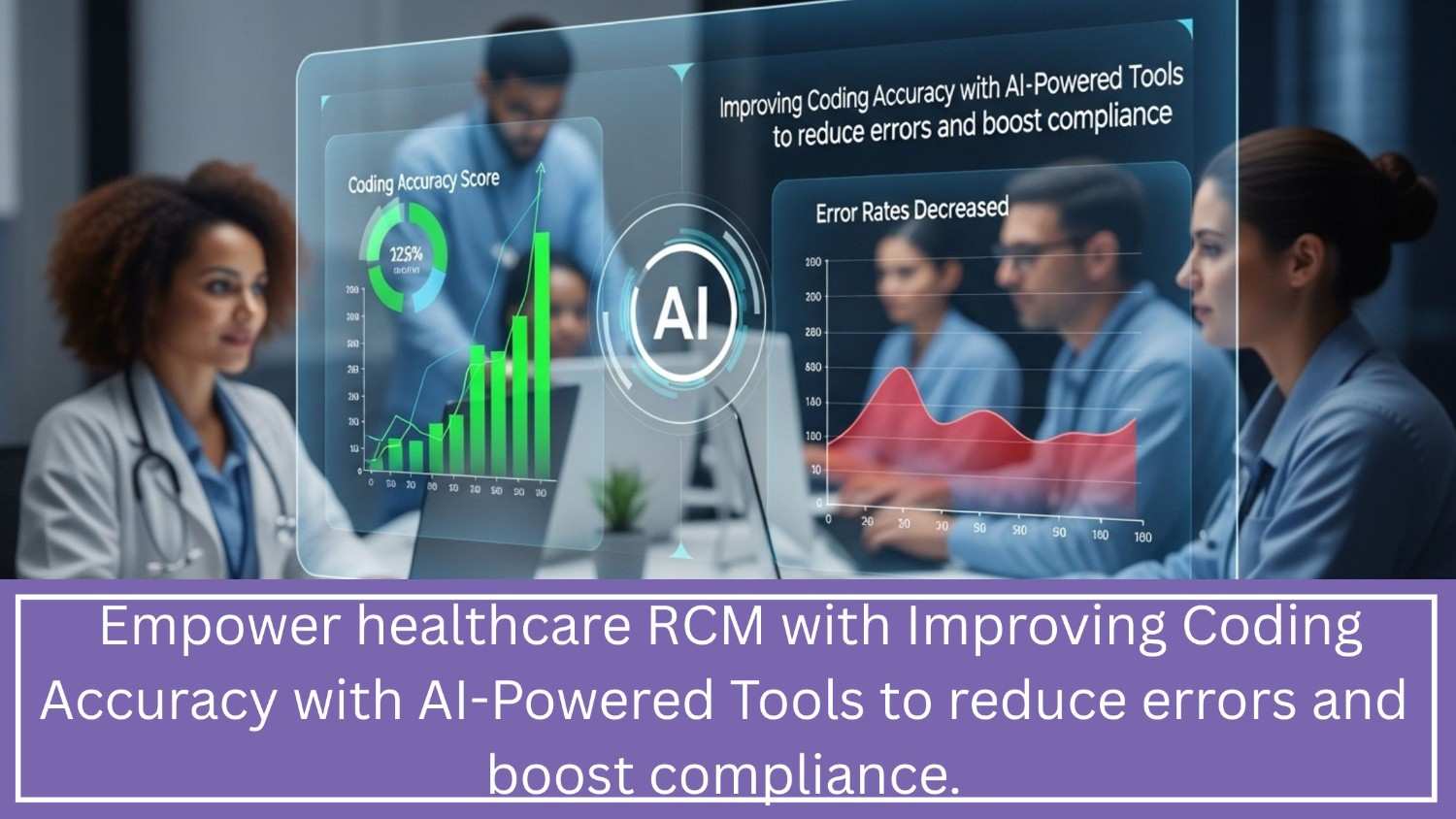
Coding errors cost real money, and they happen more than most practices realize. This guide covers improving coding accuracy with ai-powered tools. We look at why accuracy matters, the challenges coders deal with daily, and how AI tools help catch mistakes without replacing the human judgment coding still needs. We also cover how we, at Practolytics, use these tools the right way.
Every claim a practice sends out starts with a code. Get that code right, and payment moves along smoothly. Get it wrong, and the claim comes right back, sometimes weeks later, sitting in a pile of things someone has to fix.
For a long time, catching these mistakes meant a person going through chart after chart, one at a time. Late in the day, tired, moving fast because there’s always another stack waiting. Most charts are fine. But every so often, something small gets missed, a diagnosis that doesn’t quite line up with the procedure billed, a modifier left off, a note that’s a little too vague to support the code chosen. On a good day, an experienced coder catches almost all of it. On a rough day, one or two slip through, and nobody finds out until a denial letter shows up.
That gap, between a busy human doing their honest best and a claim that’s technically off, is where AI tools have quietly started making a real difference. Not by taking over the job. Just by catching what a tired set of eyes might miss.
Table of Contents
Why Medical Coding Accuracy Matters in Healthcare Revenue Cycle Management?
A code isn’t just a number on a form. It tells the payer exactly what happened during a visit, and what they should pay for it. Get the code wrong, and everything downstream gets thrown off too.
- Accurate codes get approved faster, with less back and forth.
- Wrong codes lead to denials, delays, and extra work fixing things after the fact.
- Clean coding keeps a practice out of compliance trouble.
- Good coding makes revenue predictable instead of a monthly guessing game.
- It cuts down the hours staff spend resubmitting claims that should’ve gone through the first time.
Coding sits right at the start of the whole revenue cycle. Push it slightly out of line, and billing, collections, and cash flow all feel that same small nudge, just amplified by the time it reaches the end.
Common Challenges That Affect Medical Coding Accuracy
Coders juggle a lot, usually all at once, and it helps to understand where mistakes actually come from before jumping into fixes.
- Claim volumes that never really slow down, especially in busy practices.
- Code sets that update constantly, making it genuinely hard to stay current.
- Documentation that’s vague or incomplete, leaving a coder to guess at intent.
- Manual review that takes real time, especially on detailed or unusual charts.
- Multiple specialties to juggle, each with its own separate set of rules.
- Plain fatigue. Even a sharp, experienced coder misses things by hour seven of a shift.
- Constant pressure to move quickly, which pushes people toward rushed calls.
None of this points to coders doing a poor job. It points to a heavy workload with very little room for a second look, unless something is actually built in to provide one.
How AI-Powered Tools Improve Medical Coding Accuracy?
This is where AI tools genuinely help. Not by replacing a coder’s judgment, but by acting like a second set of eyes that doesn’t get tired by hour seven.
Picture a chart where a chronic condition gets mentioned once, briefly, but the billed procedure doesn’t quite match up with it. A coder skimming through dozens of charts in an afternoon might not catch that. A tool scanning the same documentation flags it right away, before the claim ever leaves the building.
- It scans documentation and suggests codes based on what’s actually written.
- It flags mismatches between diagnosis and procedure codes before submission.
- It catches missing modifiers or thin documentation automatically.
- It notices unusual patterns, like a code that almost never shows up for a certain visit type.
- It speeds up review, so a coder spends less time hunting and more time verifying.
- It improves over time, learning from the corrections coders actually make.
Using ai medical coding audits to improve coding accuracy and compliance really just means catching problems earlier, before they ever reach a payer’s desk. The tool does the first pass. A coder still makes the real call, every time, without exception.
Key Benefits of AI-Powered Coding Solutions
Practices that adopt this well tend to notice changes that show up in day-to-day work, not just in a report somewhere.
- Fewer denied claims, since mismatches get caught before they go out.
- Faster submission, since review takes noticeably less time.
- More consistent coding, even across a large volume of charts.
- Less burnout on the coding team, since routine checks stop eating up whole afternoons.
- Stronger audit readiness, since there’s a clear trail of what got flagged and why.
- Lower costs over time, since fewer claims need rework down the line.
- More room for coders to spend time on the genuinely complex cases that need real thought.
None of this is really about speed for its own sake. It’s about speed that doesn’t cost accuracy. That’s the balance that actually protects revenue, rather than just pushing claims out the door faster and hoping for the best.
How AI Fits Into the Modern Medical Coding Workflow?
AI doesn’t sit outside the coding process. It slots directly into it, almost like an extra checkpoint added to a workflow that already existed.
- Documentation gets reviewed first, either by the provider or pulled straight from the chart.
- The AI tool scans that documentation and suggests likely codes.
- A coder reviews those suggestions, confirms or corrects them, and finalizes the claim.
- Anything flagged, missing details, mismatched codes, gets resolved before submission.
- The claim only moves forward once that human review is actually done.
- Corrections a coder makes get logged, which helps sharpen future suggestions.
How ai helps human coders perform faster coding audits comes down to that handoff. The tool absorbs the repetitive scanning work that eats up hours. The person handles the judgment calls that still genuinely need context and experience.
Best Practices for Implementing AI Coding Tools
Rolling this out well takes a bit more thought than just flipping a switch and walking away.
- Start narrow, one specialty or claim type, instead of everything at once.
- Keep a coder in the loop for every final decision, without exception.
- Train staff on how to actually read and respond to flagged issues.
- Track accuracy before and after, so the impact is measurable, not just assumed.
- Update the tool’s rules as code sets and payer policies shift.
- Treat it as a support tool, not a stand-in for real coding expertise.
- Talk openly with staff early on, so it feels like help, not a threat to their role.
Practices that ease into this tend to see steady, real improvement. Practices that rush it often end up confused, or worse, trusting suggestions blindly that still needed a second look.
Why Practolytics Is the Right Partner for AI-Driven Coding Improvement?
At Practolytics, we pair AI-powered tools with real, experienced coders. Not one in place of the other. Both, working together.
- Medical coding services built around technology and human review, side by side.
- Regular medical coding audit checks to catch mismatches before claims ever go out.
- Coders trained across 28 plus specialties, working alongside AI-flagged suggestions.
- Clear reporting, so you can see exactly what’s getting caught and fixed.
- A process built for compliance first, speed second.
- Ongoing updates as coding rules and payer policies change.
We’re not interested in fully automated coding with nobody checking the work. We use AI to make skilled coders faster and sharper, not to replace the judgment they bring to every chart.
Conclusion
AI-powered tools are changing how coding gets done, but they work best next to people, not in place of them. Faster reviews, fewer missed errors, and steadier revenue, with human judgment still at the center of it all. At Practolytics, we build our coding process around exactly that balance. If coding accuracy has been a recurring issue at your practice, we’d love to talk about how we can help.
FAQs
How does AI improve medical coding accuracy?
It reviews documentation and suggests codes based on what’s actually written in the chart.
- It catches mismatches between diagnosis and procedure codes.
- It flags incomplete or thin documentation.
- It speeds up the overall chart review process.
- It spots unusual patterns before they turn into denials.
- A human coder still reviews and finalizes every suggestion, so nothing goes out unchecked.
Can AI replace medical coders?
No, not really, and it shouldn’t try to.
- Coding often needs real clinical judgment, not just pattern matching.
- Complex cases need context that AI simply can’t fully capture.
- Compliance still requires a trained person signing off on every claim.
- AI is strongest at scanning volume, not making the final call.
- The best setup uses AI to support coders, not to replace them.
What are AI-powered medical coding tools?
Software that scans clinical documentation and suggests appropriate codes.
- Tools that flag missing or mismatched information automatically.
- Systems that highlight unusual coding patterns worth a second look.
- Technology that speeds up the first-pass review significantly.
- They work best as an early check, with a coder confirming the final code.
Does AI reduce medical coding errors?
Yes, when it’s used the right way.
- It catches small, repetitive errors that are easy to miss.
- It flags missing modifiers before a claim goes out.
- It highlights mismatched diagnosis and procedure codes.
- It reduces the fatigue-driven mistakes that happen late in a long shift.
- It doesn’t erase errors completely, but it cuts down the ones caused by simple oversight.
How does AI help healthcare revenue cycle management?
It speeds up coding, one of the earliest steps in the whole cycle.
- Cleaner coding means claims move through billing with fewer denials.
- It reduces rework, which saves staff time down the line.
- Payments tend to come in faster and more predictably as a result.
- The effect ripples across the entire revenue cycle, not just the coding step.
Is AI coding compliant with healthcare regulations?
It can be, as long as it’s set up the right way.
- AI should support human review, never replace it entirely.
- Every final coding decision still needs a trained coder’s sign-off.
- Clear documentation should exist showing what the AI flagged and why.
- That documentation trail matters a lot if a claim ever gets pulled for audit.
What is the future of AI in medical coding?
AI will likely keep absorbing more of the repetitive scanning and flagging work.
- Coders will have more room to focus on complex, judgment-heavy cases.
- Full replacement of human coders isn’t realistic anytime soon.
- Coding still requires clinical understanding that goes beyond pattern recognition.
- The most likely future is AI and coders working closely together, each doing what they’re actually best at.
ALSO READ – Decoding CPT: Your Guide to Codes and Regulations 2024
Talk to Medical Billing Expert Today — Get a Free Demo Now!