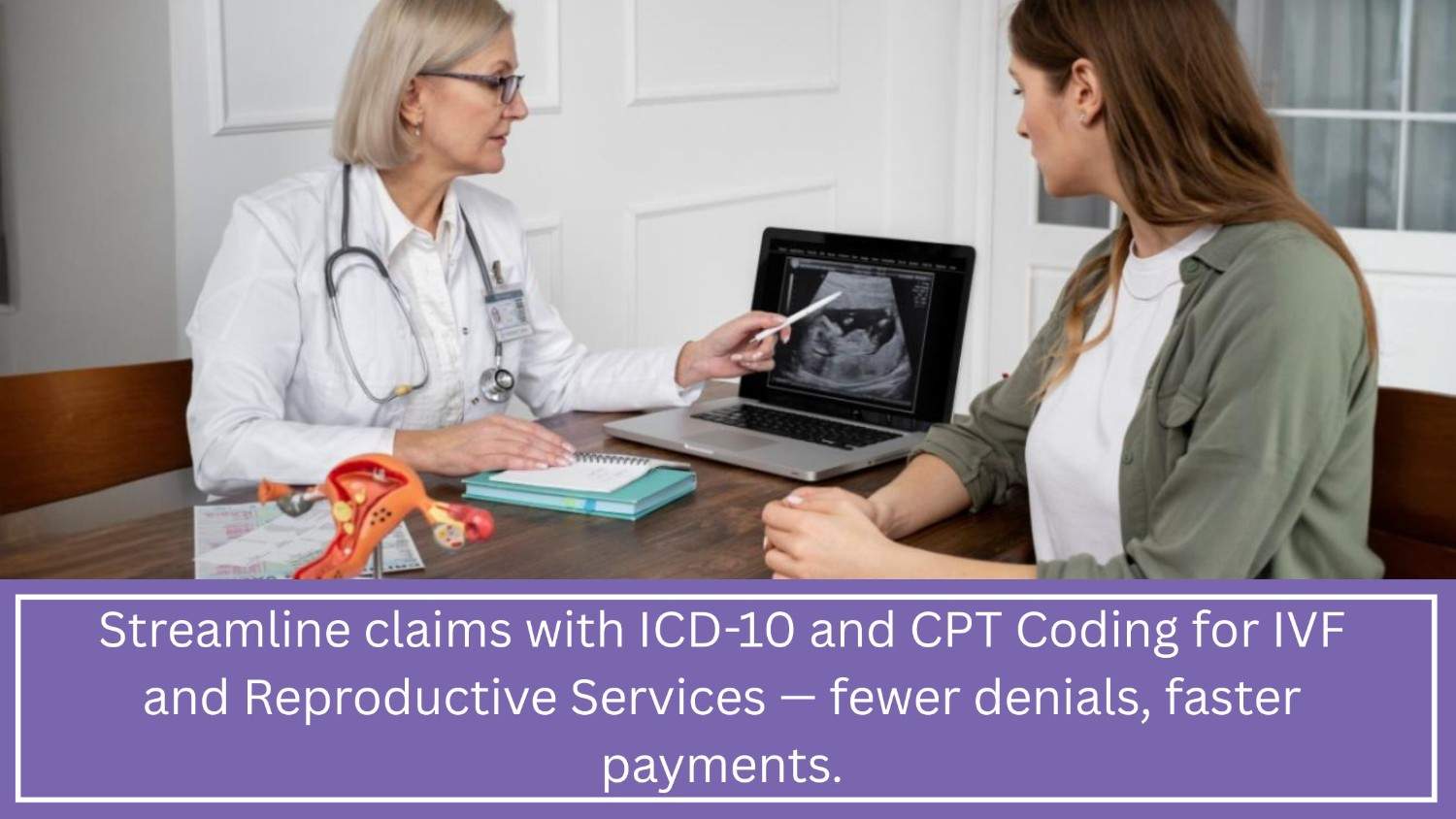
ICD-10 and CPT Coding for IVF and Reproductive Services
Good Icd 10 and CPT coding for IVF and reproductive services is important for fertility practices. IVF billing has many steps. Each service needs the right diagnosis code and procedure code. A small mistake can delay payments and cause claim denials. At Practolytics, we help fertility clinics with coding and billing. We take care of the revenue cycle and help improve claim accuracy. Our team works to reduce denials and speed up payments. This helps providers spend less time on billing and more time caring for patients.
IVF treatment is growing in the United States. More patients are looking for fertility care. Because of this, fertility practices handle more claims every year. IVF billing is not simple. Every test, procedure, and follow-up visit needs the correct code. A small coding error can delay payments. It can also increase claim denials.
That is why coding accuracy matters.
At Practolytics, we help fertility clinics simplify billing. We work as an extension of your team. We help improve coding accuracy and speed up reimbursements. In this guide, we explain Icd 10 and CPT coding for IVF and reproductive services in simple words. We cover diagnosis codes, CPT codes, common mistakes, and compliance tips.
Table of Contents
ICD-10 and CPT Coding for IVF and Reproductive Services: Complete Billing Guide
IVF billing includes many services. Every service needs proper coding. Insurance companies look for complete documentation. They also expect accurate claims.
IVF billing may include:
- Office visits
- Fertility testing
- Ultrasound studies
- Hormone monitoring
- Egg retrieval
- Embryology services
- Embryo transfer
- Pregnancy follow-up
Good coding helps practices:
- Reduce denials
- Improve collections
- Receive payments faster
- Stay compliant
- Avoid rework
Poor coding can cause:
- Claim rejections
- Delayed payments
- Revenue loss
- Compliance risks
- Higher administrative work
At Practolytics, we help practices avoid these problems. We review claims carefully before submission.
Understanding IVF Coding in Medical Billing
IVF coding uses two code systems. The first one is ICD-10. ICD-10 codes explain why the patient needs treatment. The second one is CPT. CPT codes explain what services the provider performed.
Both codes are important. They must support each other. If they do not match, claims can be denied.
Good documentation also matters.
Providers should document:
- Patient history
- Infertility diagnosis
- Treatment plan
- Physician notes
- Lab reports
- Procedure details
Strong documentation supports medical necessity. It also improves claim approval rates.
At Practolytics, we review coding and documentation together. This helps improve clean claim rates.
ICD-10 Codes Used in IVF and Infertility Treatment
Diagnosis codes explain the reason for treatment. Many providers search for IVF icd 10 information while submitting claims. One important code is icd-10-cm z31.83 encounter for assisted reproductive fertility procedure cycle. This code supports assisted reproductive procedures.
Some patients become pregnant after IVF. In these cases, providers may search for IVF pregnancy icd 10 guidance.
Common diagnosis categories include:
Female infertility
These conditions may include:
- Ovulation problems
- Tubal infertility
- Other infertility causes
- Unspecified infertility
Providers also perform counseling and fertility management services.
Common keyword searches include:
- fertility treatment icd 10
- fertility counseling icd 10
- infertility counseling icd 10
- icd 10 fertility counseling
- icd 10 infertility
- icd 10 code for fertility counseling
- fertility icd 10
Correct diagnosis coding is very important.
Wrong diagnosis codes may lead to:
- Claim denials
- Delayed payments
- Rework
- Audit risks
Our coding specialists help practices improve accuracy and reduce denials.
CPT Codes for IVF Procedures
CPT codes describe the services performed during treatment. Different stages of IVF use different procedure codes.
Monitoring visits
Patients usually need several visits. These visits may include blood tests and ultrasounds.
Egg retrieval
CPT 58970 is commonly used for follicle puncture and egg retrieval.
Embryo transfer
CPT 58974 is used for embryo transfer.
Artificial insemination
CPT 58322 supports insemination procedures.
Semen analysis
Laboratories may use CPT 89300.
Embryology services
Laboratory procedures may include:
- Oocyte culture
- Fertilization
- Embryo culture
- Cryopreservation
- Assisted hatching
Every laboratory service needs complete documentation. Coding errors in laboratory claims are common. These mistakes can delay reimbursement.
At Practolytics, we review every claim before submission. This helps reduce errors and improve payments.
Step-by-Step IVF Cycle Coding Workflow
A clear workflow improves claim accuracy. At Practolytics, we follow a simple process.
Initial consultation
We verify:
- Eligibility
- Benefits
- Insurance coverage
- Prior authorization requirements
Diagnostic testing
We review:
- Lab reports
- Ultrasound studies
- Physician notes
Ovarian stimulation
Patients need regular monitoring. We make sure every visit is documented correctly.
Egg retrieval
We review procedure details and assign the correct codes.
Embryology procedures
We review:
- Fertilization
- Embryo culture
- Assisted hatching
- Cryopreservation
Embryo transfer
We verify physician documentation before coding.
Follow-up visits
These visits may include:
- Pregnancy tests
- Ultrasound studies
- Counseling visits
This workflow helps improve clean claim rates and reduce denials.
Common IVF Coding Mistakes That Lead to Claim Denials
Small mistakes can create big problems. Common coding errors include:
Wrong diagnosis codes
Incorrect diagnosis codes may cause claim rejection.
Missing documentation
Incomplete records can delay payments.
Incorrect laboratory coding
Embryology services need accurate coding.
Prior authorization issues
Some payers require approval before treatment begins.
Duplicate claims
Duplicate submissions can create denials.
Modifier errors
Wrong modifiers may affect reimbursement.
Missing medical necessity
Insurance companies expect complete documentation.
At Practolytics, we focus on preventing these issues. We review claims before submission and help improve payment rates.
Insurance & Compliance Guidelines for IVF Billing
Coverage for IVF services varies across the United States. Some states offer fertility coverage. Some states offer limited benefits. Because of this, practices should always verify insurance benefits before treatment starts.
We recommend:
- Checking eligibility
- Reviewing payer policies
- Obtaining prior authorization
- Maintaining complete records
- Following coding updates
- Reviewing payer guidelines
Compliance is also important.
Practices should protect patient information and follow HIPAA requirements.
Good compliance helps practices:
- Reduce audits
- Prevent denials
- Improve reimbursement
- Protect patient data
At Practolytics, we maintain 100% HIPAA-compliant processes. We help practices stay compliant while improving collections.
Why Practolytics is a Trusted IVF RCM Partner?
We understand fertility billing. Our team has more than 20 years of experience. We support over 1,400 providers and 180 practices across the country.
We provide complete revenue cycle management solutions.
Our services include:
- Medical coding
- Medical billing
- Prior authorizations
- Credentialing
- Claims submission
- Denial management
- Accounts receivable follow-up
- Reporting and analytics
We process more than 5 million claims every year.
We support more than 28 specialties.
Our team focuses on:
- Faster payments
- Fewer denials
- Better cash flow
- Lower operational costs
- Higher collections
We submit claims within 24 hours. We perform eligibility checks in advance. We actively manage denied claims. We work as an extension of your team.
Our goal is simple.
We help practices spend less time on paperwork and more time caring for patients.
Conclusion
Accurate Icd 10 and CPT coding for IVF and reproductive services is very important for fertility practices. Good coding helps practices get paid faster. It also helps reduce claim denials and billing errors. Small coding mistakes can delay payments and increase extra work.
At Practolytics, we help fertility clinics make billing simple. Our team handles coding, billing, claim submission, and denial management. We focus on accuracy and compliance at every step. This helps practices improve cash flow and spend less time on paperwork.
We work as an extension of your team. Our goal is to help providers focus more on patient care and less on revenue cycle challenges. With the right coding and billing support, fertility practices can improve collections, reduce stress, and build a stronger financial future.
FAQs
What is the ICD-10 code for IVF treatment?
One commonly used code is icd-10-cm z31.83 encounter for assisted reproductive fertility procedure cycle. Providers may also use other diagnosis codes based on the patient’s condition and treatment plan. Proper documentation helps select the correct code.
What ICD-10 codes are used for infertility?
Many diagnosis codes are used for infertility. The right code depends on the patient’s condition. Providers often search for IVF icd 10, fertility treatment icd 10, and icd 10 infertility guidance when submitting claims. Correct diagnosis coding helps reduce denials.
What CPT code is used for egg retrieval?
CPT 58970 is commonly used for egg retrieval procedures. This code is used when the provider performs follicle puncture and collects eggs during the IVF cycle.
What CPT code is used for embryo transfer?
CPT 58974 is used for embryo transfer procedures. Accurate documentation helps support this code and improves claim approval.
What are common IVF laboratory CPT codes?
Common laboratory codes are used for sperm preparation, embryo culture, fertilization, assisted hatching, and cryopreservation procedures. These services should always have complete documentation.
Why is IVF coding accuracy important?
Accurate coding helps practices receive payments faster. It reduces denials and improves cash flow. Good coding also supports compliance and helps fertility practices maintain a healthy revenue cycle.

ALSO READ – Decoding CPT: Your Guide to Codes and Regulations 2024
Talk to Medical Billing Expert Today — Get a Free Demo Now!