
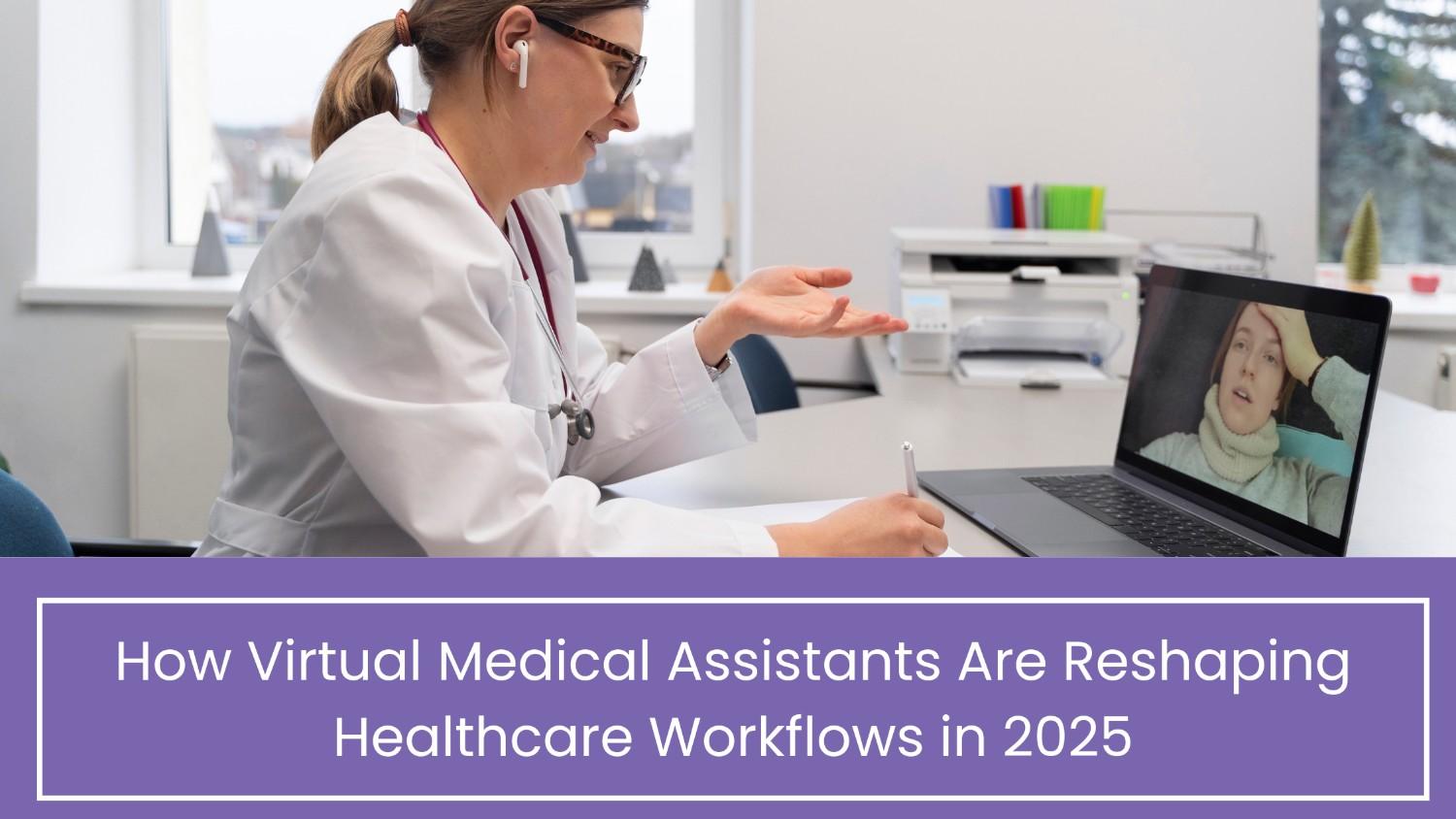
How Virtual Medical Assistants Are Reshaping Healthcare Workflows in 2025
Front desks are busy. Staff are tired. Patients wait too long. That’s why so many practices are asking the same thing: how virtual medical assistants are reshaping healthcare, and if it’s time to try one. This blog talks about what’s changing, why practices are switching, how AI fits in, and how to add a virtual assistant without messing up your day-to-day.
Table of Contents
How Virtual Medical Assistants Are Reshaping Healthcare Workflows?
Ask a practice manager what eats up their day. It’s rarely patient care. It’s phone calls. Insurance checks. Scheduling. Data entry. All of it piles up. And all of it pulls time away from patients.
This is why virtual medical assistants have become such a big deal. They’re not a trend anymore. They’re just part of how practices run now. In this blog, we’ll look at how virtual medical assistants are reshaping healthcare, why practices are making the switch, and how Practolytics fits in.
How Virtual Medical Assistants Are Changing Healthcare Workflows?
A virtual medical assistant, or VMA, is a trained person who works remotely and handles the office side of running a practice. So your in-house team doesn’t carry it all alone.
Here’s what they usually do:
- Book appointments and send reminders
- Check insurance before the patient walks in
- Answer routine calls so the front desk isn’t buried
- Enter patient data the right way, on time
- Help with billing tasks like coding support and follow-up
- Handle prior authorizations so nothing gets missed
This changes who does what. Your nurses and office staff stop splitting time between patients and paperwork. The paperwork goes somewhere else, to someone trained just for it. That’s the real shift happening right now.
Benefits of Virtual Medical Assistants for Healthcare Practices
Practices don’t switch to VMAs just to try something new. They switch because it works, and fast.
- Less burnout for staff. No more doing two jobs at once.
- Fewer no-shows, because reminders actually happen.
- Faster insurance checks, which means fewer surprises and fewer denied claims.
- Lower staff turnover. This is a big one, and one of the clearest virtual medical assistant benefits in reducing turnover — less overload means staff stick around longer.
- Lower cost, since you’re not paying for a full-time hire, benefits, and office space.
- Happier patients, because calls get answered and appointments run on time.
This is why top practices switch to virtual medical assistants. Not because it’s trendy. Because it fixes a real, everyday problem. Once a practice sees the real numbers behind medical virtual assistant efficiency, it’s hard to go back.
How AI and Automation Are Enhancing Virtual Medical Assistants?
Virtual medical assistants used to just mean a remote person doing tasks by hand. That’s changed. Now, many VMA services use AI tools alongside the human assistant, not instead of them.
Here’s how that works:
- AI flags scheduling conflicts before they cause a problem
- Automatic reminders cut down on missed appointments
- Smart insurance checks catch coverage issues early
- AI-assisted data entry means fewer small mistakes
- Automation handles the boring, repeat stuff, so the human assistant can focus on things that need real judgment
This is really how medical virtual assistants improve practice efficiency today. It’s not about replacing people. It’s about giving trained assistants better tools. Some practices call this setup a digital medical assistant — a real assistant backed by smart software running in the background. Others call the same setup a medical digital assistant. Same idea either way: people and automation working together.
How to Implement a Virtual Medical Assistant in Your Practice?
Bringing on a virtual medical assistant is simpler than most people expect.
Here’s how to do it:
- Find what’s eating your team’s time. Scheduling? Insurance? Data entry? Start there.
- Pick a few tasks to hand off first. You don’t need to hand over everything on day one.
- Choose a service that knows healthcare. Not every virtual assistant company understands HIPAA rules or medical workflows.
- Set clear goals. Fewer no-shows? Faster insurance checks? Decide what matters most.
- Try it for a few weeks. That’s usually enough to see a real difference.
- Check the results and adjust. Add more tasks once you’re comfortable.
Most practices are surprised how fast it settles in. Within a month or two, the change is usually obvious.
How Virtual Medical Assistants Are Shaping the Future of Healthcare?
This isn’t a short-term fix. Virtual medical assistants are becoming a normal part of healthcare. The numbers back this up. Healthcare virtual assistant productivity statistics keep showing the same thing: fewer missed appointments, faster claims, and lighter workloads for staff.
The virtual medical assistant service market is growing fast too, and it makes sense why. Practices have more patients, more paperwork, and fewer staff, all at once. Something has to give. Virtual assistants are filling that gap.
Looking ahead, expect to see:
- More practices mixing human assistants with automation
- More small, independent practices using VMAs, not just big hospitals
- The market keeps growing as more practices see real results
- VMAs becoming a normal hiring choice, right next to in-house staff
Why Choose Practolytics for Virtual Medical Assistant Services?
At Practolytics, we built our virtual medical assistant services for healthcare, not general office work. That difference matters a lot.
Here’s what makes us different:
- Assistants trained for healthcare, who know medical terms, insurance steps, and HIPAA rules from day one
- Support built around your practice, not a generic setup
- A team that fits into your workflow, from scheduling tools to your EHR
- Steady, reliable support, so you’re not retraining someone new every few months
- Real experience across many specialties, so we’ve likely supported a practice like yours before
If your team feels buried and patient care is starting to feel like an afterthought, that’s usually the clearest sign it’s time for help.
Conclusion
Healthcare doesn’t need more hours in the day. It needs a better way to use the hours it already has. Virtual medical assistants give practices exactly that — less admin work, fewer mistakes, and a team that finally has room to breathe. This shift isn’t slowing down. Practices that start early are already seeing the difference. If your front desk always feels behind, Practolytics can help you set up a virtual medical assistant that actually fits how you work.
FAQs
How do virtual medical assistants improve healthcare workflows?
Virtual medical assistants take over the repeat admin work that eats up a practice’s day, so your team can focus on patients instead of paperwork.
- They handle scheduling, reminders, and follow-ups
- They check insurance before visits happen
- They take work off front-desk and clinical staff
- They keep daily operations running smoother
Can virtual medical assistants work with EHR systems?
Yes. A good virtual medical assistant is trained to work inside your existing EHR, not around it.
- They can update patient records the right way, on time
- They help with data entry so nothing gets missed
- They work in your current software, so there’s no need to switch systems
- They follow the same documentation rules your practice already uses
Can a virtual medical assistant help with insurance verification?
Yes, this is one of the most common tasks they handle.
- They check coverage before a patient’s visit
- They catch problems early, before they become denied claims
- They save your front desk hours of back-and-forth with insurance companies
- They help cut down on billing surprises for patients
What is the difference between a virtual medical assistant and an AI healthcare assistant?
A virtual medical assistant is a real, trained person working remotely. An AI healthcare assistant is software that handles simple tasks, like reminders, without a person involved.
- A virtual medical assistant can handle judgment calls and real conversations
- AI is best for repeat, simple tasks
- Many practices use both together
- The mix usually works better than either one alone
Can virtual medical assistants help reduce administrative workload?
Yes, this is the main reason most practices bring one on.
- They take over scheduling, reminders, and insurance checks
- They cut down the pile-up of tasks on in-house staff
- They give your clinical team more time for patients
- They help prevent burnout from staff doing too many jobs at once
How do I know if my practice needs a virtual medical assistant?
If your team always feels behind, or simple tasks like scheduling keep slipping through the cracks, that’s usually a clear sign.
- Your front desk is overwhelmed with calls and paperwork
- No-shows or scheduling mistakes keep happening
- Staff spend more time on admin work than patient care
- You’re thinking about hiring more staff just to keep up

Read More – From Chaos to Efficiency: A Small Practice’s Journey with a Virtual Assistant
Talk to Medical Billing Expert Today — Get a Free Demo Now!