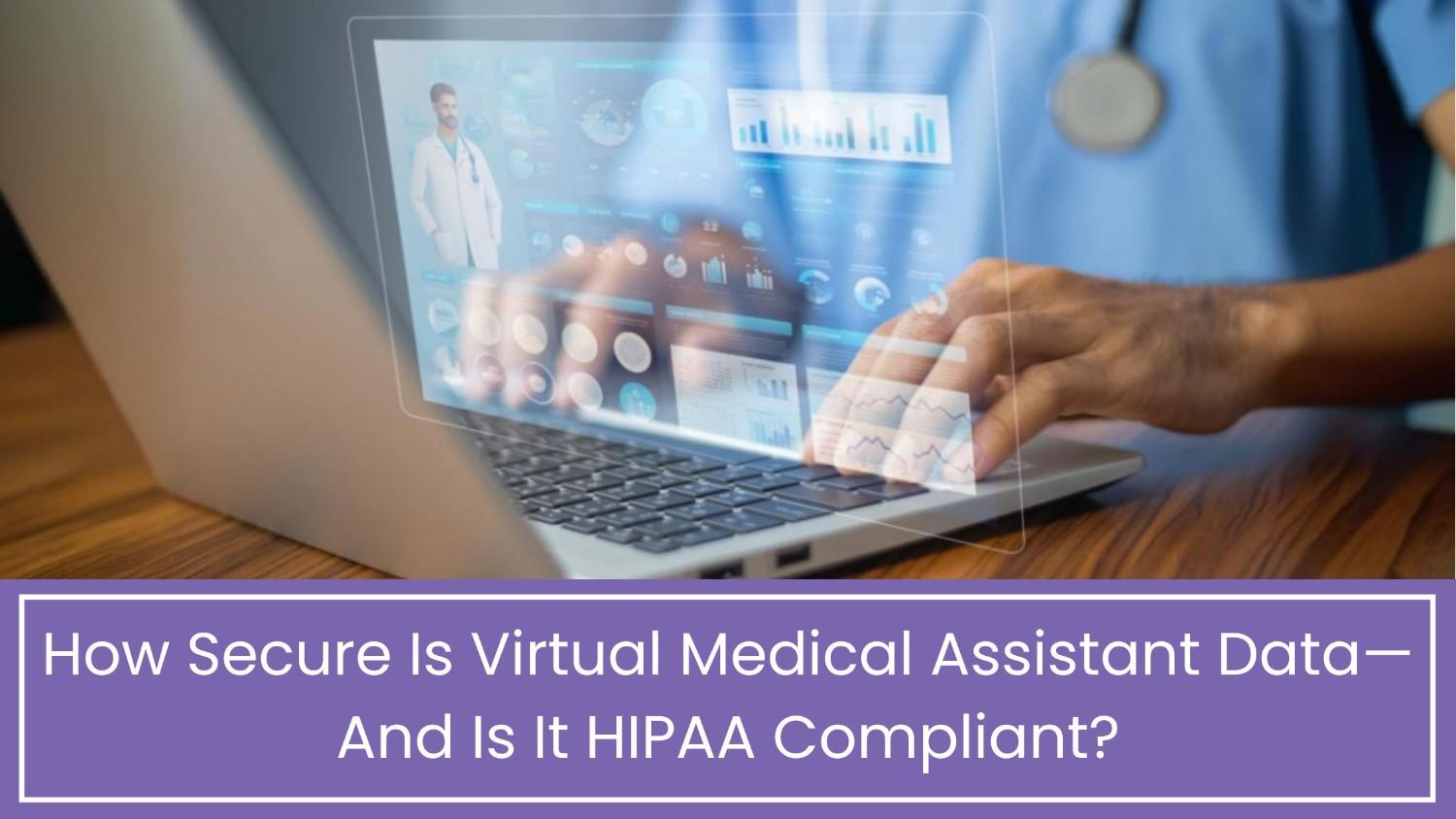
How Secure Is Virtual Medical Assistant Data?
If you’re thinking about bringing on a virtual medical assistant, you’ve probably asked yourself the same question a lot of practices ask: how secure is virtual medical assistant data, really? It’s a fair question. You’re handing over scheduling, patient calls, sometimes even parts of your billing, to someone working remotely. That means patient information is moving around in ways it didn’t before. At Practolytics, we get why this matters so much, and honestly, it should matter to you too. In this post, we’re going to walk through what actual data security looks like for virtual medical assistants, the risks worth watching for, and how we handle all of it here at Practolytics.
Table of Contents
How Secure Is Virtual Medical Assistant Data for Healthcare Practices Today?
Let’s start with the honest version of this question. A lot of practices want the benefits of a virtual medical assistant — less phone tag, faster scheduling, someone handling the admin grind — but they hold back because they’re not sure about the data side of things. That hesitation makes total sense. Patient information isn’t something you can afford to be careless with.
So we’re going to walk through this properly. Just a real look at what keeps patient data safe when a virtual assistant is involved, and what Practolytics actually does about it.
Are Virtual Medical Assistants Safe for Healthcare Practices?
Short answer: yes, if they’re set up the right way. The longer answer is a little more nuanced.
A virtual medical assistant working from home or a remote office is still handling protected health information (PHI), the same as someone sitting at your front desk. The difference is that remote work adds a few more places where things could go wrong if a company isn’t careful.
Here’s what actually determines whether it’s safe:
- Is the assistant working through secure, encrypted systems, or just a regular laptop and Wi-Fi?
- Does the provider have a signed Business Associate Agreement (BAA) in place?
- Are there real access controls, so the assistant only sees what they actually need to see?
- Is there a training process, or is this someone who got a login and a “good luck”?
If a provider can answer yes to all of that, a virtual medical assistant is honestly no riskier than in-house staff. In some ways, it can be safer, because everything is logged and tracked in ways that paper charts or loose office habits never were.
How Do Secure Virtual Medical Assistants Protect Patient Data?
This is really where is patient information safe with a virtual assistant stops being a vague worry and turns into something you can actually check. Here’s what real protection looks like in practice:
Encryption comes first. Patient data should be encrypted both while it’s sitting in a system and while it’s moving between systems. If a provider can’t clearly explain their encryption setup, that’s a red flag.
Access should be limited by role. A scheduling assistant doesn’t need access to full billing records. A billing assistant doesn’t need to see clinical notes that aren’t relevant to their work. Good providers build this in from the start instead of giving blanket access and hoping for the best.
Every action should leave a trail. Who looked at what, and when — that should all be logged automatically. If something ever looks off, you want to be able to trace it back.
Secure remote connections matter too. VPNs, private portals, and locked-down systems are the difference between a safe remote setup and one that’s basically leaving a door open.
And none of this works without training. A virtual assistant needs to actually understand HIPAA, not just sign a form saying they’ve read it once.
Common Security Risks With Virtual Medical Assistants
We’re not going to pretend there’s zero risk here, because there isn’t zero risk anywhere in healthcare. But most problems come from a small handful of causes:
- Weak or reused passwords, especially without multi-factor authentication
- Assistants working on personal, unsecured devices
- Public or home Wi-Fi networks without a VPN
- Providers who skip a Business Associate Agreement altogether
- No real audit trail, so nobody can tell what happened after the fact
- Minimal or rushed training that doesn’t actually stick
Here’s the thing — none of these are unfixable. They’re just things a provider either takes seriously or doesn’t. That’s really the whole ballgame when it comes to virtual assistant patient data compliance. It’s not about whether remote work is inherently risky. It’s about whether the company behind it built things correctly from day one.
How to Choose a Secure Virtual Medical Assistant Provider?
If you’re trying to figure out which medical va provider has the best data security practices, here’s what we’d actually tell you to ask before signing anything:
Ask if they’ll sign a BAA — and don’t accept a maybe. This should be a standard, non-negotiable part of working together. Ask what encryption they use, and don’t settle for “it’s secure, trust us.” A provider that takes this seriously will be able to explain it in simple terms. Ask how access is controlled internally, and whether assistants only see what’s relevant to their role. Ask about their training process, and how often it’s repeated, not just done once at onboarding. Ask what happens if something does go wrong — do they have a real incident response plan, or are they figuring it out as they go?
If a provider gets vague or defensive about any of these, that tells you something on its own.
Virtual Medical Assistant Security Checklist for Healthcare Providers
If you want something simple to run through before you commit to a provider, here’s a quick checklist:
- Signed Business Associate Agreement in place
- Data encrypted at rest and in transit
- Role-based access, not blanket access
- Multi-factor authentication required
- Secure remote access (VPN or private portal)
- Detailed audit logs for every interaction with patient data
- Ongoing HIPAA training, not a one-time session
- A documented process for handling security incidents
- Regular risk assessments, not a “set it and forget it” approach
If a provider checks every one of these boxes, that’s a very strong sign you’re in good hands. If they’re missing more than one or two, it’s worth asking why.
Why Choose Practolytics for Secure Virtual Medical Assistant Services?
This is where we tell you plainly why practices trust us with this. At Practolytics, security isn’t something we bolted on after the fact — it’s built into how we operate every single day.
Every virtual medical assistant we work with operates under strict, role-based access, so nobody sees more patient data than their job actually requires. We use encrypted systems for data both in storage and in transit, and our team connects through secure, protected channels, not open networks. Every interaction with patient data is logged, so there’s always a clear record of who accessed what and when.
We sign Business Associate Agreements as a standard part of working with us — that’s simply not up for debate. Our team goes through real HIPAA training, and it doesn’t stop after week one. We treat it as ongoing, because rules change and habits need reinforcing. We also run regular risk assessments to catch weak spots before they become real problems, instead of waiting for something to go wrong first.
If you’ve been asking yourself how do virtual assistants ensure patient data security, this is really our answer: through consistent habits, real oversight, and taking it seriously instead of treating it as a checkbox. That’s what practices are actually paying for when they work with us.
Conclusion
Patient data security isn’t something you should have to guess about. It’s something a provider should be able to explain clearly and back up with real practices. Practolytics builds security into every part of our virtual medical assistant services, from encryption to training to daily oversight. If you’re evaluating virtual medical assistant options for your practice, we’d be glad to walk you through exactly how we protect patient data, step by step.
FAQs
Are virtual medical assistants HIPAA compliant?
- Yes, when the provider builds compliance into their processes from the start
- This includes signed BAAs, encryption, access controls, and real staff training
- Not every provider does this well, so it’s worth confirming before you sign on
Can virtual medical assistants access patient medical records?
- Only the parts relevant to their specific role
- A scheduling assistant typically won’t need the same access as a billing assistant
- Access should always be limited to what the job actually requires, nothing more
How do virtual medical assistants protect patient data?
- Through encryption, both in storage and while data is moving
- Role-based access limits so people only see what they need
- Secure remote connections instead of open, unprotected networks
- Detailed audit logs tracking every interaction with patient information
What security risks exist when using virtual medical assistants?
- Weak passwords or missing multi-factor authentication
- Assistants working on unsecured personal devices
- Skipping a signed Business Associate Agreement
- Rushed or one-time training that doesn’t really stick
How can I verify a virtual medical assistant company’s security?
- Ask directly whether they’ll sign a BAA
- Ask what encryption standards they use
- Ask how often staff are trained on HIPAA requirements
- Ask what their process looks like if a security issue ever comes up
Does Practolytics provide secure virtual medical assistant services?
Yes. Practolytics builds security into every step of our virtual medical assistant services — encryption, role-based access, signed BAAs, ongoing HIPAA training, and regular risk assessments. It’s not an add-on for us; it’s simply how we operate.
Read More – From Chaos to Efficiency: A Small Practice’s Journey with a Virtual Assistant
Talk to Medical Billing Expert Today — Get a Free Demo Now!