
Cardiology Billing Made Simple with End-to-End Services
Cardiology is hard to bill. One patient can get an ECG, an echo, and a stress test in the same week. Each one has its own codes and its own ways to go wrong. So claims get stuck. This guide shows cardiology billing made simple with end-to-end services. We look at why cardiology is tricky, how the billing steps work, where practices lose money, and what a full-service team can do. We also share how we work at Practolytics. If your cardiology claims keep coming back, or your team is stretched thin, start here.
Monday, a patient sees the cardiologist. Tuesday, an echo. Thursday, a stress test. Friday, a heart monitor goes home with them. One patient. Four services. Four sets of rules.
Now picture 30 patients like that.
That’s cardiology billing. It’s detailed, and one small slip costs real money. If you run a practice, you already know this. The question is how to make it easier. That’s what cardiology billing services are for.
Here, we’ll cover what makes cardiology tricky, how billing works step by step, and where outsourcing helps.
Table of Contents
Cardiology Billing Made Simple With End-to-End Revenue Cycle Management Services
First, what does “end-to-end” mean? In many practices, billing is split up. The front desk checks insurance. One person codes. Another sends claims. Someone else chases unpaid ones. Things get lost in each handoff.
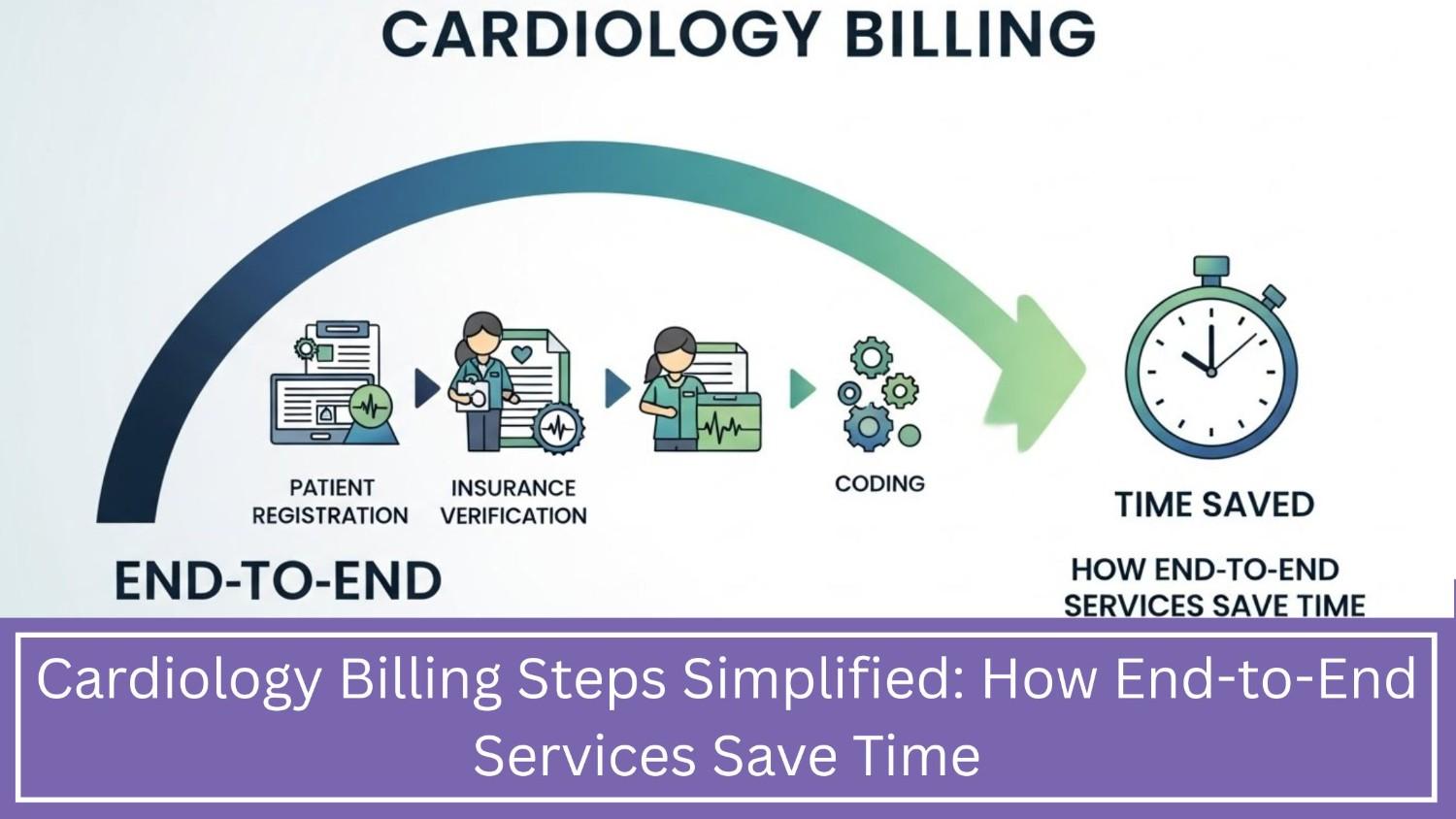
With cardiology billing made simple with end-to-end services, one team does all of it, from the first insurance check to the last payment. Some people call this cardiology medical billing. Same thing. It usually includes:
- Insurance checks and approvals for tests
- Coding and charge entry
- Claim checks and sending
- Payment posting
- Denial fixes and appeals
- Follow-up on unpaid claims
- Patient bills, credentialing, and simple reports
Why Cardiology Billing Is More Complex Than Other Medical Specialties?
A family doctor mostly bills office visits. Cardiology is different.
- Many tests. ECGs, echos, stress tests, Holter monitors, nuclear scans. Each has its own codes.
- Two parts to one test. For tests done in your office, you may bill the equipment part and the reading part. Modifiers TC and 26 show which is which. Mix them up, and the claim breaks.
- Global periods. Some procedures include follow-up visits for a set time. Bill those visits wrong, and you get denials.
- Devices. Pacemakers and defibrillators bring implant codes, device checks, and remote monitoring with time rules.
- Approvals. Many plans want a yes before imaging or nuclear studies.
- Medical necessity. The diagnosis has to explain why the test was done.
Complete Cardiology Billing Process From Patient Visit to Payment
Here’s how it goes, step by step:
- Sign-up and insurance check. We confirm the plan is active before the visit. Many denials die here.
- Approvals. If a test needs an okay, we ask for it and track the answer.
- The visit. The cardiologist writes the note. A clear note makes coding easier.
- Coding and charge entry. Our coders match the test, the diagnosis, and any modifiers.
- Claim check. We look for small errors before the claim goes out.
- Payment posting. We match each payment to its claim. If it’s short, we ask why.
- Denials and old claims. We fix denied claims and keep chasing unpaid ones.
- Patient bills. We use cardiology patient billing and invoicing software that fits your system, so patients can see what they owe and pay easily. That’s a big part of cardiology payment collection.
Common Cardiology Billing Challenges That Impact Revenue
Here’s where practices lose money:
- Wrong modifiers. TC, 26, 25, and 59 cause a lot of trouble when used by habit.
- Missing approvals. A nuclear study goes ahead without the plan’s okay. Hard to fix later.
- Bundling mistakes. Some services can’t be billed together on the same day.
- Device billing gaps. Remote checks need the right time and notes. Miss one, and you don’t get paid.
- Late claims. Every plan has a filing deadline.
- Denials nobody works. Appeal windows close while the claim sits in a folder.
- Patient balances. Higher deductibles mean more bills to collect.
Why Cardiology Practices Should Outsource Billing Services?
In-house billing can work. But it asks a lot from a small team. That’s why many practices outsource cardiology billing.
- Specialty know-how. A trained team already knows cardiology codes and plan rules.
- Backup. If your biller is out, billing keeps going.
- Lower cost. No hiring, training, or replacing staff.
- More time for patients. Your doctors and front desk spend less time on insurance calls.
When you outsource cardiology billing services, you can also start small. Many practices begin with just denials or older claims.
What Makes Practolytics Different From Other Cardiology Billing Companies?
Search for a cardiology billing company or cardiology billing companies, and you’ll get a long list. Here’s how we work at Practolytics:
- One team, one process. No handoffs to lose track of.
- We use your system. You don’t switch your EHR.
- We learn your practice first. Your services, your plans, your usual problems.
- We fix the cause. When a claim is denied, we find out why, so it doesn’t repeat.
- A real person answers. Someone who knows your account.
- We follow HIPAA rules. Patient records stay private.
Benefits of Choosing End-to-End Cardiology Billing Services
What do you get?
- Fewer denials. We catch mistakes before claims go out.
- Faster payments. Claims go out sooner and get followed up.
- Steadier cash. It’s easier to plan and hire.
- Less admin. Your team spends less time on phones and paperwork.
- Fewer missed payments. We catch short pays and old claims.
- One flow. With a single cardiology payment solution, everything from insurance checks to patient bills stays in one place.
Conclusion
Cardiology billing has a lot of moving parts. But it doesn’t have to run your week. When one team handles everything, from the first insurance check to the last payment, claims go out cleaner and money arrives sooner. At Practolytics, we keep it simple and work inside your system. Want to see where your practice might be losing money? Let’s talk. One short chat can show you where to start.
FAQs
Why is cardiology billing more complicated than general medical billing?
Cardiology has many tests and procedures, and each has its own codes and rules. Some tests are billed in two parts. Devices need ongoing checks. And many plans want approval first. One small mistake can break a claim.
- Many tests, each with its own codes
- Technical and reading parts billed with different modifiers
- Global periods that affect follow-up visits
- Time and note rules for device checks
What services are included in cardiology RCM?
RCM means revenue cycle management. It covers everything from the first insurance check to the final payment. At Practolytics, that includes:
- Insurance checks and approvals
- Coding and charge entry
- Claim checks and sending
- Payment posting
- Denial fixes and appeals
- Follow-up on unpaid claims
- Patient billing, credentialing, and reports
How can outsourcing cardiology billing improve revenue?
A trained team catches mistakes early, sends claims on time, and follows up on what’s unpaid. That means fewer denials and fewer lost claims. Money arrives sooner and more steadily.
Does Practolytics provide HIPAA-compliant cardiology billing?
Yes. We follow HIPAA rules and handle patient records with care. If you compare any billing partner, ask direct questions and get the answers in writing.
- Will they sign a business associate agreement?
- Who can see patient records?
- How is data stored and protected?
How long does it take to improve cardiology billing performance?
It depends on your practice. Claims usually go out sooner in the first month. Denial and payment trends take longer, since claims need time to move through the plans. Many practices see a clearer picture in a couple of months.
Can Practolytics handle complex cardiology procedures?
Yes. Our coders and billers work with a wide range of cardiology services. Before we start, we learn your service list and your plans, so we know what to watch for.
- ECGs, echos, stress tests, and Holter monitors
- Procedures with global periods and multiple modifiers
- Device implants, device checks, and remote monitoring
- Services that need approval first
Not sure we cover a specific procedure? Just ask.

ALSO READ – Simplifying Revenue Management: How Medical Billing Services Empower Small Practices
Talk to Medical Billing Expert Today — Get a Free Demo Now!