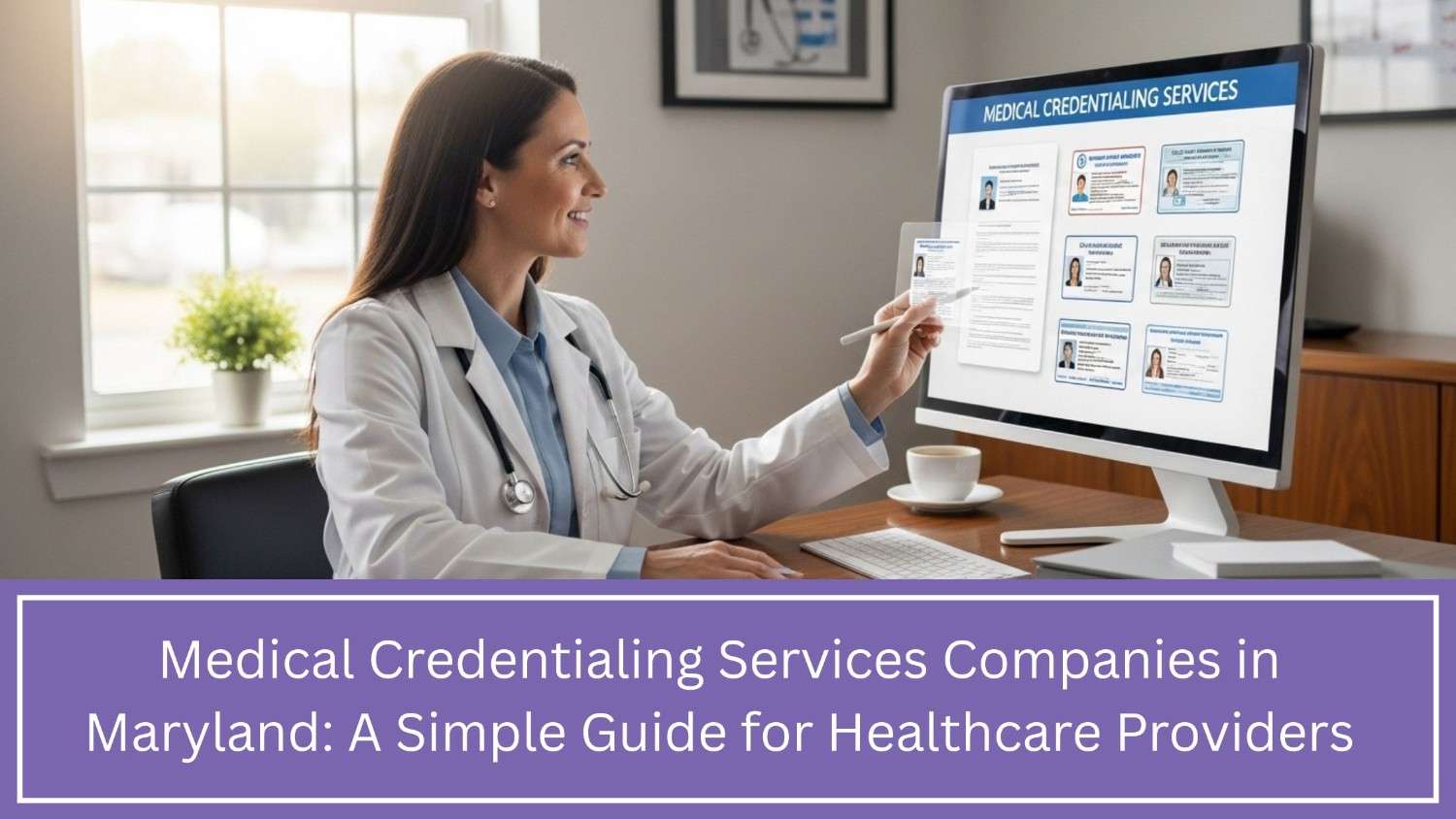


3 types of Medical Credentialing Every Provider Should Know
Medical credentialing determines a healthcare provider’s ability to participate in payer networks, seek reimbursement, and maintain privileges in delivering specific services. Understanding the 3 types of Medical Credentialing Every Provider Should Know can help physicians, therapists, and other healthcare providers navigate enrollment requirements, maintain compliance, and avoid interruptions in revenue. Knowing the types of credentialing involved in healthcare also facilitates efficient provider enrollment while supporting accurate and timely reimbursement.
The provider’s credentialing process usually takes care of their educational background, training, licensure, employment background, insurance, and other qualifications. The entities that are assigned to carry out the credentialing can be payers, hospitals, or delegated to another party.
Key areas include:
- Payer enrollment with Medicare, Medicaid, and commercial insurers
- Primary source verification (PSV) of professional credentials
- CAQH ProView profile setup and maintenance
- Medical credentialing services for ongoing documentation
- Hospital privileges and committee review
- Recredentialing / revalidation when credentials expire
Understanding these groups helps you know when to hire outsourced medical credentialing support.
CTA Button: Get Credentialing Support
Table of Contents
What Is Medical Credentialing (and Why It Controls Your Revenue)
Medical credentialing checks that a provider is qualified and meets all legal rules before they can join a health network. This step is vital for cash flow. If the paperwork is not done, the provider cannot bill insurance companies, which stops the business from receiving effective payouts.
A complete credentialing application needs a lot of paperwork and proof. Missing details cause delays that block patient care and stop your payments.
Credentialing commonly covers:
- Education and training verification
- Licensure and certifications
- Malpractice history verification
- NPI and DEA registration
- Work history and references
- Primary-source verification
- Payer participation and network status
- Hospital privileges when applicable
A practice can have great billing, but claims reimbursement delays if provider enrollment is wrong or out of date.
CTA Button: Protect Your Provider Revenue
The 3 Core Types of Medical Credentialing
While credentialing rules change by company, providers usually face three main types: payer credentialing, hospital credentialing, and delegated credentialing.
Payer credentialing refers to verifying a provider’s eligibility for inclusion in a particular network and facilitates payer enrollment in the plan and the possibility of reimbursement for services rendered under a contract between an insurer and provider.
Hospital credentialing, on the other hand, entails assessing the qualifications of a medical professional to assign privileges within a hospital. It also involves checking references, evaluating applications, and investigating educational and licensing history.
Finally, delegated credentialing is a process in which an entity that has been delegated to perform credentialing services by the payer carries out the duty on their behalf.
Together, these areas can involve:
- Insurance credentialing company support
- Hospital credentialing services
- Primary-source verification
- Network enrollment
- Privileging and committee review
- Ongoing credential maintenance
Understanding the gaps lets clinics pick the right onboarding help in credentialing services for providers.
CTA Button: Explore Credentialing Services
What Documents Do Payers Actually Require for Credentialing?
Payers generally need specific details to check a provider’s credentials and enrollment status. These needs change based on the payer, state, and medical field. To avoid errors, your team should use a fresh credentialing checklist instead of old lists.
Commonly requested materials can include:
- Current professional license
- NPI information and taxonomy
- DEA registration when applicable
- Education and training records
- Board certification information
- Malpractice history verification and insurance documentation
- Work history
- Professional references
- CAQH information
- Ownership and practice information
- Medicare or Medicaid enrollment details
- Hospital privileges, where applicable
Keeping the credentialing details updated in CAQH ProView, the payer application, and internal records can minimize the administrative burden.
The credentialing team can ensure documentation is filed in order to submit for each application and track any requirements that need to be fulfilled throughout the course of a provider’s credentialing process.
CTA Button: Request a Credentialing Checklist
How Long Does Payer Credentialing Take?
Credentialing turnaround times change based on the payer mix, provider, specialty, and completeness of clinical documentation. Some cases take longer if more proof is needed. Your office should not assume that sending a claim means faster approval workflows.
Delays can occur because of:
- Missing application information
- Inconsistent provider data
- Unverified work history
- Expired licenses or insurance
- Delayed primary-source verification
- Payer processing backlogs
- Incorrect taxonomy or NPI information
- Incomplete CAQH ProView records
A structured credentialing application process catches mistakes early and stops endless back-and-forth emails.
Providers must track their renewal dates, as recredentialing / revalidation is a constant job, not a one-time event.
CTA Button: Check Your Credentialing Timeline
Beyond the 3 Core Types: Related Credentialing You’ll Run Into
Providers may handle other tasks outside the three main credentialing steps. These steps often look like credentialing but focus on different rules or business needs.
Examples include:
- Recredentialing / revalidation to confirm continuing eligibility
- Medicare and Medicaid enrollment maintenance
- NPI and DEA registration management
- Hospital privileging
- Telehealth-related payer enrollment
- Multi-location enrollment
- Commercial payer participation
- Provider roster maintenance
- CAQH profile updates and attestations
A provider must often meet specific rules, like NCQA credentialing standards, based on their payer or contract.
The key point is that credentialing is not a one-time form. It is a continuous cycle of updating your professional data to stay compliant with the payer.
For growing clinics, an outsourced medical credentialing partner stops paperwork lapses and keeps your staff compliant.
CTA Button: Simplify Credential Maintenance
The 5-Step Provider Credentialing Process
A structured provider credentialing process cuts out needless delays and keeps provider applications moving quickly from start to payer approval.
1. Collect
Gather licenses, certifications, insurance, NPI information, work history, and other credentials needed for the application.
2. Prepare
Fill out the credentialing application forms for each organization and make sure that the information on file agrees with the information in the CAQH ProView.
3. Verify
Do primary source verification (PSV) and confirm that the professional has the necessary licenses, malpractice insurance, and other credentials.
4. Submit
Send the completed application to the commercial, Medicare, Medicaid, or institutional entity and ensure that it is received.
5. Maintain
Keep track of expiration dates, payer requests, roster updates, and recredentialing and revalidation due dates.
This systematic process holds everyone accountable and stops enrollment delays before they happen.
CTA Button: Start Your Credentialing Process
Why Credentialing Matters More Than Most Practices Admit
Credentialing is often viewed as an administrative task, but it has a direct impact on the number of providers, payer participation, reimbursement, and practice growth. Providers who are not correctly credentialed or enrolled may face reimbursement issues even for services that were clinically appropriate and properly documented.
Strong credentialing management helps practices:
- Prevent avoidable enrollment delays.
- Maintain accurate payer participation.
- Reduce administrative rework.
- Keep provider rosters current.
- Monitor recredentialing/revalidation.
- Support smoother revenue cycle operations.
- Reduce potential reimbursement interruptions.
For groups of practices that are growing and moving into different fields, locations, or networks, credentialing becomes much more essential.
Working with an experienced insurance credentialing company to manage these applications, verification, payer follow-up, and maintenance will help ensure that your practice’s billing is properly taken care of as far as visibility goes.
CTA Button: Strengthen Your Credentialing Process
Frequently Asked Questions
1. What is the difference between credentialing and licensing?
Licensing authorizes a provider to work in a specific area. Credentialing proves their skills to a payer or a health clinic. Both are needed, but they serve different purposes.
2. What are the 3 main types of medical credentialing?
The three main types are payer, hospital, and delegated credentialing. Each company has its own set of rules.
3. What documents do payers require for credentialing?
Requirements vary, but commonly it requires licenses, NPI information, education, training, insurance, work history, certificates, and other professional documents.
4. How long does medical credentialing take?
The turnaround is dependent on both the payer and the application. The submission form that is correct and complete will reduce avoidable delays, although the time that the payer takes is beyond the control of a provider.
5. What happens if a provider sees patients before payer credentialing is complete?
The provider might encounter reimbursement limitations or claim issues depending on the payers and their terms. It is essential to confirm if participation and enrollment are necessary before submitting any bills for services rendered.
6. What is delegated credentialing, and who should use it?
Delegated credentialing is when an approved organization can carry out credentialing functions for them under a delegated credentialing arrangement. Delegated credentialing is usually done by an organization that has met the credentialing requirements of the payer.
7. How often do providers need to be recredentialed?
It depends on which payer or organization you are asking. Practices should keep track of requirements from each payer and also maintain a centralized credentialing expiration calendar.
8. What’s the difference between insurance credentialing and hospital credentialing?
Insurance credentialing lets you attain proper reimbursements from insurance companies. Hospital credentialing focuses on staff membership and facility privileges.
9. Should a practice outsource medical credentialing or handle it in-house?
The decision is usually based on the volume of providers, the complexity of payers, the staff involved, and the administrative capacity of a healthcare organization. Outsourcing medical credentialing assistance may be considered appropriate when the submission, follow-up, and renewal of applications are time-consuming.
10. What’s the most common mistake that delays credentialing approval?
Incomplete or inconsistent applications are among the most common causes of claim rejections and delays in medical practices. The most frequent mistakes include incorrect NPI information, missing documents, insufficient CAQH profiles, and expired credentials.
CTA Button: Talk to a Credentialing Specialist
Talk to Medical Billing Expert Today — Get a Free Demo Now!